Do Cats Get Dementia? 7 Signs
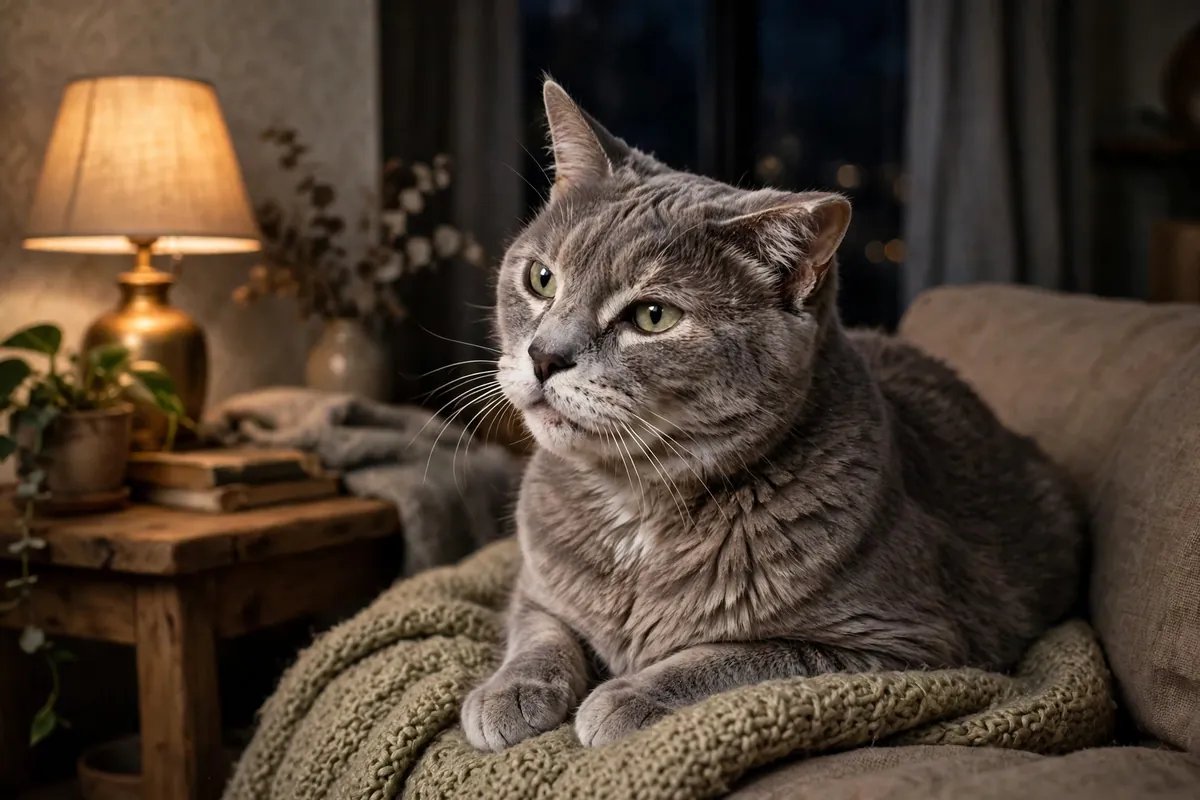
Yes, cats can develop a condition very similar to dementia in people. Veterinarians call it feline cognitive dysfunction syndrome, and it most often affects cats aged 11 and older. It is not simply "getting old" — it involves real changes in the brain that affect memory, learning, awareness, and sleep. If your senior cat has started acting strangely, the changes below are worth understanding, because some causes can be treated and others can be managed at home.
Cognitive decline creeps in slowly: a cat who stares at a wall, sleeps a little more, or misses the litter box once may not ring alarm bells. Over weeks, though, small changes add up. This guide explains the 7 cat dementia signs in plain language, the simple DISHA checklist vets use, and home adjustments that help a confused senior cat feel safer.
What Is Feline Cognitive Dysfunction?
Feline cognitive dysfunction is the medical name for age-related decline in a cat's mental abilities. As cats age, changes can occur in the brain — including the build-up of abnormal proteins and reduced blood flow — that affect how they process information, remember routines, and respond to their surroundings. The result is not one single symptom but a pattern of changes across several areas of daily life.
It is important to know that cognitive dysfunction is a diagnosis of exclusion. That means a veterinarian will first rule out other problems — pain, kidney disease, hyperthyroidism, high blood pressure, vision loss, and hearing loss — before concluding that dementia is the cause. This step matters enormously, because many of those look-alike conditions are treatable, and treating them can dramatically improve your cat's behavior.
The DISHA Checklist in Plain Language
Veterinarians group the signs of cognitive decline under the memory aid DISHA. Each letter stands for one area of life that can change:
- D — Disorientation. Your cat seems lost in familiar places, gets stuck in corners, stares blankly at walls, or forgets where the food bowl or litter box is.
- I — altered Interactions. Your cat becomes clingier than before, or withdraws and no longer greets you, seeks attention, or enjoys being petted the way they used to.
- S — Sleep-wake changes. Your cat sleeps most of the day and becomes restless, pacing, or yowling at night — the day-night rhythm flips.
- H — House soiling. A previously reliable cat starts urinating or defecating outside the litter box, even though the box is clean and accessible.
- A — Activity changes. Your cat plays less, grooms less, explores less, or repeats odd behaviors like pacing the same route or staring for long periods.
Changes in two or more areas over several weeks mean it is time for a vet visit — not panic, but a proper check-up.
7 Cat Dementia Signs to Watch For
- Getting lost in the house. Your cat pauses in doorways, walks into a room and seems to forget why, or gets trapped behind furniture they used to navigate easily. This is the clearest sign of disorientation, and it often appears first.
- Staring blankly at walls or into space. Long, unfocused staring is different from a cat calmly watching birds. A cat with cognitive decline may stare at nothing for minutes at a time, unresponsive when you call their name softly.
- Night-time yowling and restlessness. Waking the household with loud, confused crying at 2 or 3 a.m. is one of the most common complaints from owners of senior cats. The cat often seems anxious or lost rather than hungry or in obvious pain.
- Withdrawing from family — or becoming unusually clingy. Some cats stop coming to greet you and hide more. Others do the opposite, following you everywhere and becoming distressed when you leave the room. Either direction of change is worth noting.
- Accidents outside the litter box. A reliably litter-trained cat may start missing the box or choosing new spots. Rule out urinary problems and arthritis first — a cat who cannot climb into a high-sided box is not necessarily confused.
- Less grooming, play, and curiosity. A dull, unkempt coat, no interest in favorite toys, and a cat who no longer investigates visitors or new objects can all signal declining mental sharpness — or pain, so again, a vet check comes first.
- Repetitive behaviors. Pacing the same path, circling, licking the same spot, or asking for food again minutes after eating can all be part of the pattern. Repetition alone does not prove dementia, but combined with other signs it strengthens the picture.
Not Just Old Age: Problems That Look Like Dementia
This is the most important section of this article, because it can change your cat's outcome. Several treatable conditions mimic cognitive decline:
- Pain, especially arthritis. A cat in pain moves less, grooms less, avoids the litter box, and sleeps more — all of which look like dementia. Pain relief can transform such a cat.
- Kidney disease. Common in older cats, it can cause increased thirst, weight loss, and behavior changes that overlap with cognitive signs.
- Hyperthyroidism. An overactive thyroid can cause restlessness, night-time vocalizing, weight loss, and increased appetite — easily mistaken for dementia.
- High blood pressure and vision or hearing loss. A cat who cannot see or hear well may startle easily, seem confused, and vocalize loudly. These are often manageable once diagnosed.
Never assume "it is just old age." A senior cat with new behavior changes deserves a vet examination, bloodwork, and blood pressure check — fixing a treatable cause may restore much of your cat's old self.
Home Adjustments That Help a Confused Cat
While your vet investigates, small changes at home can reduce your cat's confusion and anxiety right away:
- Keep the routine steady. Feed, play, and settle your cat at the same times each day. Do not rearrange furniture or move the litter box and food bowls — familiarity is comforting.
- Add night lights. Dim lights along hallways and near the litter box help a disoriented cat find their way at night and can reduce night-time yowling.
- Make the litter box easy. Use a low-entry box, keep it spotlessly clean, and add an extra box on each floor so your cat never has far to go.
- Add ramps and steps. Ramps to favorite beds, sofas, and window perches let a stiff or uncertain cat reach beloved spots without jumping.
- Offer gentle mental enrichment. Short play sessions, puzzle feeders, and new (but not overwhelming) smells and textures can keep a senior brain engaged. Keep sessions brief and positive.
- Stay calm and patient. Never scold a confused cat for accidents or night-time crying — reassure them calmly.
When to Call the Vet: Red-Flag Checklist
Book a vet visit promptly — or urgently if the sign is severe — if you notice any of these:
- Sudden behavior change over days rather than gradual change over months.
- Complete refusal of food or water for more than 24 hours.
- Vomiting, diarrhea, or straining to urinate, or blood in urine or stool.
- Rapid weight loss, greatly increased thirst, or very large urine clumps in the litter.
- Collapse, seizures, extreme weakness, or difficulty breathing.
- Your cat seems to be in pain — crying when touched, limping, or hiding and refusing to move.
- Night-time yowling that is new, loud, and persistent, especially in a cat over 11.
Frequently Asked Questions
At what age do cats get dementia?
Cognitive decline is most often seen in cats aged 11 and older, and it becomes more common with each passing year. That said, age alone does not prove dementia, because many treatable health problems cause similar changes in older cats.
Can cat dementia be cured?
There is no cure, but it can often be managed. Environmental changes, enrichment, diet adjustments, and sometimes vet-prescribed medication can slow the decline and improve quality of life.
Why does my senior cat yowl at night?
Night-time yowling is a classic sign of cognitive decline, especially when a cat seems disoriented or anxious in the dark. However, it can also be caused by pain, high blood pressure, or hyperthyroidism, so a vet check is important before assuming dementia.
What is the DISHA checklist for cats?
DISHA is a simple memory aid vets use for cognitive decline: Disorientation, altered Interactions with family, Sleep-wake changes, House soiling, and Activity changes. If your cat shows changes in several of these areas, it is worth a vet visit.
Should I change my senior cat's routine?
Keep the core routine stable — same feeding times, same furniture layout, same litter box locations — because predictability reduces confusion. Change only what helps: add night lights, ramps, and easier litter box access rather than rearranging the home.