Cat Age Calculator: How Old Is My Cat in Human Years?
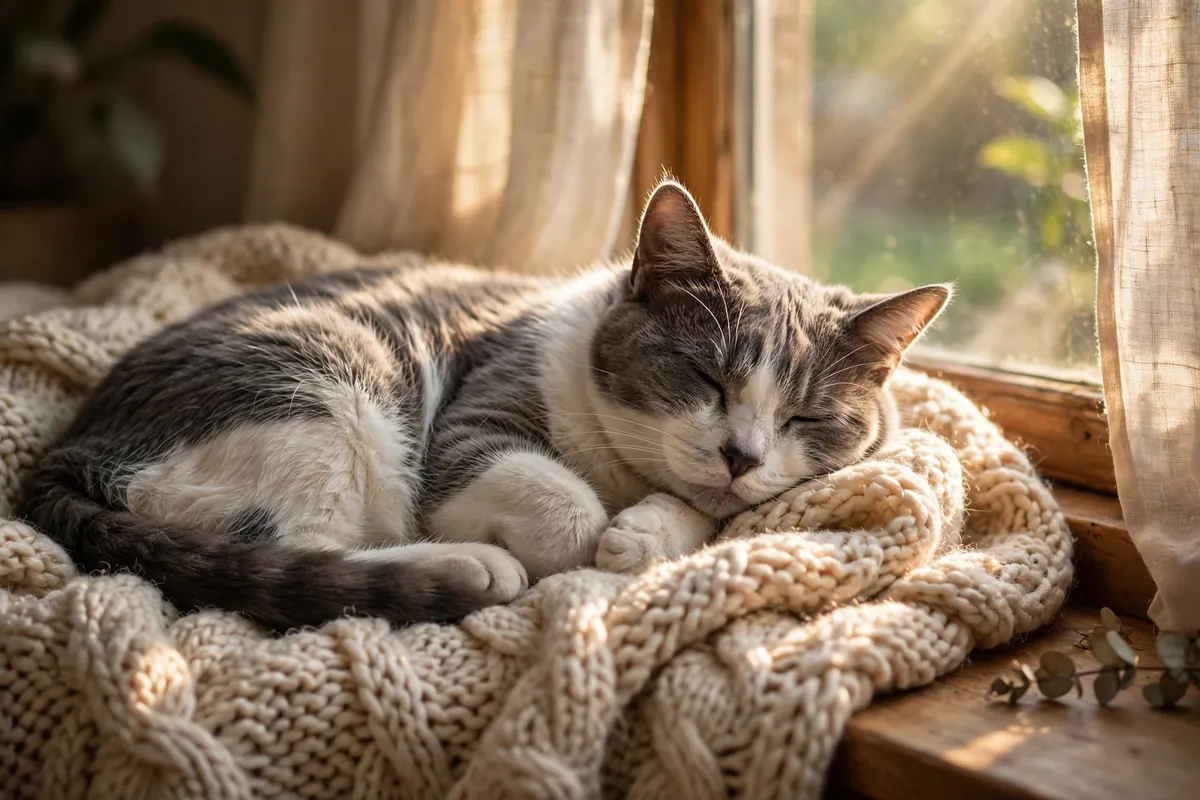
Is your cat 3 years old — or 28? Cats age much faster than people in their first two years, then slow down. A 1-year-old cat is already about 15 in human years, and a 2-year-old is about 24. After that, each cat year adds roughly 4 human years.
This free calculator converts your cat's age into human years using the standard veterinary rule, and tells you which life stage your cat is in — so you know what to expect and what care matters most right now. It runs entirely in your browser — nothing is sent anywhere, and nothing is stored.
🐾 Calculate Your Cat's Age in Human Years
Not sure of the exact age? Your vet can estimate it from teeth, eyes and overall condition — a rough guess is fine for this calculator.
Your cat's age in human years
| Cat's age | |
| Life stage | |
| What to expect |
How the Calculation Works
We use the standard veterinary rule, stated openly so you can check it:
- First year of life = 15 human years. Months in the first year count as 1.25 human years each (15 ÷ 12).
- Second year = +9 human years (24 total). Months in the second year count as 0.75 human years each (9 ÷ 12).
- Each year after that = +4 human years. Extra months count as about 0.33 human years each (4 ÷ 12).
So a 3-year-old cat is 15 + 9 + 4 = 28 in human years, and a 10-year-old cat is 15 + 9 + (8 × 4) = 56. The rule is an average — individual cats age a little faster or slower depending on breed, health and lifestyle.
Cat Years to Human Years — Conversion Table
| Cat age | Human age | Cat age | Human age |
| 1 year | 15 years | 11 years | 60 years |
| 2 years | 24 years | 12 years | 64 years |
| 3 years | 28 years | 13 years | 68 years |
| 4 years | 32 years | 14 years | 72 years |
| 5 years | 36 years | 15 years | 76 years |
| 6 years | 40 years | 16 years | 80 years |
| 7 years | 44 years | 17 years | 84 years |
| 8 years | 48 years | 18 years | 88 years |
| 9 years | 52 years | 19 years | 92 years |
| 10 years | 56 years | 20 years | 96 years |
What Changes at Each Life Stage
- Kitten (0–1 year): Growing fast — lots of play and learning, vaccinations, and 3–4 small meals a day. Everything is new, so gentle socialisation now shapes an adult cat's confidence.
- Junior (1–2 years): The teenage years — full of energy, reaching adult size, and testing boundaries. Keep play daily and consider spaying or neutering if not done yet.
- Prime (3–6 years): Peak health and energy. Keep up regular play, good food, and a vet check once a year — small problems caught now stay small.
- Mature (7–10 years): Slowing down slightly and more prone to weight gain. Watch the waistline, switch to adult food suited to less active cats if needed, and start twice-yearly vet checks.
- Senior (11–14 years): Grey whiskers and longer naps. Senior food, warm comfy spots, easy access to litter and water, and vet checks every 6 months matter most now.
- Geriatric (15+ years): A wise old friend. Gentle routines, warmth, help with grooming, and regular vet care keep them comfortable — many cats live happily well past 15.
Frequently Asked Questions
How old is a 1-year-old cat in human years?
A 1-year-old cat is about 15 in human years. Cats mature very fast in their first year — by their first birthday they are roughly equivalent to a human teenager.
Is the "1 cat year = 7 human years" rule true?
No — that rule is a myth. Cats age much faster in their first two years (15 human years in year one, 9 more in year two, for a total of 24) and then slow to about 4 human years per cat year after that. The 7-year rule underestimates young cats and overestimates old ones.
Why do cats age faster in their first two years?
The first year covers kittenhood, puberty and reaching adult size — a huge amount of growth packed into 12 months. The second year finishes physical and social maturity. After that, ageing slows to a steadier pace of roughly 4 human years per cat year.
Does breed or indoor vs outdoor life change a cat's age in human years?
The calculation is the same for all cats, but real ageing differs: indoor cats usually live longer than outdoor cats, and some breeds age a little faster or slower. The human-age number is a helpful guide, not an exact measure — your vet can judge your individual cat's condition best.