Adopting a Cat: Complete Checklist for First-Timers
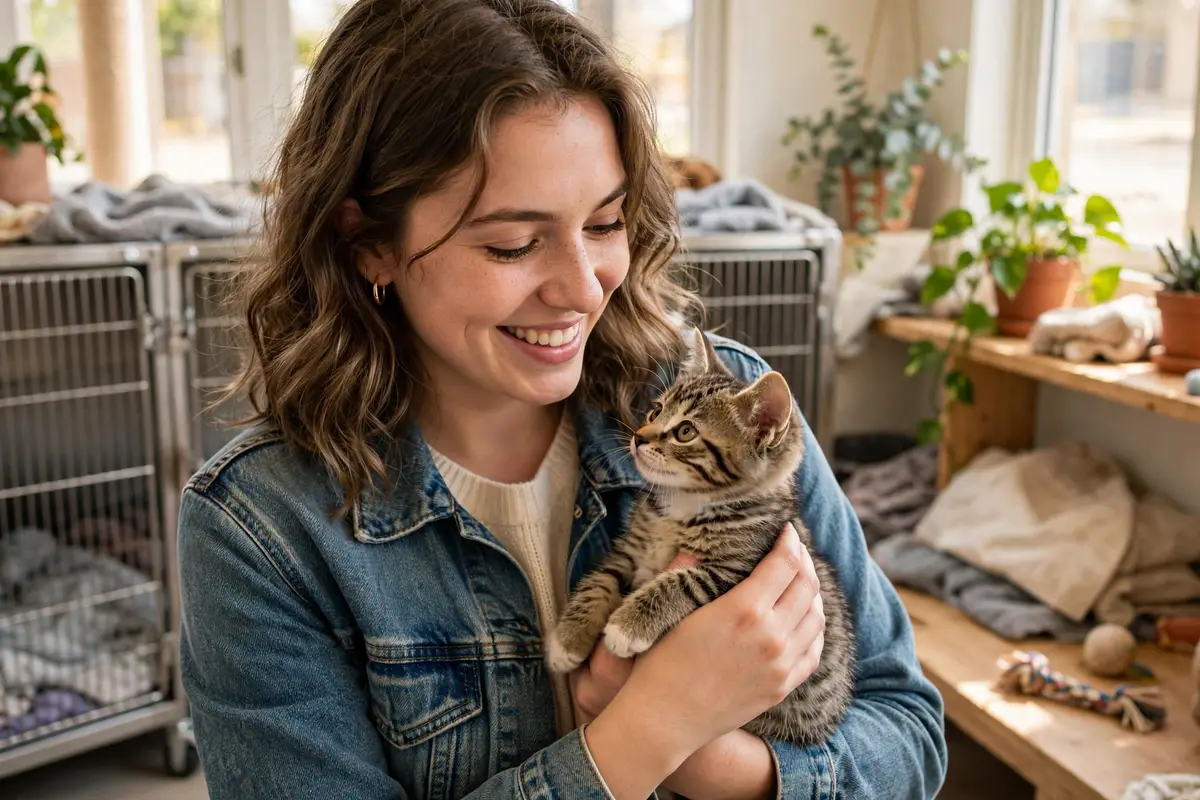
Bringing home your first cat is one of the most rewarding decisions you can make — and one of the easiest to get wrong when excitement takes over. Too many first-timers fall in love at the shelter, bring a cat home the same day, and only then realize they have no litter box, no food, and a very stressed animal hiding behind the sofa.
This complete adopting-a-cat checklist covers the honest lifestyle and cost questions, shelter vs. breeder, what to ask the staff, the supplies you need, the first 48 hours at home, when to book the first vet visit, and the mistakes that trip up most beginners.
Before You Adopt: The Honest Questions
A cat is a 12-to-18-year commitment. Before you fall in love with a pair of green eyes, answer these questions honestly:
- Time. Cats are independent but still need daily feeding, litter box cleaning, playtime, and companionship. If you travel constantly or work very long days alone at home, a cat may not be the right fit right now.
- Money. Beyond the adoption fee, budget for quality food, litter, routine vet visits, vaccinations, and an emergency fund — one emergency surgery can cost more than a year of supplies.
- Your home. Renters should check the lease for pet policies and restrictions. Everyone in the household must agree, and anyone with allergies should spend time around cats first.
- Other pets. Introductions to a resident dog or cat take weeks of patience, and some pets never accept a newcomer. Be realistic about whether your current pet can handle it.
- Lifestyle. Kittens are adorable but demanding. An adult cat (1–7 years) is often the smarter choice for a first-timer, and senior cats make wonderfully calm companions.
Shelter vs. Breeder: Which Is Right for You?
For most first-time owners, a shelter or rescue is the better choice.
- Shelter/rescue pros: Fees are far lower (often $25–$200) and usually cover spay/neuter surgery, vaccinations, a microchip, and a vet check. Staff know each cat's personality, and you house a cat that needs one.
- When a breeder makes sense: Only if you need a specific breed for a genuine reason, such as allergies. Visit in person, meet the mother cat, see the living conditions, and walk away from sellers who refuse visits or demand a deposit sight unseen.
- Avoid: Pet-store kittens from unknown sources, online sellers who ship kittens with no visit, and anyone selling unweaned kittens under 8 weeks old.
What to Ask the Shelter Before You Decide
Shelter staff know their cats well — good questions get you the information that matters:
- How old is the cat, and what is its known health history?
- Is it spayed/neutered, and what vaccinations has it received?
- Is it litter trained? Any history of going outside the box?
- How does it behave around other cats, dogs, and children?
- Any known behavioral quirks — fear of loud noises, dislike of being held, food aggression?
- What food is it currently eating? (Buy the same for the transition.)
- What is the return policy if the adoption genuinely does not work out? Reputable shelters take their animals back.
Spend time with the cat before deciding: sit in the meet-and-greet room, let the cat approach you, and ask staff how it behaves in calmer settings — a cat that hides at first may just be scared.
Adopting a Cat: Supplies Checklist
Have all of this ready before adoption day.
- Sturdy carrier. Hard-sided carriers are safest for transport and vet visits. Line it with a towel that smells like home.
- Litter box, litter, and scoop. One box per cat plus one extra is the rule. Start with the same litter the shelter used, then transition gradually.
- Food and water bowls. Stainless steel or ceramic — plastic can cause chin acne in some cats. Place water away from food; cats prefer to drink apart from their eating spot.
- The same food the shelter fed. Sudden diet changes cause stomach upset, so buy a small bag of the shelter's food and transition to your brand over 7–10 days.
- Scratching post. A tall, sturdy post near where the cat sleeps — tall enough for a full stretch. The best furniture-saver you can buy.
- A quiet safe room. A spare bedroom or bathroom with a door, set up with litter box, food, water, a bed, and a hiding spot. Your new cat will live here for the first few days.
- Optional: a cat tree, interactive toys, a window perch, and an enzymatic cleaner for accidents.
The First 48 Hours at Home
The ride home and the first two days set the tone for your whole relationship. Go slow.
- Keep the carrier calm. Cover it with a light blanket, keep the car quiet, and talk to your cat in a soft voice.
- Start in the safe room. Open the carrier and walk away — let the cat come out on its own. Never drag a cat out.
- Let the cat set the pace. Sit nearby and let the cat investigate you; offer a finger to sniff. Hiding is normal — it is how cats cope with new environments.
- Keep it quiet. No visitors or loud music for the first 48 hours. Calm now pays off for years.
- Watch the basics. Make sure the cat finds the litter box, eats, and drinks. Skipping food for more than 24 hours (12 for a kitten) needs a vet call.
- Do not introduce other pets yet. Scent-swapping and gradual introductions come after a week or more — rushing this is the most common cause of long-term pet conflict.
Shelters often describe adjustment with the 3-3-3 rule: 3 days to decompress, 3 weeks to learn your routine, 3 months to feel at home. Shy or older cats may take longer — patience now pays off for years.
When to Schedule the First Vet Visit
Book a vet appointment within the first week — sooner if the shelter gave no recent vet records. Bring adoption paperwork and vaccination records. The vet will do a full exam, confirm vaccinations, discuss flea and worm prevention, and cover spay/neuter timing if needed. See our guide to your kitten's first vet visit for what to expect.
Common First-Timer Mistakes to Avoid
- Declawing. Declawing is not a nail trim — it amputates the last bone of each toe and can cause lifelong pain. Trim nails regularly and provide scratching posts instead.
- Skipping the safe room. Full run of the house on day one leads to hiding, litter box avoidance, and fear-based behavior.
- Punishing accidents. Yelling teaches the cat to fear you, not the rule. Clean with enzymatic cleaner and fix the cause (box cleanliness, location, stress).
- Dry food only, no water plan. Cats have a low thirst drive, so wet food helps with hydration — and place fresh water in multiple spots.
- Skipping carrier training. Without treats in the carrier and short practice rides, vet visits become a battle. Start early.
- A second cat too soon. Settle the first cat fully (usually several months) before adding another — two stressed cats are far harder to integrate.
Adopting a cat starts a long, wonderful relationship. Take it slow, prepare well, and ask the shelter or your vet for help — they want the adoption to succeed too. For a detailed supply list, check our new kitten checklist, browse the Care Guides page, or visit the Purrfect Paws homepage.
Frequently Asked Questions
How much does it cost to adopt a cat?
Shelter adoption fees typically run from $25 to $200, often covering spay/neuter surgery, initial vaccinations, and a microchip. After that, plan for ongoing costs: quality food, litter, routine vet visits, and an emergency fund. A realistic first-year budget is often higher because of one-time supply purchases and initial vet care.
Is it better to adopt a cat from a shelter or a breeder?
For most first-time owners, a shelter or rescue is the better choice: adoption fees are far lower, the cat is usually already spayed or neutered and vaccinated, and you are giving a home to a cat in need. A responsible breeder makes sense only if you need a specific breed for allergy or lifestyle reasons — always visit in person and avoid sellers who will not let you see the living conditions.
What should I ask the shelter before adopting a cat?
Ask about the cat's age and health history, whether it is spayed or neutered, what vaccinations it has had, its litter box habits, how it behaves around other pets and children, whether it has any known behavioral quirks, and what food it currently eats so you can transition gradually.
What do I need at home before bringing an adopted cat home?
Before adoption day, have a sturdy carrier, a litter box with litter and a scoop, food and water bowls, the same food the shelter was feeding, a scratching post, and a quiet 'safe room' set up where the cat can settle in for the first few days.
How long does it take for an adopted cat to adjust?
Many shelter staff use the 3-3-3 guideline: 3 days to decompress, 3 weeks to learn your routine, and 3 months to feel fully at home. Shy or older cats may take longer. Give the cat space, keep interactions calm, and do not rush introductions to other pets.