Your Kitten's First Vet Visit: What to Expect
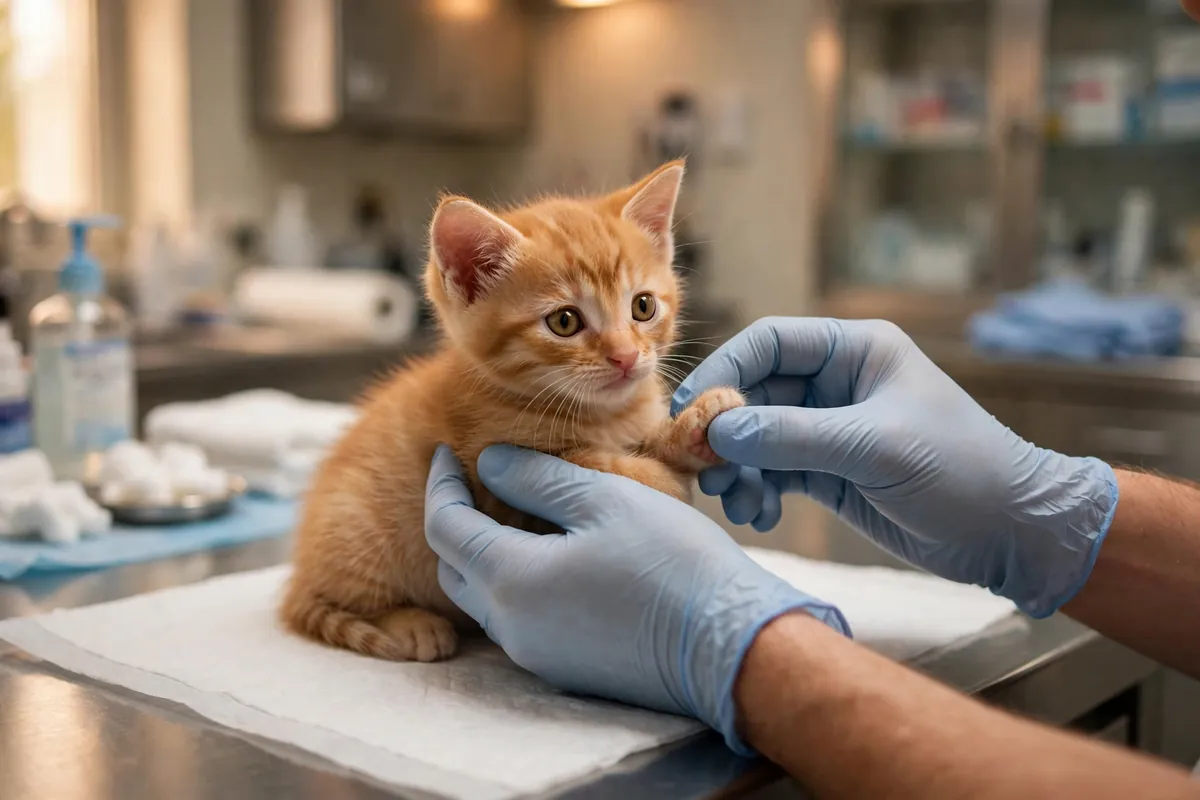
Your kitten's first vet visit is a straightforward wellness check: the veterinarian performs a nose-to-tail physical exam, starts the core vaccine series, screens for worms and parasites, and talks you through feeding, litter, and spay or neuter timing. Plan it for the first week after your kitten comes home — usually around 8 weeks of age — and expect 20 to 30 minutes at the clinic. This guide explains exactly what the vet will do, what the visit typically costs, what to bring, and how to keep the experience calm for everyone.
When to Schedule the First Visit
Book the appointment for within the first week of bringing your kitten home, even if the kitten seems perfectly healthy — 8 weeks is the typical age for this first checkup. Bring shelter or breeder paperwork so the vet knows which vaccines or deworming are already done. If your kitten's history is unknown, or you notice sneezing, runny eyes, diarrhea, or poor appetite, do not wait for a "convenient" week — call sooner. Kittens are small and can go downhill fast, so early is always better than late.
What the Physical Exam Covers
The exam is gentle and thorough — the vet is building a health baseline for your kitten's life. Expect checks of:
- Weight and body condition — the reference point for tracking growth at every future visit.
- Eyes, ears, and mouth — looking for discharge, redness, ear mites, and age-appropriate teeth and gums.
- Skin and coat — parting the fur to check for fleas, flea dirt, dry skin, or bald patches.
- Heart and lungs — listening for murmurs or abnormal breathing sounds.
- Abdomen, legs, and paws — gentle palpation of the organs, plus joint flexibility and claw condition.
- Temperature — usually taken with a pet thermometer; quick and routine, though kittens rarely enjoy it.
The vet will also ask about appetite, litter box habits, and energy. No observation is too small — mention everything you have noticed.
Vaccines: What Your Kitten Needs
Vaccines are the main event of the first visit. Here is the standard picture in the United States:
- FVRCP (the core combination vaccine). One shot protecting against three serious diseases: feline viral rhinotracheitis, calicivirus, and panleukopenia (feline distemper). Kittens get boosters roughly every 3 to 4 weeks from about 8 to 16 weeks, closing the gap as maternal antibodies fade.
- Rabies. Usually a single shot at 12 to 16 weeks. Required by law in most places, even for indoor cats.
- FeLV (feline leukemia virus). Recommended for most kittens, and especially important if your cat will ever go outdoors or live with other cats. Your vet will advise based on lifestyle and risk.
Your vet will hand you a written schedule with the next visit dates — stick to it, because an incomplete series leaves real gaps in protection.
Deworming and Parasite Checks
Intestinal worms are extremely common in kittens — many are born with roundworms passed from the mother, even in clean, well-cared-for litters. At the first visit the vet will typically run a fecal test (bring a fresh stool sample — a tablespoon in a sealed bag is plenty), start or continue deworming (kittens usually get several rounds spaced weeks apart, since one round rarely catches every life stage), and check for external parasites like fleas and ear mites, recommending a kitten-safe preventive. This is standard kitten care, not a sign your kitten came from a bad place — treated early, worms are a minor, easily solved problem.
Microchipping: Worth Doing?
Yes, in most cases. A microchip is a tiny device — about the size of a grain of rice — implanted under the skin between the shoulder blades with a quick injection, much like a vaccine. It carries a unique ID linked to your contact details in a registry, so if your kitten ever slips out and lands at a shelter or clinic, a scan reunites you. Collars fall off; a microchip cannot. Many vets offer it at the first visit — your only ongoing job is keeping the registration details current.
The Spay/Neuter Conversation
The first visit is also when spaying or neutering comes up. Most vets recommend it at around 4 to 6 months, before the first heat cycle in females — though timing varies, so follow your vet's advice. It prevents unwanted litters, lowers the risk of certain cancers, and curbs spraying, roaming, and yowling. Your vet will usually schedule it at this visit or a follow-up. Shelter kittens may already be done — check your paperwork.
How Much Does a Kitten's First Vet Visit Cost?
Costs vary widely by region and clinic, but a routine first visit in the US typically totals between $75 and $200 — covering the exam (often $40–$75), the first vaccines ($20–$40 each), and frequently a fecal test or deworming. Microchipping adds a one-time fee if done. Ask for an estimate when you book; clinics quote these routinely. Low-cost vaccine clinics can cover the booster series, and enrolling a young, healthy kitten in pet insurance means the lowest premiums with no pre-existing conditions. For more ways to prepare, see our new kitten checklist, and browse the Care Guides section or the homepage for the full library.
Your Pre-Visit Checklist
A little preparation makes the appointment smoother for everyone:
- A secure carrier. Hard-sided is sturdiest. Line it with a familiar-smelling blanket from home.
- Adoption or breeder paperwork. Any vaccine records, deworming history, or health certificates.
- A fresh stool sample. Collected within the last 12–24 hours, sealed in a bag.
- Current food details. Brand and type, so the vet can confirm it suits a growing kitten.
- A question list. Write it down — everyone blanks in the exam room. Good starters: vaccine schedule, deworming plan, spay/neuter timing, microchipping, food portions, litter box setup.
- Treats. For rewarding brave behavior before, during, and after.
7 Tips for a Calm First Visit
- Make the carrier familiar days ahead. Leave it open with treats and a blanket inside — a familiar-smelling carrier is a den, not a trap.
- Try a calming pheromone spray. Sprayed in the carrier 15–30 minutes before travel, it takes the edge off for many cats.
- Cover the carrier. A light towel draped over it blocks scary stimuli — barking dogs, sliding doors, bright lights.
- Keep the carrier on your lap, not the floor. In the waiting room, elevate it — the floor is where the big dogs sniff.
- Let the vet lead. Experienced vets have a whole repertoire of kitten-calming techniques; follow their cues.
- Reward constantly. Treats and gentle praise throughout build a positive association with the clinic from day one.
- Stay calm yourself. Kittens read your tension instantly — slow breathing and a relaxed voice genuinely help. (Some clinics also welcome brief treat-only "happy visits" between appointments; worth asking.)
After the Visit: What's Normal
Most kittens bounce back within a day. It is normal to be sleepy, slightly sore at the injection site, or a bit off food for 24 to 48 hours after vaccines, and you may feel a small, painless lump where the shot was given — it usually fades within a couple of weeks. Let them rest somewhere quiet with water and food nearby. Call your vet for facial swelling, repeated vomiting, difficulty breathing, or lethargy beyond two days — possible signs of a vaccine reaction. Otherwise, file that vaccine schedule somewhere findable, and enjoy the ride home with a healthy, officially checked-out kitten.
Frequently Asked Questions
When should my kitten have their first vet visit?
Within the first week after bringing your kitten home, usually around 8 weeks of age. If the kitten's history is unknown or they seem unwell, go sooner rather than later.
Which vaccines does a kitten need?
The core vaccines are the FVRCP combination (feline viral rhinotracheitis, calicivirus, panleukopenia), given in a series starting around 8 weeks, plus rabies at 12 to 16 weeks. The FeLV vaccine is recommended based on your kitten's lifestyle and risk.
How much does a kitten's first vet visit cost?
A routine first visit typically totals somewhere between $75 and $200, covering the exam, first vaccines, and often a fecal test or deworming. Costs vary widely by region and clinic, so ask for an estimate when you book.
Should I bring anything to the appointment?
Yes. Bring any adoption or breeder paperwork and prior vaccine records, a fresh stool sample in a sealed bag, the name of your kitten's current food, and a list of questions. Bring the kitten in a secure carrier with a familiar blanket.
Is it normal for my kitten to be sleepy after vaccines?
Yes. Mild sleepiness, a slightly sore spot, or a small lump where the injection was given is normal for 24 to 48 hours. Call your vet if you notice facial swelling, repeated vomiting, or lethargy lasting beyond two days.