How to Litter Train a Kitten in 7 Days
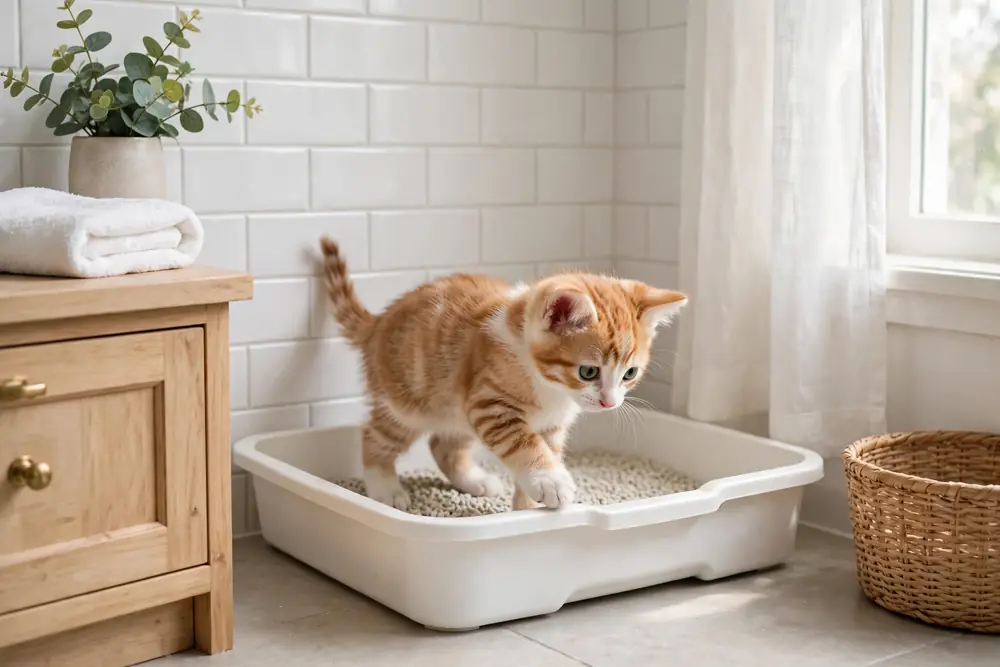
Here's the good news most new kitten parents don't expect: kittens are practically born knowing how to use a litter box — mother cats teach them, and the digging instinct is hardwired. Your job isn't really "training" so much as setting up the right conditions and reinforcing the habit. Follow this 7-day plan and most kittens are reliably box-trained within the week.
When litter training "fails," it's almost never the kitten's fault — it's the setup: wrong box, wrong litter, wrong location, or a dirty box. Fix the setup and the kitten does the rest. Let's walk through it day by day.
Before Day 1: The Setup
Get this right and you're 90% done:
- Box: large, low-sided (kittens are tiny — high walls are a barrier), uncovered. One box per cat plus one extra.
- Litter: unscented, fine-grained clumping litter. Start with whatever the kitten already knows, then transition if you want. Avoid scented litter — the perfume that smells "fresh" to you is overwhelming to a kitten nose.
- Location: quiet, accessible, away from food and water. A laundry room corner or bathroom works. Avoid next to loud appliances — a kitten mid-business startled by a dryer may never return to that box.
- Depth: about 2 inches. Too deep feels unstable under tiny paws.
The 7-Day Plan
- Day 1 — Introduction. After bringing the kitten home, gently place them in the box so they feel the litter under their paws. Let them sniff and step out on their own. After meals, naps, and play sessions, place them in the box again — these are the prime "need to go" moments. Praise calmly for any interest.
- Day 2 — Routine building. Keep taking them to the box after every meal, nap, and play bout. Kittens have tiny bladders and go often — frequent, calm trips build the habit fast. If they start sniffing the floor and circling, that's the signal: box, now.
- Day 3 — Let them lead. By now most kittens head to the box themselves at least sometimes. Keep supervising loosely and keep reinforcing the post-meal routine. Clean any accidents with enzyme cleaner (never ammonia-based — it smells like urine to cats).
- Day 4 — Expand slightly. If the kitten is using the box reliably in their safe room, open up one more room. Keep the box where it is — don't move it yet. Add the second box if you haven't.
- Day 5 — Watch for preferences. Notice patterns: does the kitten prefer one box? Hesitate at the litter texture? Most kittens are unfussy, but if you see avoidance, try a different litter in one box as a test.
- Day 6 — Normal life. Let the kitten roam supervised. Keep the routine (box after meals/naps/play) but you can stop carrying them — just watch. Accidents at this stage are usually about access: a box too far away for a tiny bladder.
- Day 7 — Graduate. Most kittens are reliable by now. Keep scooping daily, keep boxes accessible, and you're done. If accidents persist past two weeks, see the troubleshooting section below.
The Golden Rules of Litter Boxes
- Scoop daily, deep-clean regularly. A dirty box is the #1 cause of avoidance. Cats would rather go on your rug than in a filthy box — honestly, fair.
- Never punish accidents. Rubbing a kitten's nose in it or scolding teaches fear, not training — and fearful cats hide their accidents instead of stopping them.
- Don't move the box around. Once the kitten knows the location, keep it stable. If you must move it, shift it a few feet per day.
- Keep food and litter apart. Cats don't eat next to the toilet — separate rooms ideally, separate corners at minimum.
- Uncovered beats covered for kittens — covered boxes trap odors and feel like ambush spots to a small cat.
Troubleshooting: If It's Not Working
- Going next to the box, not in it? Try a lower-sided box, different litter texture, or a bigger box. Some kittens dislike the feel of certain litters.
- Going in one specific wrong spot? Clean with enzyme cleaner, then temporarily place a box on that spot — then inch it toward the desired location over days.
- Sudden regression after success? Rule out medical causes first — urinary tract issues make cats associate the box with pain. A vet check is the right move for any sudden litter box change.
- Multiple cats, one box? Add boxes. The one-per-cat-plus-one rule exists because some cats refuse to share.
- Kitten under 4 weeks old? Very young orphans can't eliminate alone and need gentle stimulation with a warm damp cloth — that's beyond litter training and needs a vet or experienced fosterer's guidance.
Litter Box Placement: Rules That Prevent Problems
Location mistakes cause more litter box failures than anything except dirty boxes. The rules:
- Quiet but not isolated. A box in a scary basement corner won't get used; a box in the middle of the living room won't either. Aim for low-traffic but accessible — a bathroom, laundry room, or spare room corner.
- Multiple floors, multiple boxes. In a two-story home, a kitten won't trek downstairs in time. One box per floor minimum.
- Away from food and water — separate areas, ideally separate rooms.
- Escape routes. Never place a box in a dead-end corner where another pet can trap the kitten. Cats need to feel they can exit freely.
- Night access. If bedroom doors close at night, make sure a box is on the kitten's side of the closed door.
When you eventually move the box to its permanent home, do it gradually — a few feet per day. And if you're switching litter types later, mix the old and new 50/50 for a week rather than swapping outright. Kittens accept change fine when it's gradual; they protest when it's sudden.
Frequently Asked Questions
At what age can kittens start litter training?
Most kittens are ready around 3–4 weeks, learning by watching mom. By 8 weeks (typical adoption age), the vast majority already understand the concept — your job is just providing the right setup.
What litter is best for kittens?
Unscented, fine-grained litter is the safest default. Avoid clumping litter for very young kittens under 4 weeks (they may ingest it); for weaned kittens 8+ weeks, normal unscented clumping litter is fine.
Why is my kitten sleeping in the litter box?
Usually it means the box feels like the safest enclosed spot in a new place — a sign the kitten needs more cozy hiding spots, not a litter problem. Add a covered bed or box with blankets nearby.
Should the litter box be near the kitten's food?
No — keep them well separated. Cats instinctively avoid eliminating near food, and a box next to the food bowl can put them off both.
My kitten uses the box but doesn't bury — is that normal?
Yes, some kittens never quite master burying. It's harmless. You can gently demonstrate by moving litter with your finger, but don't stress — many cats skip it forever with no issues.