Why Does My Cat Knead? 5 Sweet Reasons
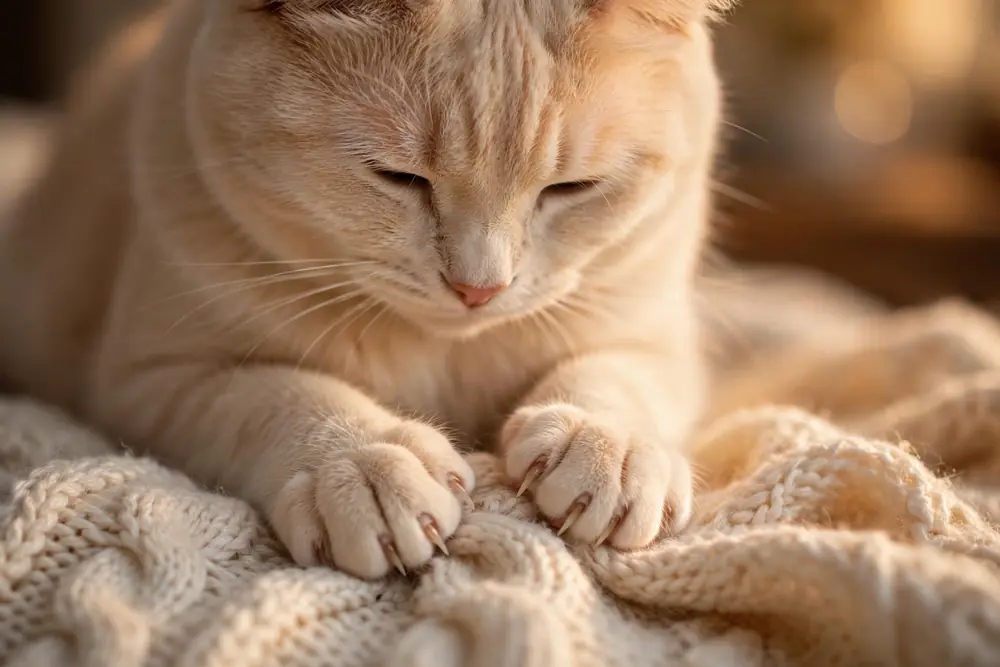
That rhythmic push-push of paws against your lap, a blanket, or a pillow — sometimes with claws, sometimes with blissful drooling — is called kneading, and it's one of the most endearing things cats do. The short answer to why cats knead: it's a leftover kitten behavior tied to nursing, comfort, and contentment — and adult cats do it when they feel safe, happy, or are settling in for a nap. Here are the 5 sweet reasons behind it, plus what to do about the claws and when kneading can signal something else.
Nearly all cats knead at some point, though some are enthusiastic "bakers" and others barely bother. The behavior usually starts in the first weeks of life and, for many cats, never fully goes away — which tells you something lovely about how your cat sees you.
5 Sweet Reasons Cats Knead
- It's a kittenhood leftover. Newborn kittens knead their mother's belly to stimulate milk flow while nursing. The motion gets wired to feelings of warmth, fullness, and safety — so adult cats knead when those same feelings return. Your lap, basically, feels like mom.
- They're marking you as theirs. Cats have scent glands in their paw pads. When your cat kneads you, they're depositing their scent — a quiet, affectionate way of saying "you're mine." It's a compliment, even when the claws come out.
- They're getting comfortable. Wild ancestors kneaded grass and leaves to flatten a sleeping spot. Domestic cats still do the ritual: knead, circle, flop. If your cat kneads the bed before lying down, you're watching ancient nesting software run.
- They're deeply content. Kneading paired with purring, half-closed eyes, and maybe a little drool is the feline equivalent of a blissful sigh. Cats rarely knead when stressed — it's overwhelmingly a happy behavior.
- It can be self-soothing. Some cats knead more during changes — a new home, a new schedule — the way a person might hug a pillow. The familiar rhythm is calming. A temporary uptick in kneading during stressful times is normal.
Why Do Cats Knead With Claws Out?
Because they can — kneading is a full-paw motion, and claws naturally extend with it. It isn't aggression; your cat genuinely doesn't realize it hurts. Kittens kneading their mother would get corrected with a gentle nip or a shift away, so you can do the feline equivalent:
- Keep a thick blanket on your lap as a designated kneading zone — many cats happily redirect to it.
- Keep claws trimmed. Regular nail trims (every 2–3 weeks) take the ouch out of kneading without punishing the behavior.
- Don't push them off suddenly. A startled cat may scratch by accident. Gently slide a blanket under the paws instead.
- Never punish kneading. Scolding a cat for showing contentment just teaches them you're unpredictable — the kneading won't stop, the trust might.
Kneading, Purring, and Drooling: The Full Combo
Some cats go all-in: kneading + loud purring + drooling, sometimes while suckling a blanket. This "smurgle" combo is just an amplified version of kitten nursing behavior — the cat is essentially reliving peak kitten bliss. It's most common in cats weaned early, but plenty of normally-weaned cats do it too.
It's harmless. Put a washable blanket down, let them enjoy it, and consider it one of the highest compliments a cat can pay you: in that moment, you are the safest thing in their world.
When Kneading Might Mean Something Else
Kneading is almost always positive, but context matters. Pay attention if:
- A cat that never kneaded suddenly starts constantly — paired with other behavior changes, it can occasionally reflect anxiety or even pain seeking comfort. Look at the whole picture.
- Kneading becomes frantic or obsessive — nonstop kneading to the exclusion of normal activities deserves a vet conversation.
- A female cat kneads while restless, vocal, and affectionate — unspayed females in heat knead more; spaying resolves it along with the yowling.
For the vast majority of cats, though, kneading is simply joy in motion — no intervention needed beyond a lap blanket and trimmed claws.
What Else Do Cats Knead? Blankets, Air, and Other Cats
Kneading isn't reserved for your lap. Watch closely and you'll catch variations:
- Blankets and soft bedding — the classic. The soft texture mimics the nursing context best, which is why fleece and knit blankets are kneading magnets.
- Other cats (or dogs). Cats in bonded pairs sometimes knead each other, usually around the neck and shoulders during mutual grooming. It's social bonding — the feline equivalent of a hug.
- The air. "Air kneading" — paws pumping at nothing while lying on their side — looks odd but is just a deeply relaxed cat running the comfort program with no target. Completely normal.
- You, specifically, when you're upset. Many owners report increased kneading when they're sad or stressed. Whether cats sense it or just respond to stillness (a stationary human is an inviting lap), the comfort goes both ways — studies on human-animal interaction consistently show petting a purring cat lowers human stress markers.
Some cats also have preferred kneading materials and will reject substitutes — one cat's beloved ratty blanket is another's ignored pillow. If your cat has a favorite, protect it: wash it gently (unscented detergent — strong fragrances can put them off) and accept that it will never look nice again. It's not a blanket anymore; it's a security object.
The Science Bit: Why Kitten Habits Stick
Why would an adult behavior trace back to the first weeks of life? Because nursing is the most neurologically powerful experience a kitten has — warmth, food, safety, and maternal contact all firing together, repeatedly, during the brain's most plastic phase. Behaviors wired in that window become lifelong comfort tools.
This is also why kneading often intensifies during relaxation rituals: settling into a warm lap at the same time each evening recreates the conditions, and the old program runs. It's not regression — it's a feature. The kitten learned what safety feels like, and the adult cat still knows how to find it.
Frequently Asked Questions
Why does my cat knead me and not the couch?
Because you're the favorite. Kneading deposits scent from paw glands and is directed at whatever (or whoever) the cat feels safest and most bonded with. Being the chosen kneading surface is a genuine compliment.
Should I stop my cat from kneading with claws?
Don't punish it — redirect it. Keep a thick blanket handy as the kneading spot and trim nails regularly. The behavior itself is a sign of contentment worth preserving.
Why does my cat drool while kneading?
Drooling during kneading is part of the nursing-memory package — kittens drool a little while nursing. As long as the drooling only happens during happy kneading (not at other times), it's normal.
Do all cats knead?
Most do, but not all — and frequency varies hugely. Some cats knead daily, others rarely. Both are normal. A cat that never kneads isn't unhappy; it just expresses contentment differently.
My older cat just started kneading — is that okay?
Usually yes — cats can pick up or increase kneading at any age, often when they feel especially secure. Only be concerned if it's paired with other sudden behavior changes, in which case a vet check is wise.