Why Does My Cat Sit on My Chest and Purr?
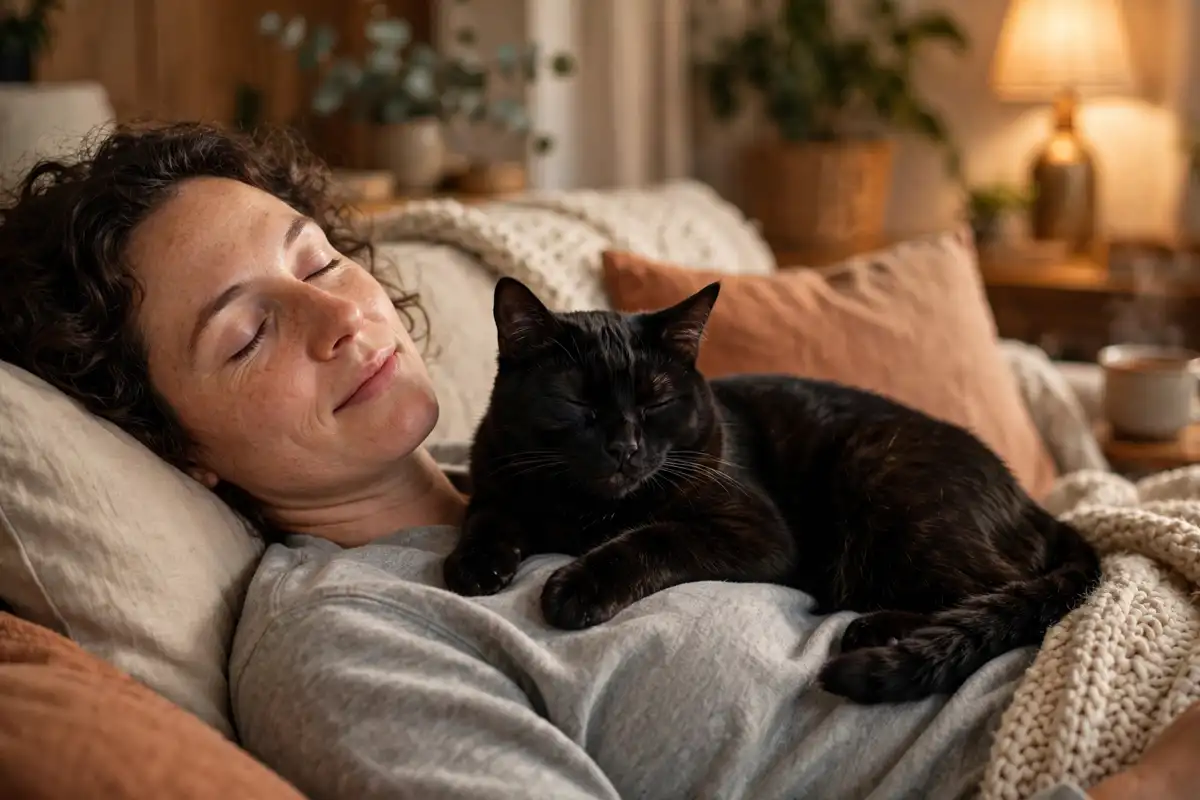
You lie down on the couch and, within seconds, your cat settles directly onto your chest like it is the one spot in the house made for them — then starts a deep purr you can feel through your ribs. Why your chest, of all places? Because it is warm, it moves gently with your breathing, it carries your scent, and sitting on it makes your cat feel safe and close to you. Purring is usually a sign of contentment and bonding, though cats also purr to soothe themselves. Here are the seven reasons behind this classic cat behavior, what the purring really means, and when sudden clinginess deserves a second look.
The 7 Reasons Your Cat Chooses Your Chest
- Warmth. A resting cat's body temperature sits around 101–102.5°F, and cats love basking in heat — sunny windowsills, warm laundry, the top of the TV. When you lie down, your chest becomes a large, evenly heated surface: often simply the warmest spot in the room.
- Your heartbeat and breathing. Kittens are raised against their mother's chest, feeling her heartbeat and the rise and fall of her breathing. Your chest recreates that steady rhythm and gentle vibration, echoing the safest experience of their kittenhood.
- Your scent. Cats navigate the world by smell, and your chest — near your skin, breath, and worn clothes — carries your scent strongly. Pressing against it surrounds your cat with a familiar, trusted smell, the same reason cats sleep on pillows and laundry.
- Trust and safety. Chest-sitting leaves a cat fully exposed and unable to sprint away quickly. Cats only park themselves on people they genuinely trust — if yours chooses your chest, you are their safe place.
- Attention and bonding. Your chest is impossible to ignore. A cat that wants petting or company quickly learns that sitting on your sternum gets an immediate reaction — and the purring keeps your attention even longer.
- Routine and habit. Cats are creatures of habit. If lying on your chest earned warmth and petting once or twice, they will return at the same time each day. Chest-sitting often becomes a ritual both of you can set a clock by.
- Kneading practice. Many chest-sitters knead their paws against your ribs as they settle — a leftover nursing behavior adult cats repeat when they feel especially content.
Why Does My Cat Purr on My Chest?
Purring is one of the most misunderstood sounds in the animal world, because cats use it for more than one purpose. When a cat is sprawled on your chest, kneading softly and purring loud enough to feel, the meaning is almost always positive:
Purring as contentment
The most common meaning is simple happiness. A cat that is warm, safe, and near a trusted human often purrs as an expression of pleasure — the feline equivalent of a satisfied sigh.
Purring as bonding
Mother cats purr while nursing and kittens purr back — one of the earliest forms of communication a cat learns, essentially "I am here, I am calm, we are okay." Your adult cat purring on your chest is extending that kittenhood language to you. You have been promoted to family.
Purring as self-soothing
Cats also purr when anxious, in pain, or at the vet — the vibration is thought to calm the cat itself. Context is everything: a purring cat that eats, plays, and behaves normally is a happy cat; a purring cat that hides or stops eating should see a vet.
Purring as a request
Cats have a special "solicitation purr" — a purr mixed with a higher-pitched cry — used to prompt humans to feed or attend to them. If the chest-sitting purr spikes in pitch around dinner time, you are being gently reminded of your duties.
Reading Your Chest-Sitter's Body Language
The purr is the headline, but the rest of your cat's body tells the full story:
- Slow blinking from your chest is the famous "cat kiss" — a sign of trust. Blink back slowly; many cats return the gesture.
- Kneading means deep contentment. It can hurt through a thin T-shirt, so keep a thick blanket nearby or gently redirect the paws to a cushion.
- Head bunting against your chin marks you with scent glands on the forehead and cheeks. You are being claimed — consider it an honor.
- Drooling during intense purring is normal for some cats and usually means a blissful, kitten-like state. If drooling is new, heavy, or paired with mouth pawing or appetite loss, have your vet check for dental issues.
- Tail thrashing while you pet can signal overstimulation — a cue to pause before you get a warning nip.
My Cat Only Sits on My Chest — Is That Normal?
Perfectly normal. Cats develop strong location preferences, and "your chest, every evening" is a very common one. What matters is the pattern, not the spot. Preferences can shift with the seasons, too: many cats become dedicated chest-sitters in autumn and winter and drift back to the windowsill in summer — another vote for the warmth theory. And if your cat picks one favorite human and ignores everyone else, do not take it personally: cats simply bond differently with different people, often choosing whoever feeds and plays with them most.
When Sudden Clinginess Deserves Attention
A sudden change in chest-sitting habits is worth noticing. A cat that was never cuddly and suddenly will not leave your chest may be telling you something — cats sometimes seek extra closeness when they feel unwell, anxious, or in pain. Watch for these companions:
- Loss of appetite or sudden weight change
- Hiding between cuddle sessions, or unusual lethargy
- Vomiting, diarrhea, or changes in litter box habits
- Crying out, flinching when touched, or a hunched posture
If any of those appear alongside the behavior change, call your veterinarian. And remember: colder weather, a new pet, a move, or a change in your schedule can all make a healthy cat clingier — consider what else changed before you worry.
How to Make Chest Cuddle Time Great
- Let them settle. Give your cat a moment to circle and knead before you start petting. Cats allowed to choose their own position stay longer and purr louder.
- Pet the sweet spots. Most cats love slow strokes along the cheeks, chin, and behind the ears. Many dislike prolonged belly rubs — watch your cat's response and adjust.
- Keep a blanket handy. Kneading claws through a T-shirt are no joke. A folded throw protects your skin and gives your cat an even cozier nest.
- Move them gently. When you need to get up, ease them onto the warm cushion beside you with a hand under chest and hindquarters. Sudden shoves teach a cat your chest is unpredictable.
- Set boundaries kindly. If chest-sitting bothers your allergies or sleep, redirect consistently to a heated bed or a blanket with your scent nearby. Cats learn routines, not lectures.
Bottom line: a cat on your chest, purring like a tiny motorboat, is one of the clearest compliments in the animal kingdom. Enjoy it — you have been chosen. For more everyday feline mysteries, browse our Purrfect Paws home page.
Frequently Asked Questions
Why does my cat sit on my chest when I'm sleeping?
A sleeping owner is the perfect cat bed: still, warm, and breathing in a slow rhythm your cat can feel, with your scent at its strongest. Like kittens piling together, many cats stay close to a sleeping human for comfort and safety.
Does it mean my cat loves me if they sit on my chest and purr?
In practical terms, yes. Cats only settle on people they trust, and your chest is a vulnerable spot to park. Purring here usually signals contentment and bonding — though cats also purr to soothe themselves, so read the rest of their body language too.
Why does my cat purr so loudly when lying on me?
Purring gets louder when a cat is deeply relaxed, and lying on a trusted human is peak relaxation. Some cats also purr louder as a solicitation sound to prompt attention. A loud purr on a happy, kneading cat is almost always a compliment.
My cat suddenly started sitting on my chest all the time — should I worry?
Often it is harmless — cold weather, a schedule change, or household stress can all make a cat clingier. But if it comes with appetite loss, hiding, lethargy, vomiting, or litter box changes, call your veterinarian. Cats sometimes seek comfort when unwell.
How do I get my cat off my chest without upsetting them?
Slide them gently: one hand under the chest, one under the hindquarters, then ease them onto the cushion beside you. Offer a warm alternative like a heated pad or a blanket with your scent, and avoid shoving or startling them awake.