Why Does My Cat Bite Me Gently? Love Bites Explained
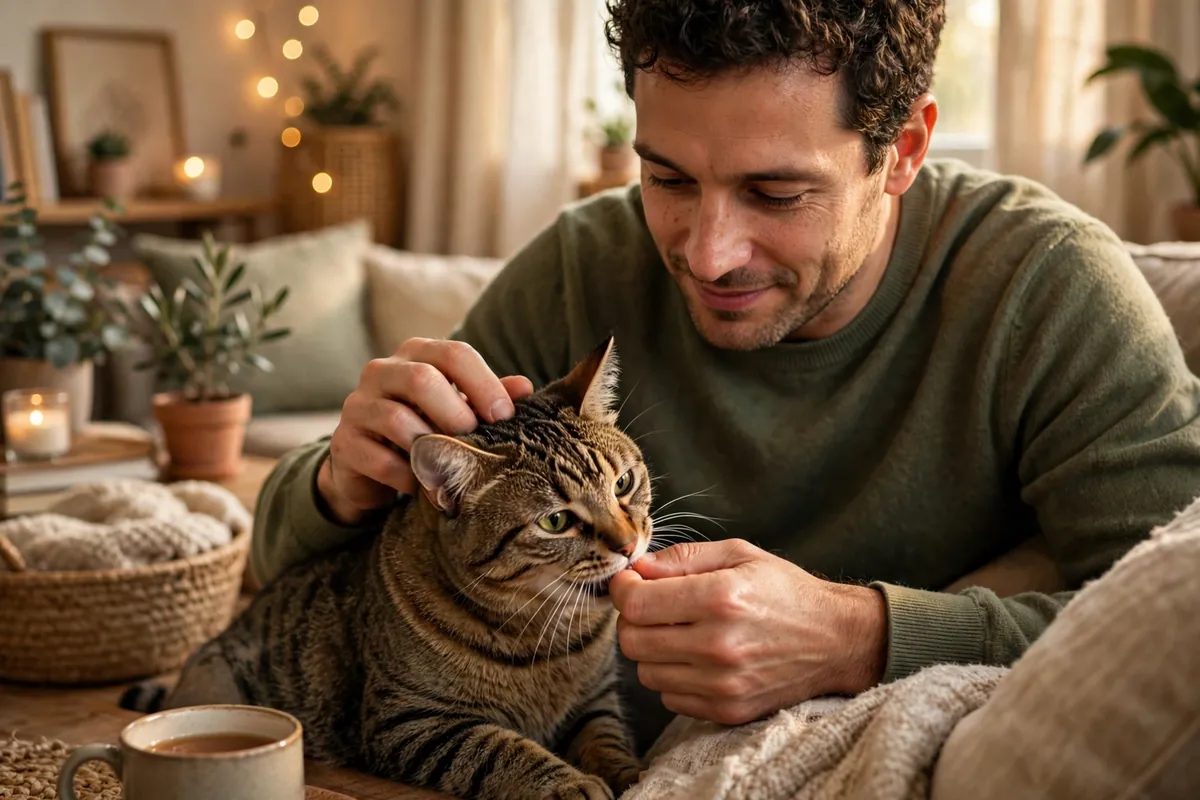
A gentle bite from your cat is almost always a sign of affection or communication, not aggression. These soft nibbles — often called "love bites" — are how cats express contentment, mark you with their scent, or politely signal that they have had enough petting. The key is context: a relaxed, purring cat that softly mouths your hand is giving you a compliment, while a tense cat with a lashing tail that suddenly bites harder is asking you to stop. This guide explains the difference between love bites, overstimulation bites, and play aggression — plus exactly how to respond so your cat keeps trusting your hands.
Nearly every cat owner has felt it: you are stroking your cat, everything is peaceful, and then — teeth. Not hard enough to hurt, just enough to make you pause. It feels contradictory, but in feline body language, the mouth is a multi-purpose tool used for grooming, bonding, hunting practice, and boundary-setting. Once you learn to read which kind of bite you are getting, those little nibbles stop being confusing and start being genuinely endearing.
What Are Cat Love Bites? The Affectionate Nibble Explained
Love bites are soft, controlled mouthing — your cat wraps its teeth around your hand, finger, or wrist with barely any pressure, and usually lets go on its own. Kittens first learn this from their mothers: a mother cat grooms her kittens with her tongue and teeth, nibbling gently at their fur, and adult cats carry that association into their bond with you. When your cat love-bites you, it is essentially grooming you the way it would a trusted companion.
There is also a scent component. Cats have scent glands around their mouths, and mouthing you deposits their scent — a feline way of saying "you're mine." Love bites most often happen during calm, happy moments: while you are petting them, when they are kneading on your lap, or when they rub against you and purr. If you want to understand more of these affectionate quirks, our cat behavior guides cover the full vocabulary of feline body language.
True love bites are easy to spot: relaxed body, upright ears, often purring — and the bite never breaks skin. If that matches, take it as the compliment it is.
Love Bites vs. Overstimulation vs. Play Aggression: Know the Difference
Not every gentle bite is a love bite. Cats deliver three very different kinds of "soft" bites, and telling them apart changes how you should react:
- Love bites: Soft pressure, relaxed body, often paired with purring, kneading, or slow blinks. Happens during affection. No warning signs beforehand — it simply flows out of contentment.
- Overstimulation bites (petting-induced): Start gentle during a petting session, then the bite gets firmer and the cat may grab your hand with its paws. Unlike love bites, these come with escalating warning signs first — the cat's skin starts rippling, the tail tip begins to flick, and the purring may stop. The message is "I loved the petting, but I've had enough now."
- Play aggression: Common in kittens and young cats. These bites happen during play — ambushing your feet, wrestling your hand — and feel more energetic and less controlled. The cat's pupils are often huge, the body is wiggly, and it may bunny-kick with its back legs. It is not affection and not anger; it is hunting practice aimed at the wrong target.
The takeaway: love bites need no correction, overstimulation bites mean ending the petting session, and play aggression means redirecting onto toys.
Body Language Warning Signs: Read Your Cat Before the Bite
Cats almost always warn you before a bite turns serious — the signals are just subtle if you don't know what to look for. Watch for this escalation ladder during petting:
- Tail tip flicking or thumping — the earliest and most reliable sign that patience is running out.
- Skin rippling along the back — the muscles twitch as arousal builds; many owners miss this one.
- Ears rotating sideways or flattening — relaxed ears point forward; sideways "airplane ears" mean irritation is rising.
- The cat turns its head toward your hand — it is visually tracking the source of the stimulation, deciding whether to tolerate it.
- Purring stops abruptly — a sudden silence mid-petting is a louder signal than it seems.
- Whiskers pin back and pupils dilate — the cat is shifting from relaxed to aroused.
- Body tenses or the cat shifts away slightly — the final warning before teeth.
Most "bites out of nowhere" were actually well-telegraphed — spot the early signs and you can stop petting before teeth ever appear.
How to Respond When Your Cat Bites Gently (Without Punishing)
Your reaction in the moment teaches your cat what biting accomplishes. Here's the right playbook:
- Freeze — don't yank your hand away. Pulling back fast triggers a cat's prey instinct and can turn a soft mouthing into a harder grab. Go still, and most cats simply let go.
- Disengage calmly. Once the cat releases, quietly withdraw your hand and pause the interaction. No scolding, no drama.
- Never punish. Spray bottles, shouting, tapping the nose, or scruffing don't teach a cat to bite softer — they teach the cat to fear your hands, which makes future bites harder and more defensive. Punishment damages trust; it never builds manners.
- Redirect play aggression onto toys. If the biting happens during play, the rule is simple: hands are never toys. Keep a wand toy or kicker toy nearby and redirect every single time teeth touch skin.
- Keep petting sessions short for sensitive cats. Some cats have a three-minute petting limit and that's fine. Pet for a little while, pause, and let the cat ask for more by headbutting or rubbing against you.
- Pet where cats like it most. Chin, cheeks, and the base of the ears are usually safe zones. The belly and the base of the tail are overstimulation hotspots for most cats — admire the fluffy belly with your eyes, not your hands.
For more everyday guidance on living happily with feline quirks, browse the rest of Purrfect Paws — from feeding to litter training, every guide is written for real-life cat ownership.
When Gentle Biting Signals Pain: Signs It's Time to See the Vet
Occasionally, biting is not about affection or boundaries at all — it's about pain. A cat that has always tolerated petting but suddenly starts biting when touched may be hurting. Pay attention if the biting:
- Started suddenly in a cat that never bit before — a behavior change is always worth investigating.
- Happens when you touch a specific spot — flinching or biting when you stroke the back, hips, or belly can point to arthritis, skin pain, or abdominal discomfort.
- Comes with other changes — reduced appetite, hiding, sleeping more than usual, limping, or changes in litter box habits alongside new biting behavior.
- Is paired with over-grooming — licking one area raw can signal pain or irritation underneath.
If biting is new, escalating, or paired with any of the signs above, schedule a veterinary checkup rather than treating it as a training issue. A cat in pain isn't misbehaving — it's asking for help the only way it can.
Frequently Asked Questions
Are love bites a sign my cat loves me?
In the right context, yes. Soft mouthing during relaxed, purring moments is widely understood as an affiliative behavior — cats groom and gently nibble the companions they trust. As long as the body is relaxed and the pressure stays light, take it as a compliment.
Why does my cat bite me gently and then lick me?
That's the classic groom-nibble-groom cycle. Mother cats alternate between licking and gentle nibbling when grooming kittens, and adult cats repeat the pattern with their favorite humans. The lick-then-nibble sequence is one of the clearest signs of feline affection.
Why does my cat bite me when I rub its belly?
The belly is a cat's most vulnerable area, and most cats only tolerate brief belly touches — if at all. What looks like an invitation (rolling over, exposing the tummy) is usually a sign of trust, not a request for rubs. Stick to the chin and cheeks, where almost all cats enjoy attention.
How do I stop my kitten from biting my hands during play?
Never use your hands as toys — wiggling fingers teach kittens that hands are prey. Redirect every bite onto a wand toy or kicker toy, and briefly end play when teeth touch skin. Kittens also bite less as they mature and learn bite inhibition from consistent, calm responses.
When should I worry about my cat's biting?
See a vet if biting is sudden or escalating, if it breaks skin regularly, or if it comes with appetite loss, hiding, limping, or litter changes. Also: any bite that breaks skin should be washed thoroughly with soap and water, and see a doctor if redness, swelling, or pain spreads — cat bites can introduce bacteria deep into tissue.