Cat Grimace Scale: How to Tell If Your Cat Is in Pain
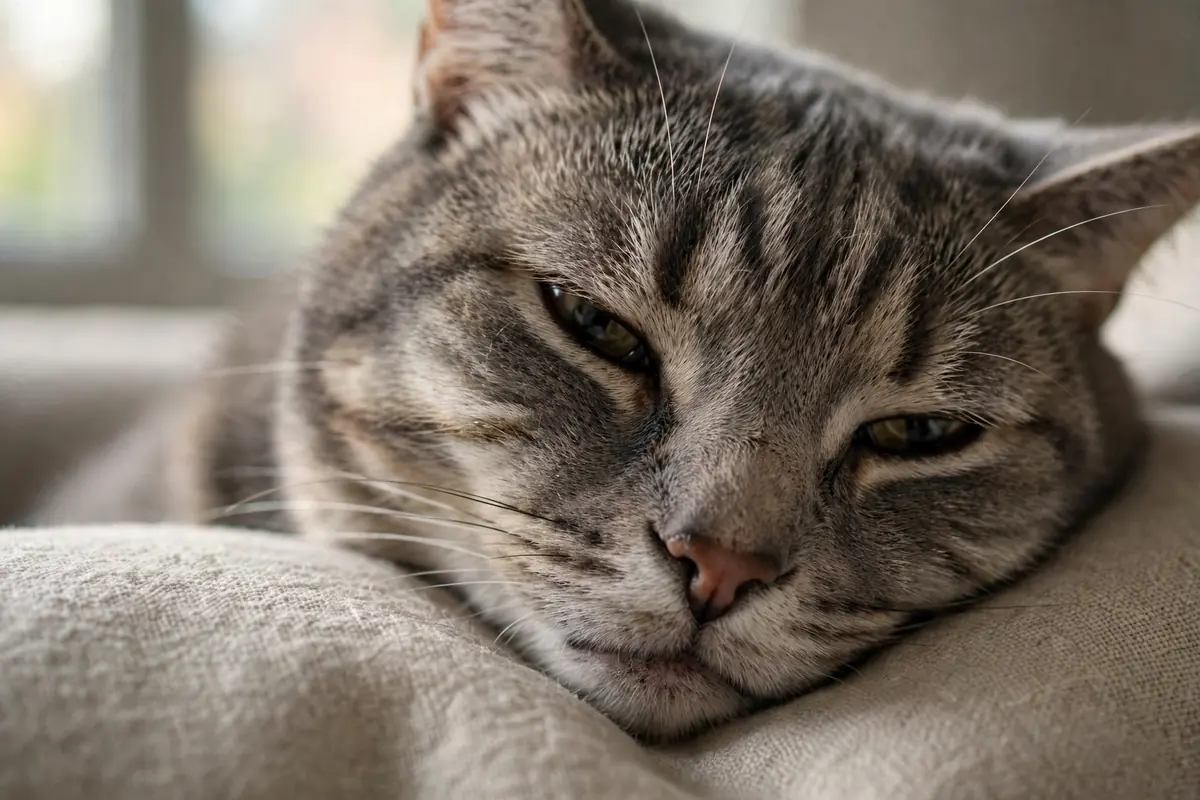
Cats are masters at hiding pain — an instinct from their wild ancestors. The good news: your cat's face quietly tells the truth. Researchers developed the Feline Grimace Scale, a validated tool that scores pain from five facial features, so owners can spot suffering their cat would rather conceal. This guide teaches you the five facial action units, the simple 0/1/2 scoring, and a practical at-home checklist.
Why does this matter? Because cats in pain often behave almost normally — they may still eat and even purr (purring can be self-soothing during pain). By the time a cat is visibly limping or crying, the pain is usually advanced. Learning to read the face gives you a head start, and early treatment is simpler and more successful.
What Is the Feline Grimace Scale?
The Feline Grimace Scale (FGS) was developed by researchers at the Université de Montréal and validated in a 2019 study published in Scientific Reports. It was created to help veterinarians assess acute pain — after surgery, dental work, or injury — but studies show it works reliably even in the hands of owners with no veterinary training.
The principle is simple: pain changes how facial muscles behave. Researchers photographed cats before and after painful procedures, identified the facial changes that consistently appeared, and built a scoring system around them. A few boundaries: the scale was designed for acute pain rather than long-term chronic pain like arthritis, where signs can be subtler. It is a screening tool, not a diagnosis — a high score means "see a vet," not "this cat has condition X." And it works best on a calm, undisturbed cat.
The 5 Facial Action Units Explained
The scale scores five facial features, called action units. Look at your cat's face straight-on (a photo helps enormously) and assess each one:
- Ear position. Comfortable ears sit upright, facing forward. In pain, ears rotate outward and flatten slightly — tipped outward like a collapsing tent, not fully pinned back as in fear.
- Orbital tightening. A narrowed eye opening — a squint or half-mast look versus the usual round, open eyes. One of the most reliable indicators, but judge it against your cat's normal.
- Muzzle tension. The nose-and-mouth area looks flattened or "pinched" instead of smooth and rounded, sometimes with the nose pointing slightly downward.
- Whisker position. Relaxed whiskers fan out in a loose spray. In pain they pull back flat against the cheeks or bunch forward in a tight bundle.
- Head position. The head drops below the shoulder line, the chin tucks, or the cat presses its head against a surface — often paired with a hunched body.
No single unit proves pain — a cat squinting in sunlight will narrow its eyes. The power is in the combination: several units changing together is what flags real discomfort.
How the 0 / 1 / 2 Scoring Works
Each action unit gets a simple score: 0 (looks normal for this cat), 1 (mildly or uncertainly present), or 2 (obvious). Add the five scores for a total out of 10. In the original research, 4 or higher out of 10 was the threshold suggesting the cat is likely in pain and needs veterinary attention.
If you can't see a feature clearly, mark it "not possible to score" and score only what you can see — don't guess. When torn between 0 and 1, choose 0; between 1 and 2, choose 1. Being conservative avoids false alarms while still catching real pain, because genuine pain usually pushes multiple units to unmistakable 2s. Try it now on a calm, happy cat and note the total — that's your baseline, and it's what makes future changes meaningful.
Your At-Home Pain Checklist
Use this routine whenever something seems off — after a fall, a scrap with another cat, dental work, or a vague feeling your cat "isn't right":
- Set the scene. Wait until your cat is awake, calm, and undisturbed — not after play or meals. Stress distorts the face.
- Take a straight-on photo or short video. Faces are easier to assess in a still image, and you can compare with baseline photos or show them to your vet.
- Score the five units. Ears, eyes, muzzle, whiskers, head — 0, 1, or 2 each. Write the total down.
- Check the body too. Note appetite, litter box habits, grooming (less grooming, or over-grooming one sore spot), mobility (hesitating before jumps), and behavior (hiding, irritability when touched).
- Repeat after 30–60 minutes. One snapshot can mislead. If the score stays at 4+ or behavior changes persist, involve your vet.
- Log it. Date, time, score, photo, context ("jumped off the counter awkwardly at noon"). This turns "she's been off" into information your vet can act on.
Learn more general warning signs on our cat health hub.
What to Do If You Think Your Cat Is in Pain
First, the critical rule: never give your cat human painkillers. Ibuprofen and acetaminophen (Tylenol/paracetamol) are toxic to cats — even small doses can be fatal. There are no safe over-the-counter pain medicines for cats; relief must come from a veterinarian.
- Call your vet and describe what you see: the grimace score, the photos, the behavior changes. "Her grimace score is 6 out of 10 and she's hiding" gets faster, better care than "she seems sad."
- Keep the cat comfortable and confined — a quiet room, soft bedding, food and water nearby, minimal handling.
- Don't wait it out if the score is high or symptoms persist beyond a few hours. Untreated pain slows healing and suppresses appetite.
- Re-score after treatment. The scale works in reverse too: a dropping score confirms treatment is helping; if it doesn't drop, your vet needs to know.
Pain is one of the most under-treated problems in cats simply because they hide it so well. The grimace scale closes that gap. Learn your cat's normal face, trust the score, and let your vet handle the rest. See Purrfect Paws for more health guidance.
Limitations: What the Scale Can't Do
- Chronic pain is harder to read. Cats with long-term arthritis may show subtler facial changes than a cat in fresh post-surgical pain. A low score doesn't guarantee a pain-free cat.
- Breed differences exist. Flat-faced breeds like Persians start from a different "normal," so the scale needs a personal baseline for each cat — same for kittens.
- It doesn't say what's wrong. Dental disease, urinary blockage, and injury can all produce similar faces. Diagnosis is the vet's job.
- Context can fool you. Squinting into sunlight or ears flattened by a loud noise can mimic pain units. Assess a calm cat and look for the pattern across multiple units.
Used with these caveats, the Feline Grimace Scale is one of the best tools in modern cat welfare — a free, science-backed window into what your cat can't tell you in words.
Frequently Asked Questions
How accurate is the Feline Grimace Scale?
In validation studies, trained and untrained observers scored cats consistently, and scores matched pain levels assessed by veterinarians. It's a reliable screening tool for acute pain — best used alongside observing behavior, appetite, and mobility.
Can I use the grimace scale on kittens or flat-faced breeds?
Yes, with extra care. Kittens' faces are still developing and flat-faced breeds like Persians have a different resting face, so establish a personal baseline for your individual cat first and compare against their own normal.
My cat always squints — does that mean she's in pain?
Not necessarily; some cats naturally have narrow eyes. That's why a baseline matters: if the squint is her normal and nothing else changed, it's just her face. New or worsening squinting combined with other changed units is what raises concern.
Can the grimace scale replace a vet visit?
No — it replaces guesswork, not veterinary care. The scale tells you when pain is likely present so you can seek help sooner and communicate better with your vet. Diagnosis and treatment always require a professional.
What grimace score means I should call the vet?
Research suggests 4 out of 10 or higher indicates likely pain warranting intervention. If your cat scores 4+, shows behavior changes, or the high score persists over an hour, contact your vet.