Why Does My Cat Stare at Me? (It's Not What You Think)
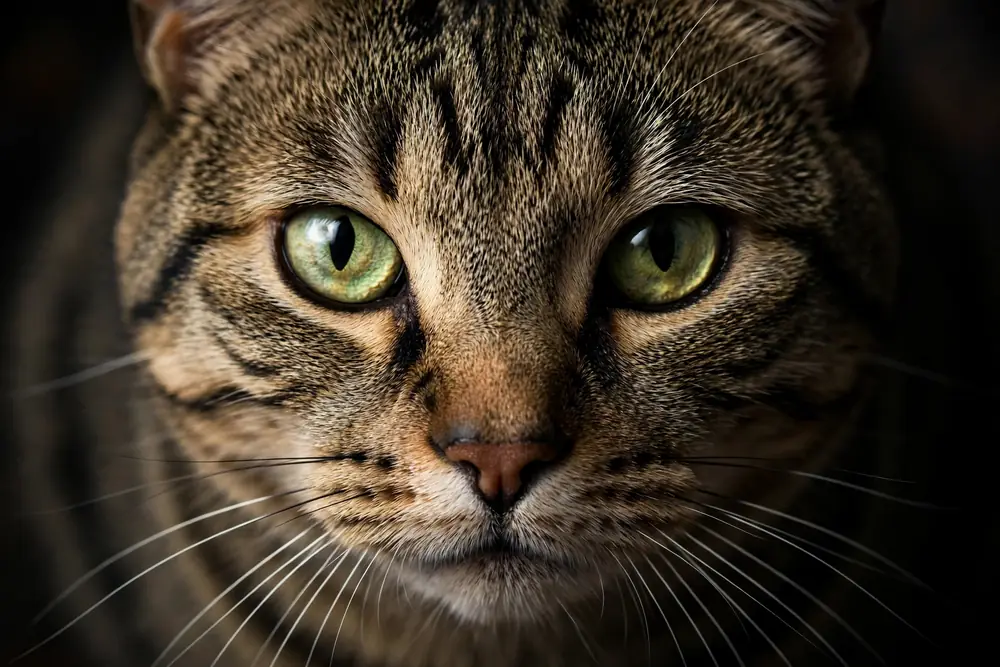
You look up from your laptop and there it is: your cat, sitting perfectly still, eyes locked on you. Unblinking. Slightly unnerving. The reassuring truth: cats stare mostly out of affection, curiosity, or communication — they're watching you because you're the most interesting thing in their world. It's rarely anything sinister. Here's what that intense gaze actually means, how to read it, and the rare cases when staring deserves a closer look.
Humans find prolonged eye contact intense — in our social world, staring can signal confrontation. Cats play by different rules. For them, watching is how they learn, bond, and ask for things. Once you know the vocabulary, the stare becomes a conversation.
The Real Reasons Your Cat Stares
- Affection and bonding. The most common reason, full stop. Cats stare at the people they love the way you might gaze at someone you adore — you're their person, their food source, their warmth, their entertainment. A relaxed body, slow blinks, and maybe a soft purr alongside the stare = love, plain and simple.
- They're trying to tell you something. Cats are excellent observers and terrible mind-readers' assistants — staring is one of their loudest tools. The usual requests: food (stare near the kitchen), play (stare + glance at toys), door service (stare + glance at door), or fresh water. Watch where they look after staring at you — the glance direction is the request.
- Curiosity. You're doing something fascinating — typing, cooking, talking on the phone — and your cat is simply studying you. Cats learn household routines by watching; your cat probably knows your schedule better than you do.
- They're reading your emotions. Cats are surprisingly attuned to human body language and tone. A cat may stare intently when you're upset, ill, or acting differently — they're monitoring their favorite human for changes.
- Hunting instinct. That fixed, predatory stare with dilated pupils and a low crouch? That's the hunter watching movement — your feet under a blanket, a dangling sleeve. It's play-drive, not malice.
- Routine anticipation. Cats are timekeepers. If you feed at 6pm, expect the 5:45pm stare. They're not being demanding; they're just extremely punctual.
How to Read the Stare: Body Language Clues
The eyes never tell the whole story — read the rest of the cat:
- Slow blinks + relaxed body: affection and trust. This is the famous "cat kiss." Slow-blink back — many cats respond in kind.
- Stare + meow or chirp: a request. Follow their gaze to decode it.
- Wide eyes + tense body + tail flicking: overstimulation or irritation — give space, especially during petting.
- Fixed stare + crouch + wiggling rear: play/hunt mode. A toy is about to be "murdered."
- Stare + following you everywhere: could be affection, boredom, or — if new — a health check trigger (see below).
The Slow Blink: Stare Back (the Right Way)
Here's a lovely trick backed by real feline-behavior research: when your cat stares at you softly, slowly close your eyes, hold a beat, and open them. Cats interpret the slow blink as a friendly, non-threatening signal — it's about as close as humans get to speaking cat.
Many cats will slow-blink right back, and some will then approach for affection. It's a small ritual that genuinely deepens the bond. Try it during the next staring session and watch what happens.
When Staring Might Signal a Problem
Staring itself is normal — but changes in staring patterns deserve attention:
- Suddenly clingy staring + behavior changes (hiding, appetite loss, litter box changes, vocalizing): cats sometimes shadow owners when they feel unwell. If the new staring comes with other changes, book a vet check.
- Staring at walls or "nothing" for long periods — especially in senior cats — can occasionally relate to cognitive changes or vision/hearing loss. Worth mentioning at the next checkup.
- Unblinking hard stare with aggression signs (flattened ears, growling): that's a warning, not affection — back off calmly.
Rule of thumb: the stare you've always known is fine. A brand-new, intense, out-of-character pattern paired with other changes is worth investigating.
Why Cats Stare at Other Pets — and Strangers
The stare isn't reserved for you. Here's how to read it aimed elsewhere:
- At another cat: context is everything. Relaxed bodies + staring = social monitoring, totally normal in multi-cat homes. Stiff body, direct hard stare, blocked doorways = territorial tension that may need management (more resources, separate spaces).
- At dogs: usually cautious assessment. A cat staring at a new dog is gathering data — let them observe from a safe high perch rather than forcing introductions.
- At guests: strangers are fascinating and slightly suspicious. The cat is deciding whether this new human is safe, interesting, or ignorable. Tell guests to let the cat approach — the fastest way to win a cat over is to ignore it.
- At babies: cats often stare intently at infants — new sounds, new smells, unpredictable movements. Supervise closely, not because cats are malicious, but because they're curious and babies are fragile.
In all these cases the same body-language rules apply: soft body and slow blinks mean calm interest; tension, piloerection (puffed tail), or growling mean give space. You're fluent in stare-reading now — it works on every target.
Staring in Multi-Cat Homes
With several cats, staring takes on social dimensions worth knowing:
- Relaxed mutual gazing between bonded cats is normal — friends watch friends.
- Staring contests at doorways, food bowls, or litter boxes signal resource tension. The fix is more resources, spread out — not punishment.
- One cat always staring at another can be low-grade bullying. Watch for the stared-at cat changing routes, eating less, or hiding — those are the real signals.
Cats negotiate most conflicts silently through stares and body blocks long before any hissing starts. Learning to read these quiet negotiations lets you intervene early — usually just by adding another litter box or feeding station.
Frequently Asked Questions
Is it bad to stare back at my cat?
A soft gaze with slow blinks is wonderful — it's friendly communication. A hard, unblinking stare-down can feel confrontational to a cat, so keep your return gaze soft and blinky, not intense.
Why does my cat stare at me while I sleep?
You're warm, you breathe rhythmically, and you're finally still enough to study closely. Plus, many cats do their most affectionate check-ins at night. It's creepy-cute, not concerning.
My cat stares at the wall — should I worry?
Occasional wall-staring is usually nothing — they may hear or see something you can't (their senses are far sharper). If it's frequent, prolonged, and new — especially in a senior cat — mention it to your vet.
Why does my cat stare then suddenly attack my feet?
That's the hunting sequence: the stare was target-lock. Feet under blankets look like prey. Redirect with interactive play sessions so the hunter gets a proper outlet.
Do cats understand when we slow-blink at them?
Research suggests they do respond positively — cats are more likely to approach a person who slow-blinks at them. It's one of the few human gestures with evidence behind it in cat communication.