Cat Slow Blink: What It Really Means
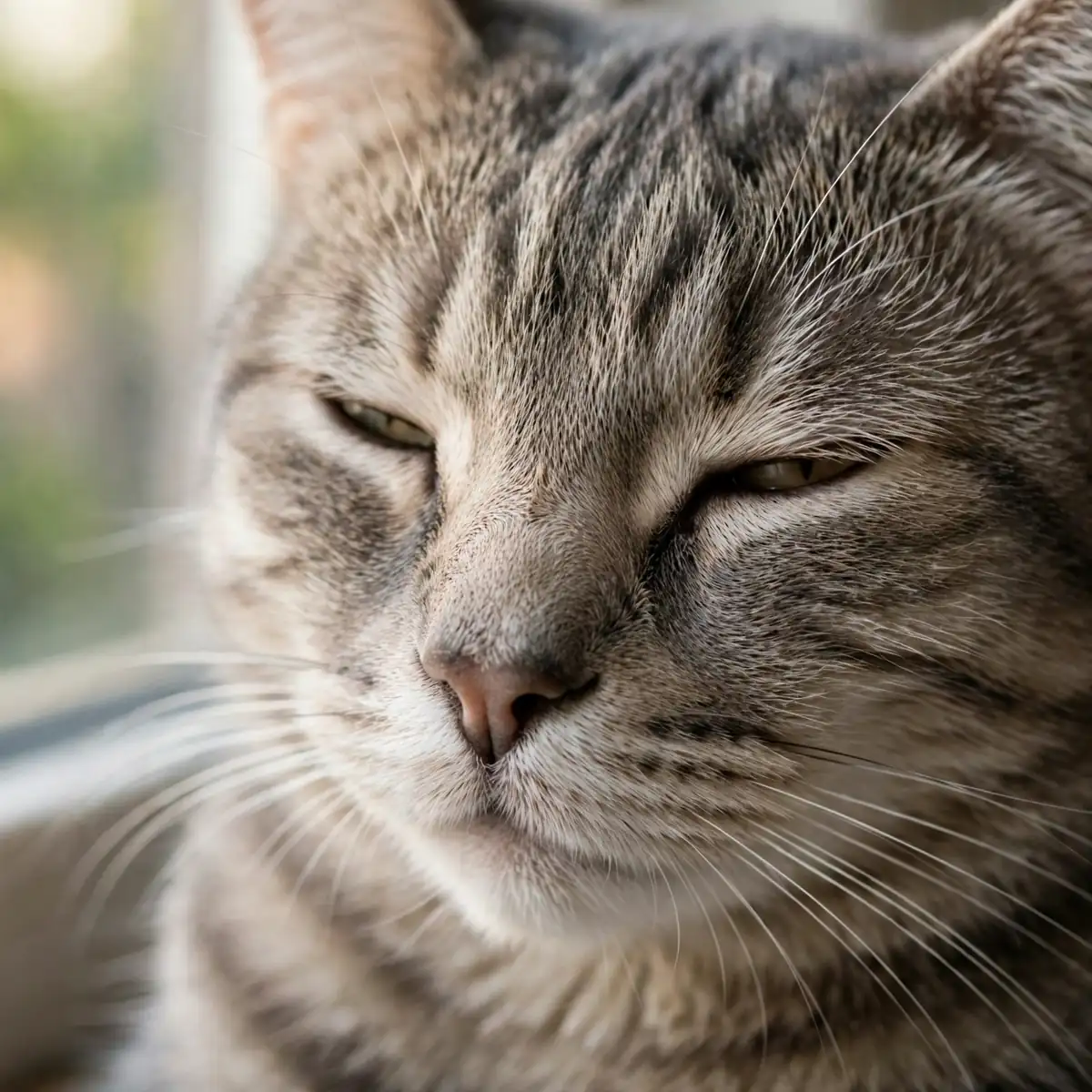
You are sitting quietly with your cat when it looks at you and does something almost dreamlike: its eyes narrow, the lids drift half closed in one slow, deliberate motion, and then open again. Cat owners call this the slow blink — and it means something wonderful. A cat slow blink is a sign of trust, relaxation, and affection. It is the closest thing cats have to a kiss, and researchers have found that cats actually respond to it as a genuine positive signal.
If your cat slow blinks at you, take it as a compliment: your cat feels safe with you. This guide explains exactly what the slow blink means, what science says about it, how to slow blink back at your cat, and how to tell it apart from eyes that are simply tired — or unwell.
What Is a Cat Slow Blink?
A slow blink is not a normal blink. A regular blink is quick, automatic, and barely noticeable — the eyelid snaps shut and reopens in a fraction of a second to moisten the eye. A slow blink is deliberate and languid: the cat's eyelids lower gradually, the eyes narrow to slits or close completely for a beat, and then reopen slowly. The whole gesture often takes a couple of seconds and is usually directed at someone the cat is focused on.
You will usually see it during calm, quiet moments — your cat lounging nearby, sitting on your lap, or watching you from across the room. The body language around it matters: a slow-blinking cat typically has a relaxed posture and neutral ears. It is a soft, unhurried gesture, and that softness is the whole point.
What Does It Mean When a Cat Slow Blinks at You?
To understand the slow blink, think about what eyes mean to a cat. In the animal world, holding eye contact can be a threat — a hard, unblinking stare says "I am watching you, and I might be trouble." Closing the eyes, even partway, is the opposite: it says "I trust you enough to lower my guard." For a small animal whose survival depends on vigilance, voluntarily narrowing its vision in your presence is a meaningful statement.
That is why the slow blink is widely considered the feline equivalent of a kiss or an "I love you." When your cat slow blinks at you, it is communicating comfort and security. It feels no need to stay on high alert around you. The gesture is so closely tied to positive feelings that many behaviorists recommend it as the single best way to say "I like you" in cat language.
Cats slow blink in a few specific contexts. The most common is relaxed companionship — you are nearby, everything is calm, and your cat is simply enjoying the moment. Some cats slow blink when they are being petted in just the right way. And many cats offer it as a greeting when they notice you looking at them with affection.
The Science Behind the Slow Blink
This is not just owner wishful thinking. Animal behavior researchers at the University of Sussex investigated the slow blink in a study of domestic cats and found that the gesture genuinely works as positive communication. When an unfamiliar person slow-blinked at cats, the cats were more likely to approach that person and more likely to slow blink back, compared with a neutral expression.
The researchers also tested the reverse: cats were more willing to approach their owners' outstretched hands after a bout of slow blinking than after a neutral face. In other words, the slow blink does not just reflect a good mood — it actively builds a moment of connection between a cat and a human. It is one of the few cat-human communication signals that has been tested and confirmed rather than merely assumed.
None of this means the slow blink is magic — it works best with cats that are already comfortable. But when your cat slow blinks at you, that warm feeling is grounded in something real: your cat is signaling trust, and you can signal it right back.
How to Slow Blink at Your Cat (Step by Step)
Want to try the "cat kiss" yourself? Here is how to do it:
- Pick a calm moment. Do this when your cat is relaxed — lounging or resting nearby. A wound-up cat mid-zoomies is not in the mood for subtle communication.
- Soften your gaze. Look at your cat with relaxed eyes, not a hard stare. Think of the expression you have when you are half asleep on the couch — that is the energy.
- Close your eyes slowly. Let your lids drift down to half-mast or fully closed. Hold them there for about a second — not a quick blink, a slow one.
- Open them slowly. Reopen your eyes gently, keeping your face relaxed.
- Wait and repeat. Give your cat a moment. Many cats will return the slow blink within a few tries. If nothing happens, try again later. Do not stare or lean in close — let the cat set the pace.
It can feel a little silly the first time, but many owners are surprised by how reliably it works. A returned slow blink is one of the most rewarding small moments in cat ownership — a quiet little conversation in a language with no words. For more ways your cat says "I love you," see our Purrfect Paws behavior guides.
Slow Blink vs. Sleepy Eyes vs. Something Wrong
Not every half-closed eye is a love note, so it helps to know the difference. A genuine slow blink is deliberate and directed — your cat looks at you, performs the slow eyelid movement, and looks relaxed throughout. Sleepy eyes are different: a drowsy cat's lids droop because it is nodding off, often with no particular focus on you, and the whole body is sinking into rest.
Sometimes narrowed or half-closed eyes are a health signal rather than affection. Persistent squinting, pawing at the eyes, discharge, redness, swelling, or a visible third eyelid are not a slow blink — those signs mean a veterinarian should take a look. Context is everything: a slow blink comes with a relaxed cat in a calm moment; eye trouble comes with squinting and rubbing.
Other Cat Eye Signals Worth Knowing
Once you start reading your cat's eyes, you will notice a whole vocabulary there — and our Cat Behavior guides cover even more of these quiet feline signals:
- Soft, relaxed gaze with normal pupils — calm and content, the everyday "all is well."
- Slowly dilating and contracting pupils — interest and engagement, often during play or while watching birds out the window.
- Wide, fully dilated pupils — excitement, fear, or overstimulation. In play, this is normal; paired with flattened ears or a low crouch, it can mean your cat feels threatened.
- A hard, fixed stare — tension or a challenge. Unlike the slow blink, an unblinking stare keeps the eyes wide open. If a strange cat stares at your cat this way, expect posturing, not friendship.
Frequently Asked Questions
What does it mean when a cat slow blinks at you?
A slow blink is a sign of trust, relaxation, and affection — many owners call it a “cat kiss.” Your cat is telling you it feels safe and comfortable in your presence. It is one of the clearest positive signals in feline body language.
How do I get my cat to slow blink back?
Look at your cat with a soft gaze, slowly close your eyes halfway or fully, hold for a second, then open them slowly. Repeat after a pause. Many cats will return the slow blink within a few tries, especially in a calm, quiet moment when they are already relaxed.
Do all cats slow blink?
Nearly all cats are physically capable of it, but individual cats vary. Confident, bonded cats slow blink freely; shy or newly adopted cats may take weeks or months to feel safe enough. A cat that never slow blinks is not necessarily unhappy — it may just express affection differently, through headbutting, kneading, or purring.
Why does my cat stare at me and then slow blink?
A soft stare followed by a slow blink is affection, not a challenge. Your cat is looking at you because it is interested in you, and the slow blink that follows is its way of saying it feels safe. A hard, unblinking stare with tense body language is a different story — context and the rest of the body always matter.
Is a slow blink the same as a cat kiss?
Functionally, yes — that is why behaviorists and owners use the term. Cats do not kiss the way humans do, so the slow blink is their closest equivalent: a deliberate, gentle signal of comfort and trust directed at someone they like.