Why Does My Cat Purr So Loud?
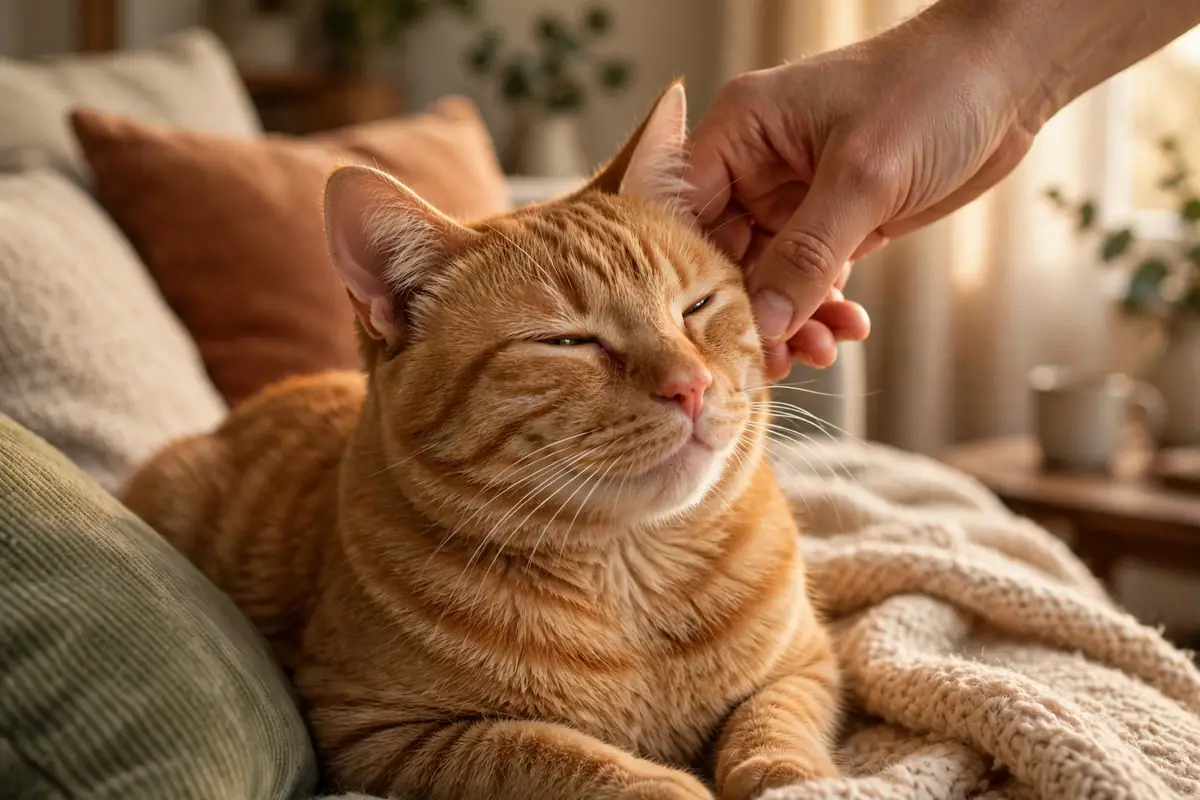
You settle onto the couch, your cat climbs into your lap, and within seconds the room fills with a rumble like a tiny motorboat parked on your legs. Some cats purr at a whisper; others sound like they are idling an engine. If you have one of the loud ones, you have probably wondered: why does my cat purr so loud?
The short answer: a loud purr is almost always completely normal. Purring volume varies enormously, shaped by throat anatomy, body size, personality, and even the bond the cat shares with you. This guide explains how purring works, why some cats are dramatically louder than others, what loud purring means emotionally, and the rare situations when a loud (or suddenly changing) purr means you should call the vet.
How Cats Purr: The Anatomy Behind the Sound
For a long time, scientists did not fully understand how cats produce their famous rumble. The leading explanation involves a neural oscillator — a rhythm generator in the cat's brain. It sends rapid, repeating signals to the muscles around the larynx (the voice box). Those muscles twitch, briefly closing and opening the space between the vocal cords about 25 to 150 times per second.
As the cat breathes in and out, air passes through this rapidly opening and closing gap, and the vocal cords vibrate — that vibration is the purr. Because the oscillator keeps firing during both inhalation and exhalation, cats purr continuously, which is why a purr sounds like a steady engine rather than a choppy pant. Volume comes down to the machinery: stronger laryngeal muscles and a larger resonant chest move more air and make a louder rumble.
Why Some Cats Purr Louder Than Others
Volume comes down to the machinery: stronger laryngeal muscles and a larger resonant chest move more air and make a louder rumble. Individual anatomy shapes it further:
- Body size and chest resonance. Bigger cats have more physical space in the chest and throat to amplify sound. A small, petite cat often produces a softer, higher-pitched purr simply because there is less resonance chamber to work with.
- Individual throat anatomy. Just like humans have different speaking voices, cats have different laryngeal structures. Vocal cord thickness, muscle strength, and trachea shape all influence volume. Some cats are born with a built-in amplifier.
- Breed tendencies. Siamese, Burmese, Ragdolls, and Maine Coons are frequently described as motorboat-level purrers — but plenty of ordinary domestic shorthairs hold the household record.
- Age and development. Kittens start purring within days of birth, but their purrs are tiny and faint. As the body grows and the laryngeal muscles strengthen, the purr gets fuller and louder. A senior cat that purrs loudly has often been doing it for years; it is part of who they are.
- Personality. Some cats are simply more "vocal" — they meow more, chirp more, and purr more dramatically. A bold, social cat often purrs with its whole chest, while a shy cat may keep its purr subtle even when equally content.
- Learned behavior. Cats are observant. If a cat discovers that purring loudly earns extra pets, treats, or a longer lap session, it keeps doing it. Owners who reward the rumble with attention get an ever-louder purr over time.
Loud Purring vs Normal Purring: What Is Typical?
There is no official "normal volume" for a cat's purr. The typical domestic cat's purr sits around the level of a quiet conversation — audible next to the cat, but not filling the room. On either side of that average is a huge range, and all of it counts as normal.
What actually matters is your cat's own baseline. If your cat has purred like a small tractor since adoption day, that is simply their voice. The time to pay attention is when the volume changes. Cats are creatures of habit, and a change in a lifelong pattern — a quiet cat turning loud, or a motorboat going silent — is always worth noting, especially with other behavioral changes.
Why Cats Purr: It Is Not Always Happiness
Most of us assume purring means "I am happy," and most of the time that is true. A cat purring on your lap during an evening petting session is genuinely expressing contentment. But purring is actually a multi-purpose behavior, and understanding the full range helps you read your loud purrer correctly.
Contentment and affection. This is the classic scenario. The cat is comfortable, relaxed, and enjoying contact — with you, with another cat, or just with a warm sunbeam. Loud purring here is pure enthusiasm: your cat is so pleased that it cannot keep the volume down.
Communication. Mother cats purr while nursing, and newborn kittens — who cannot see or hear for the first week — purr back within days. The purr acts as a vibration beacon guiding kittens to their mother. Adult cats extend this: purring greets familiar people and animals, and some cats add a special high-pitched "solicitation purr" when they want food — it sounds remarkably like a baby's cry, and owners find it very hard to ignore.
Self-soothing and stress. Cats also purr when frightened, hurt, or at the vet. The same vibration that signals happiness appears to have a calming effect on the cat itself. A cat purring loudly in the carrier on the way to the clinic is not enjoying the ride; it is trying to calm itself down.
Possible healing properties. Most cat purrs fall roughly in the 25 to 150 hertz range, and vibrations in parts of this range have been studied for associations with bone and tissue health in other contexts. It is an intriguing area of research, but evidence that a cat's purr actively heals injuries is far from settled — treat it as a fascinating hypothesis, not a proven fact.
When Loud Purring Means You Should See a Vet
For the vast majority of loud purrers, there is nothing to worry about. But a purr can also be a comfort mechanism for a cat that is unwell. Here are the signs that the purr may be telling you something else:
- A sudden change in volume or frequency of purring. As noted above, your cat's baseline matters most. A quiet cat that starts purring loudly all the time — or a loud cat that stops — deserves attention.
- Purring combined with hiding or withdrawal. A cat that retreats under the bed or into a closet and purrs loudly when touched may be self-soothing through pain or illness rather than expressing joy.
- Changes in appetite, thirst, or litter box habits. Eating less, drinking much more or less, or avoiding the litter box alongside altered purring are classic general illness signals.
- Breathing changes. A purr that sounds congested or wheezy, or is paired with labored breathing, may indicate a respiratory issue — get to a vet promptly.
- Restlessness, crying, or drooling. If loud purring comes with pacing, vocalizing at night, drooling, or difficulty settling down, the cat may be uncomfortable.
- Lethargy and dullness. A cat that purrs loudly but seems flat, uninterested in play, or reluctant to move is giving mixed signals — and the body language is the more reliable one.
In short: judge the purr by the company it keeps. Loud purr plus normal behavior, appetite, and playfulness? Enjoy the concert. Loud purr plus anything on the list above? Call your veterinarian. For more decoded feline behaviors, browse our Cat Behavior guides or start from the Purrfect Paws homepage.
Frequently Asked Questions
Is it normal for a cat to purr very loudly?
Yes. Purring volume varies widely between individual cats. Some are barely audible while others can be heard across a room, and both are normal as long as your cat's behavior is otherwise unchanged.
Which cat breeds purr the loudest?
Siamese, Ragdoll, Maine Coon, and Burmese cats are often reported as enthusiastic, loud purrers, but any mixed-breed cat can purr loudly too. It comes down to the individual cat's anatomy and personality.
Can a cat purr too loudly?
Volume alone is not a problem. What matters is a change from your cat's own baseline. If a quiet cat suddenly becomes loud, or a loud cat goes silent, paired with other symptoms, that change is worth a veterinary check.
Do cats purr only when they are happy?
No. Cats also purr when they are anxious, in pain, hungry, or frightened. Purring is a multi-purpose behavior used for contentment, self-soothing, communication, and possibly even healing.
How loud can a cat's purr get?
Most domestic cat purrs fall in the 21 to 44 decibel range, similar to a quiet conversation, though the loudest individual cats on record have reached levels comparable to household appliances. Typical cats purr well below that.