Why Does My Cat Headbutt Me? Bunting Explained
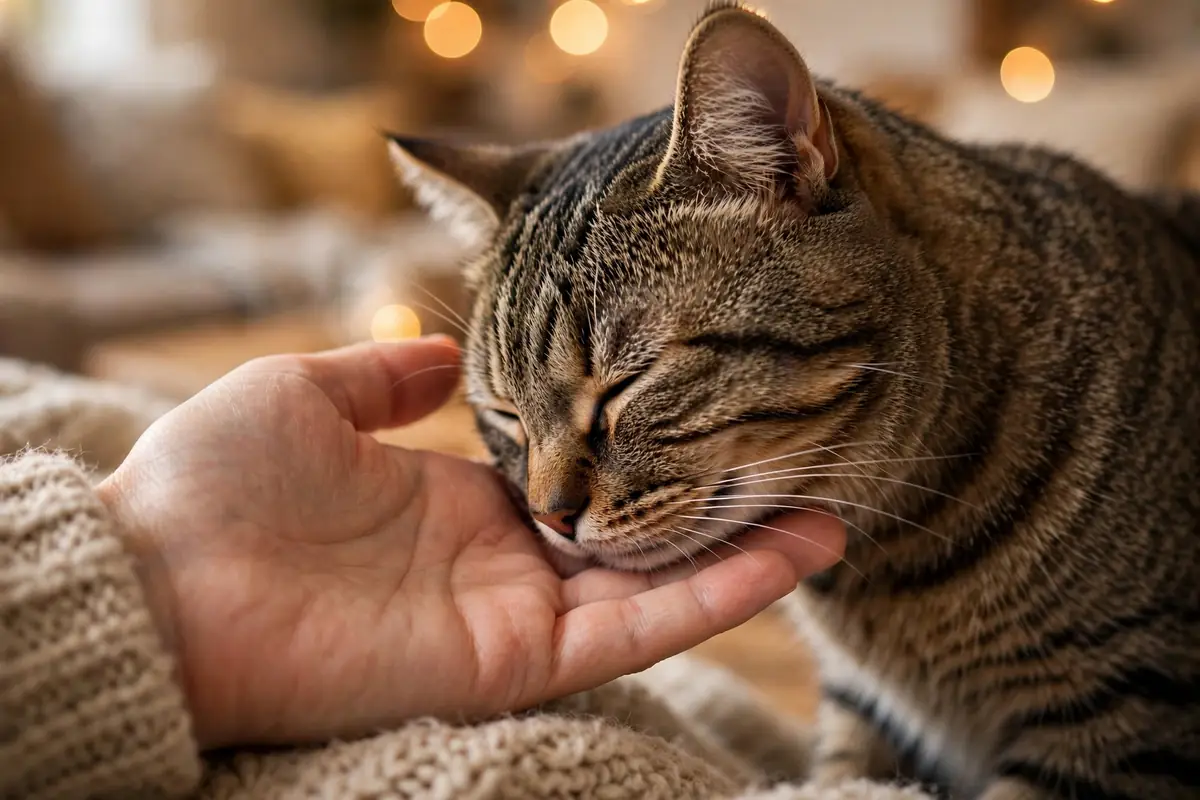
You are sitting quietly when your cat walks over, locks eyes with you, and bonks — a firm, deliberate press of the forehead against your leg, your hand, or, if you are lucky, your chin. It is not an accident, and it is not aggression. That gentle head bump has an official name — bunting — and it is one of the warmest compliments a cat can pay you.
Why does your cat headbutt you? In short: your cat is marking you as "theirs" with scent, greeting you as a trusted member of its social group, and asking for attention — all at once. This guide breaks down the science of bunting: the scent glands in your cat's forehead, what the headbutt means socially, how it differs from aggressive behavior, and the one similar-looking behavior that genuinely warrants a vet visit.
What Is Bunting?
Bunting is the behaviorist's term for a cat pressing or rubbing its head — forehead, cheeks, or chin — against a person, another animal, or an object. The motion is deliberate and usually gentle: the cat approaches, leans in, and applies a soft, sustained pressure before pulling back or rubbing again.
You will most often see it directed at the people the cat trusts most. Many cats have a favorite target — your hand, your shin as you walk past, your cheek if you lean down. Some cats bunt furniture, doorframes, and cabinet corners too, treating their whole territory the same way they treat their favorite human.
Bunting is also a two-way street. In multi-cat households, cats bunt each other — pressing foreheads in a mutual exchange that strengthens their bond. When your cat does it to you, it is offering you the same social gesture it would offer a feline friend.
The Scent Glands Behind the Headbutt
The real purpose of the headbutt is invisible to us: scent. A cat's head is covered with specialized scent glands that produce pheromones — chemical messages other cats can interpret. The key locations include:
- The forehead and the area between the ears. These glands are the ones activated during a classic headbutt, depositing pheromones directly onto whatever — or whoever — the cat presses against.
- The cheeks and chin. When your cat rubs its cheek along your hand or drags its chin across a table edge, it is using a second set of facial glands to lay down the same kind of scent marks.
- The base of the tail. Cats that walk past you with their tail wrapped around your leg are deploying a third scent zone for the same purpose.
These pheromones are undetectable to the human nose, but to a cat they are a rich message board: facial pheromones say "this is safe, this is familiar, this belongs to me." When your cat headbutts you, it is stamping you with its signature scent.
Marking You as "Theirs": The Social Meaning
Cats live in a world organized by scent. Your house cat maps its territory with scent marks — rubbed, sprayed, and scratched into the environment — and you are part of its territory.
When your cat headbutts you, it is adding its scent to yours, blending the two into a shared "colony scent" — how cats recognize members of their social group. By bunting you, your cat is doing the feline equivalent of linking arms in public: this one is with me.
This also explains why some cats headbutt you more after you come home smelling different — after a shower with new soap, or a day around other animals. The cat is refreshing its scent mark, restoring the familiar scent profile that tells it everything is right in its world.
Affection and Bonding: The Headbutt as a Hug
Not every cat behavior is purely functional — bunting is genuinely affectionate. Cats that headbutt tend to be relaxed, trusting, and emotionally bonded to their person. Studies of cat-human interaction have consistently found that cats form real attachment bonds with their owners, and bunting is one of the clearest physical expressions of that attachment.
Watch the body language around the headbutt and you will see the affection plainly: slow blinks, a soft or upright tail with a curved tip, ears neutral or slightly forward, and often a burst of purring. It is the full package — the cat is not just marking you, it is enjoying the contact.
Kittens learn bunting early. Mother cats bunt their kittens, and kittens bunt back, so the behavior is wired into feline social life from the start. An adult cat that headbutts you is treating you the way it treated its mother — with complete, uncomplicated trust.
Communication: Greetings, Attention, and "Pet Me"
Beyond scent and affection, the headbutt is also a practical request. Context matters, and cats use bunting as a versatile little memo:
- Greeting. Many cats headbutt as a hello — when you wake up, when you come home, or when they pad over after a nap.
- Attention-seeking. A headbutt paired with meowing, weaving around your legs, or sitting on your keyboard is a demand for interaction. The cat has decided it is petting time and is not taking no for an answer.
- Permission. Some cats headbutt your hand first, then nudge it toward their head — a clear instruction to start scratching.
- Comfort-seeking. A slightly uneasy cat — a new guest, a loud noise outside — may headbutt you and stay close, drawing reassurance from your familiar scent.
Bunting vs Head Pressing: The Behavior You Should Worry About
There is one critical distinction every cat owner should know. Bunting is not the same as head pressing — and confusing the two could mean missing a medical emergency.
Bunting is social and interactive: the cat approaches a person or object, applies gentle pressure, and moves on. It happens in normal contexts — during petting, greetings, relaxed moments.
Head pressing looks very different: the cat pushes its head firmly and continuously against a wall, floor, or corner — often for minutes — seeming unable or unwilling to stop, sometimes looking dazed or distressed. It can signal serious neurological problems, including head trauma, brain tumors, liver disease, or poisoning.
If you ever see your cat head pressing — not bunting you affectionately, but grinding its head into a wall or floor — contact your veterinarian immediately. Once you have seen both described, you will never confuse them: bunting is a happy cat saying hello; head pressing is a sick cat that needs help.
Should You Headbutt Your Cat Back?
Many cat owners do — gently lowering their forehead toward the cat — and plenty of cats seem to love it. If your cat initiates and stays relaxed, a soft, slow response is perfectly fine.
Follow your cat's lead. Some cats want a full mutual head-press session; others bunt once and walk away, mission accomplished. Never force the interaction by pushing your head toward a tense cat with flattened ears — respect the no the way you would want your yes respected. And if sessions regularly end in a nip, your cat may be telling you it gets overstimulated — enjoy the bunt, keep petting short, and everyone stays happy.
Bunting is one of many ways your cat talks to you without words. Explore more decoded behaviors in our Cat Behavior section, starting from the Purrfect Paws homepage.
Frequently Asked Questions
What does it mean when a cat headbutts you?
Headbutting, or bunting, is a sign of affection and trust. Your cat is marking you with its scent and treating you as part of its social group. It is one of the most positive gestures a cat can make.
Why does my cat headbutt and then bite me?
This is usually overstimulation. The headbutt is affectionate, but continued petting can push some cats past their comfort threshold, and they respond with a gentle warning nip. Learn your cat's limits and stop petting before they reach that point.
Is headbutting different from head pressing?
Yes, very different. Bunting is a social, back-and-forth gesture toward people or objects. Head pressing — pushing the head firmly against a wall or floor for extended periods — can indicate a neurological problem and needs prompt veterinary attention.
Why does my cat headbutt my hand but not other people?
Cats reserve bunting for those they trust most. Your cat has chosen you as its preferred person, which is a genuine compliment. With time and gentle interaction, many cats will start bunting other household members too.
Should I headbutt my cat back?
Many cats enjoy it if you gently lower your forehead toward them or respond with slow blinks. Keep it soft and let your cat lead — never push your head toward a cat that looks tense or unwilling.