Can Cats Eat Apricots?
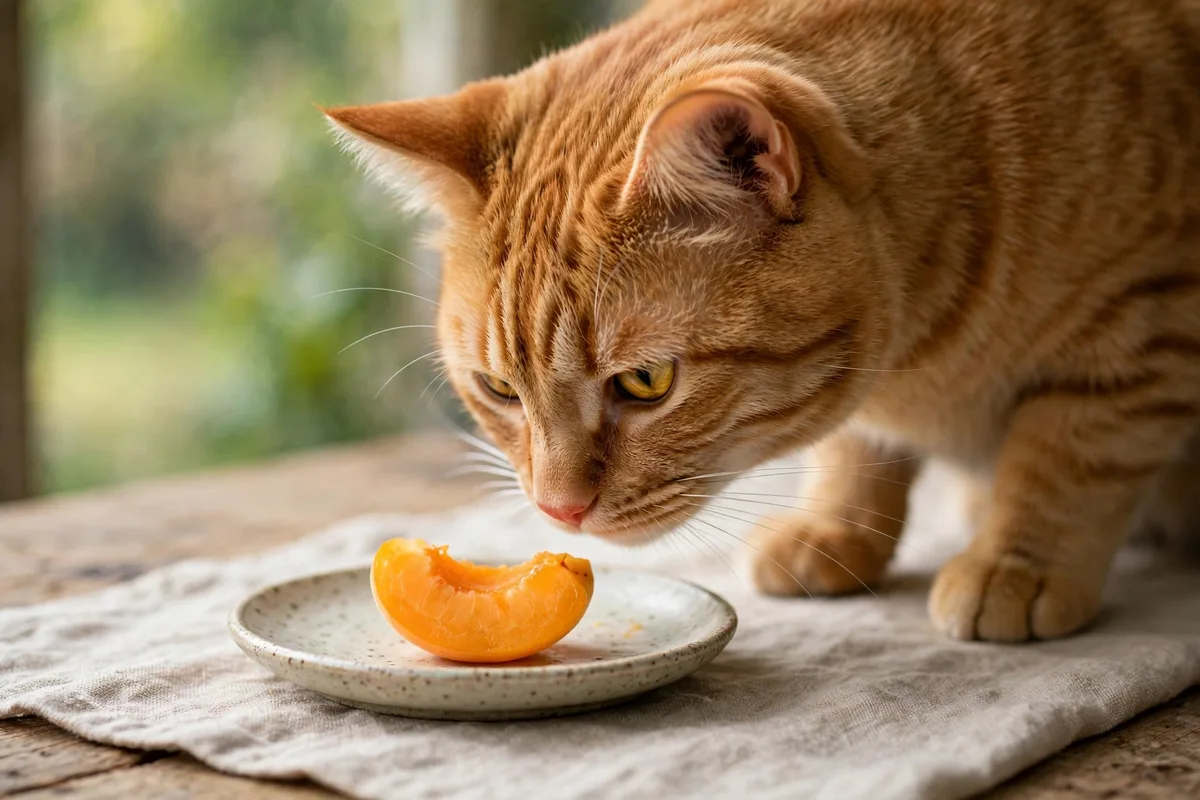
Cats can eat apricots, but only with caution: fully ripe flesh only, pit completely removed, and a very small piece, rarely. Apricot flesh itself is not toxic to cats, and a tiny amount will not harm a healthy adult cat. But apricots carry the classic stone-fruit hazards — a pit that contains cyanide compounds and can block the gut — plus a second trap: dried apricots are very often treated with sulphur and sweetened, which makes them a poor choice even before the concentrated sugar is counted.
That combination is why apricots earn a caution verdict rather than a clean yes. The fresh flesh is fine; the pit and the dried form are not. Cats are obligate carnivores, which means their bodies are built to run on animal protein, and apricots add nothing they need. If you do share one, the rules are strict: ripe only, flesh only, pit out, piece tiny, frequency rare — and dried apricots never.
Is Apricot Safe for Cats?
Ripe apricot flesh is safe for cats in very small amounts. It is soft, mostly water, with some fiber, vitamin A, vitamin C, and potassium, and it contains no compounds known to be toxic to cats once the pit is gone. A small piece of fresh, ripe apricot flesh will not harm a healthy cat — but the sentence only holds with all of its conditions: ripe, flesh only, and a small piece.
The pit is the main hazard. Apricot pits contain amygdalin, a compound that breaks down into cyanide when the pit is crushed or chewed, and a swallowed pit is also a choking and intestinal blockage risk. Apricot pits are smaller than plum or peach pits, which makes them easier for a cat to swallow whole — and that ease is exactly what makes them dangerous. The skin is a lesser concern: it is thin and not toxic, but peeling is still the safer choice, since it removes pesticide residue. Cut the flesh away from the pit entirely and check each piece before serving.
The Pit Danger and the Dried-Apricot Trap
The pit rule for apricots is the same as for every stone fruit: the flesh may be fine, but the pit is never food. A cat that crunches a pit can release cyanide compounds, and a cat that swallows one whole risks a blockage that can need emergency surgery. Because apricot flesh clings to the pit, cut carefully and discard any piece that will not separate cleanly — flesh with pit fragments in it is not worth serving.
Dried apricots deserve their own warning. Most commercial dried apricots are treated with sulphur dioxide to keep their orange color, and many are sweetened as well. Sulphur-treated fruit can irritate a cat's stomach, and the drying process concentrates the sugar into a small, sticky, chewy piece — a choking risk and a sugar overload in one. Even unsulphured, unsweetened dried apricots are too sugary and too chewy for a cat. Apricot jam, apricot nectar, and apricot-flavored desserts are all out for the same reasons. Fresh, ripe flesh is the only acceptable form.
How Much Apricot Can a Cat Eat?
Keep it to one or two pea-sized pieces of ripe flesh, once in a while — no more than once a week or so, and less is fine. Apricots are sugary, and a cat's daily treat allowance is small: treats of all kinds should stay under about 10 percent of daily calories. Half an apricot is already more than a treat portion for a cat, and a larger amount raises the odds of soft stool or vomiting.
Start with a single tiny piece the first time and watch for the next 24 hours: normal appetite, normal litter box habits, no vomiting or diarrhea. If everything looks fine, that tiny piece can become a rare treat. Cats with diabetes should skip apricots unless their vet approves them, and cats with sensitive stomachs are better off skipping apricots entirely — no cat needs an apricot, and gentler treats exist.
How to Serve Apricots to Your Cat
Choose a fresh, fully ripe apricot that yields gently to pressure and wash it well under running water. Peel it if you can — the skin is thin, but peeling removes residue — then cut the flesh away from the pit and check every piece for pit fragments. Dice the flesh into one or two pea-sized pieces, serve plain at room temperature in your cat's regular bowl, and throw away anything uneaten after a short while so it does not spoil.
Do not cook the apricot, sweeten it, or serve it in any processed form. Apricot jam, dried apricots, apricot nectar, and apricot pastries all add sugar, sulphur, or other ingredients that have no place in a cat's diet. Plain, fresh, peeled, pitted, and tiny is the whole recipe — and the pit goes straight into the bin, never onto the floor where a curious cat can find it.
Can Kittens Eat Apricots?
Kittens should stick to kitten food. Their growth demands precise nutrition, and fruit treats only displace that nutrition without adding anything useful. A kitten's stomach is also small and more easily upset by new foods, and a kitten is more likely to gulp a piece whole. Wait until your cat is an adult, around twelve months old, before offering apricot at all, and even then start with a single tiny piece.
What Happens If My Cat Eats an Apricot Pit or Dried Apricot?
A pit is the more serious accident. If your cat chews or swallows a pit, watch closely for vomiting, drooling, difficulty breathing, unusual weakness, lethargy, or straining in the litter box, and call your vet or an emergency animal poison line right away with details of what and how much was eaten. Do not try to induce vomiting at home unless a vet tells you to.
A dried apricot is less dramatic but still worth watching: expect possible soft stool or stomach upset from the concentrated sugar, and watch for any sign of irritation if the dried fruit was sulphured. Offer fresh water, keep the next meals plain and familiar, and call your vet if vomiting or diarrhea lasts more than a day, if there is blood in the stool, or if your cat stops drinking.
Apricots are a caution fruit through and through: the fresh flesh is fine, the pit is dangerous, and the dried form is a poor choice on two counts. Follow every rule — ripe, peeled, pitted, tiny, rare, never dried — and an apricot becomes a harmless novelty. Skip any step and the risk climbs. Most cats will be perfectly happy never tasting an apricot, and that is a fine outcome. Keep the main diet a complete cat food.
Is apricot flesh safe for cats?
Yes, in very small amounts. Ripe apricot flesh is non-toxic to cats once the pit is completely removed.
Are apricot pits poisonous to cats?
Yes. Apricot pits contain cyanide compounds when crushed, and a swallowed pit can also cause choking or an intestinal blockage.
Can cats eat dried apricots?
No. Most dried apricots are sulphur-treated and often sweetened, and drying concentrates the sugar and makes the pieces chewy and hard to swallow safely.
How much apricot can a cat eat?
One or two pea-sized pieces of ripe flesh, rarely — no more than about once a week. Start with a single tiny piece.
Can kittens eat apricots?
No. Kittens should stick to kitten food. Wait until your cat is an adult, around twelve months, before offering apricot.
What if my cat eats an apricot pit?
Call your vet or an animal poison line right away and watch for vomiting, drooling, breathing difficulty, lethargy, or straining.