Can Cats Eat Cherries?
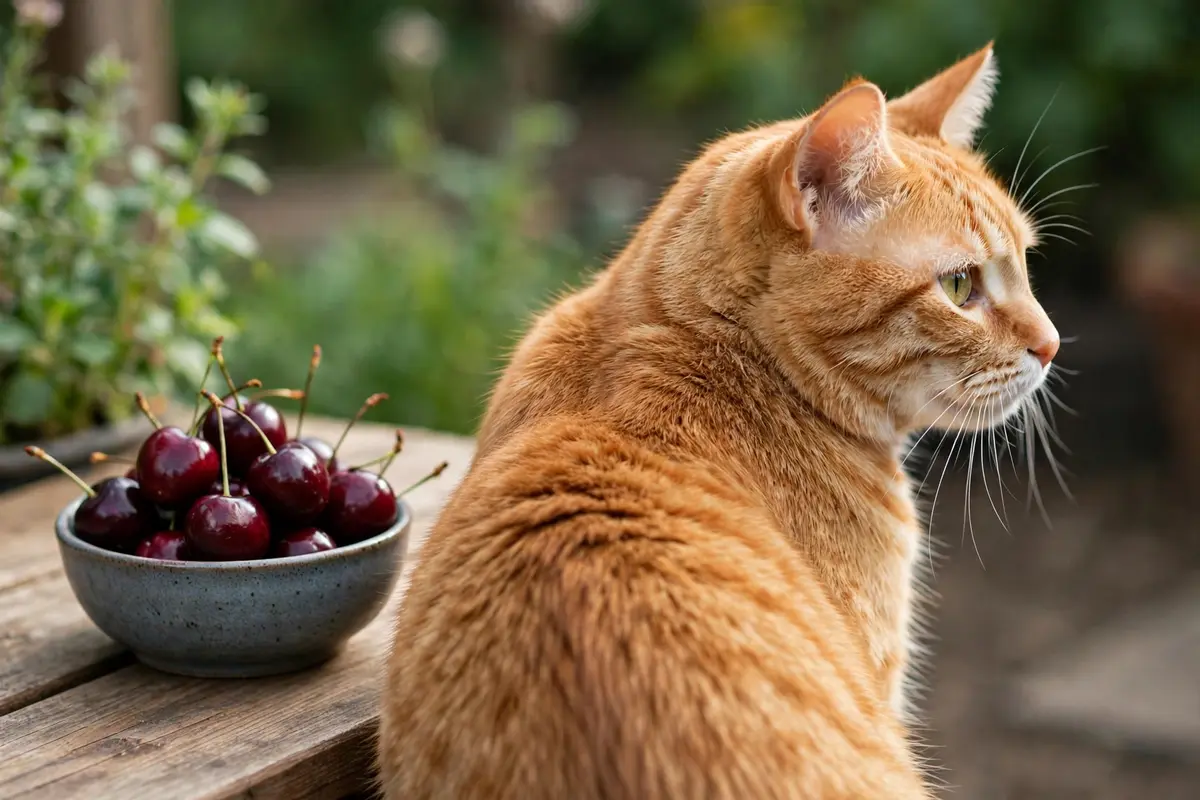
No, cats should not eat cherries. Cherries are unsafe for cats, and the simplest advice is to keep the whole fruit away from them entirely. The danger is not just one part of the cherry: the pits, the stems, and the leaves all contain cyanide compounds, and the flesh itself is not worth the risk of separating it from those parts. A cat that begs for a cherry is better off with a safe treat instead.
This verdict sometimes surprises owners, because cherry flesh looks harmless and tastes sweet. But the risk-to-reward balance is terrible: cherries offer a cat nothing it needs — cats are obligate carnivores, built to run on animal protein, and they cannot even taste sweetness — while the pits and stems carry a genuine poison risk and a choking and blockage risk. When a fruit's safe part is small, fiddly to prepare, and nutritionally pointless, the honest answer is simply no.
Why Are Cherries Unsafe for Cats?
Cherry pits, stems, and leaves contain amygdalin, a compound that breaks down into cyanide when chewed or crushed. Cyanide interferes with the body's ability to use oxygen, and in sufficient amounts it can cause difficulty breathing, weakness, collapse, and worse. Cats are small animals, so a dose that would barely register in a human can matter a great deal to a four-kilogram cat — and there is no safe threshold worth testing at home.
The pit adds a second, mechanical danger. Cherry pits are hard, smooth, and just about the size a cat could swallow whole, and a swallowed pit can choke a cat or block the intestine — a veterinary emergency that sometimes needs surgery. The stems are woody and indigestible, and the leaves are toxic as well. With every part of the fruit except a small amount of flesh carrying risk, and the flesh itself offering nothing a cat needs, cherries belong on the do-not-feed list alongside grapes and onions.
But What About Just the Flesh?
You may read that cherry flesh itself is not toxic, and strictly speaking that is true — the flesh does not contain the cyanide compounds found in the pit, stem, and leaves. But that technical fact does not make cherries safe to serve. Separating flesh from pit in a cherry is fiddly work, and a single missed fragment, a stem left attached, or a pit that a cat crunches before you notice it is all it takes to turn a treat into an emergency.
There is also no reason to take that chance. A cat gains nothing from cherry flesh that it cannot get more safely from its regular food or from a genuinely safe treat like a piece of plain cooked chicken. The flesh is sugary, the preparation is risky, and the margin for error is small. Responsible cat-care sources consistently list cherries as a fruit to avoid, and this site agrees: do not serve cherries to cats, flesh included, because the risk of a preparation mistake outweighs a treat with no nutritional purpose.
Hidden Cherry Exposures to Watch For
The most common cherry accident is not a cat deliberately eating a cherry from a bowl — it is a dropped cherry rolling under furniture, a stem left on a counter, or a cherry baked into food. Cherry pie, cherry jam, cherry-flavored desserts, and maraschino cherries are all worse than fresh cherries, because they add sugar and processing chemicals on top of the original risks, and maraschino cherries are soaked in syrup and preservatives.
Garden exposure matters too. If you have a cherry tree, fallen fruit, leaves, and stems on the ground are all within a roaming cat's reach, and a curious cat may chew leaves or bat pits around. Clean up fallen fruit promptly, and keep cherry stems and pits out of kitchen bins that a cat can nose into. If your cat is an enthusiastic counter-surfer, keep cherries in a closed container in the fridge, not in an open bowl on the table.
Symptoms of Cherry Poisoning in Cats
Cyanide poisoning symptoms can appear within minutes to a few hours of eating pits, stems, or leaves. Watch for drooling, vomiting, difficulty breathing or rapid breathing, bright red gums, dilated pupils, weakness, confusion, or collapse. A swallowed pit that blocks the gut shows up differently: repeated vomiting, straining in the litter box without results, a tender or swollen belly, lethargy, and refusal of food and water.
Do not wait for symptoms to become severe. If you know or suspect your cat has eaten cherry pits, stems, or leaves — even one pit — call your vet or an emergency animal poison line immediately and describe exactly what was eaten and how much. Time matters with cyanide exposure, and a vet can assess whether your cat needs to be seen right away, even if it still looks normal.
Can Kittens Eat Cherries?
Absolutely not. Kittens are smaller, more vulnerable to toxins, and more likely to gulp small objects whole, which makes cherry pits a double danger for them: poisoning risk plus choking and blockage risk. Kittens should stick to kitten food, full stop. There is no age at which cherries become a good idea for a cat — this is a lifelong no, not a wait-until-adult situation.
What to Do If Your Cat Eats a Cherry
Stay calm and act fast. First, remove any remaining cherries, pits, stems, or leaves from your cat's reach so it cannot eat more. Note how many cherries were involved and whether pits or stems were chewed or swallowed — that detail helps your vet enormously. Then call your vet or an emergency animal poison line right away, even if your cat looks fine.
Do not try to induce vomiting at home unless a vet tells you to — that can cause more harm, especially if a pit could get stuck on the way back up. Do not offer milk, food, or home remedies to dilute the poison; they do not help and can delay proper care. If your vet asks you to bring your cat in, bring a sample of what was eaten if you safely can, and watch your cat closely on the way for breathing difficulty or weakness.
Cherries are a clear no for cats. The pits, stems, and leaves carry cyanide, the pit is a choking and blockage risk, and the flesh offers nothing a cat needs. There are plenty of safe treats — plain cooked chicken, a commercial cat treat, a genuinely safe fruit prepared properly — and none of them require gambling on a pit fragment. Keep cherries out of your cat's reach, clean up fallen fruit and stems, and choose a safer treat instead.
Can cats eat cherries?
No. Cherries are unsafe for cats — the pits, stems, and leaves contain cyanide compounds, and the pit is also a choking and blockage risk.
Is cherry flesh itself poisonous?
Cherry flesh does not contain the cyanide compounds, but it is still not recommended: separating flesh from pit is fiddly, one missed fragment is enough to cause harm, and the flesh offers a cat nothing it needs.
What happens if my cat eats a cherry pit?
A chewed pit can release cyanide; a swallowed pit can choke or block the gut. Call your vet or an animal poison line immediately, even if your cat looks fine.
Can cats eat maraschino cherries?
No. Maraschino cherries are soaked in syrup and preservatives and carry all the original cherry risks plus added sugar. Keep them away from cats.
Can kittens eat cherries?
No. Kittens are smaller and more vulnerable to toxins, and more likely to swallow a pit whole. Cherries are a lifelong no for cats.
What are the signs of cherry poisoning in cats?
Drooling, vomiting, difficulty or rapid breathing, bright red gums, dilated pupils, weakness, confusion, or collapse. Seek veterinary help immediately.