Can Cats Eat Grapes?
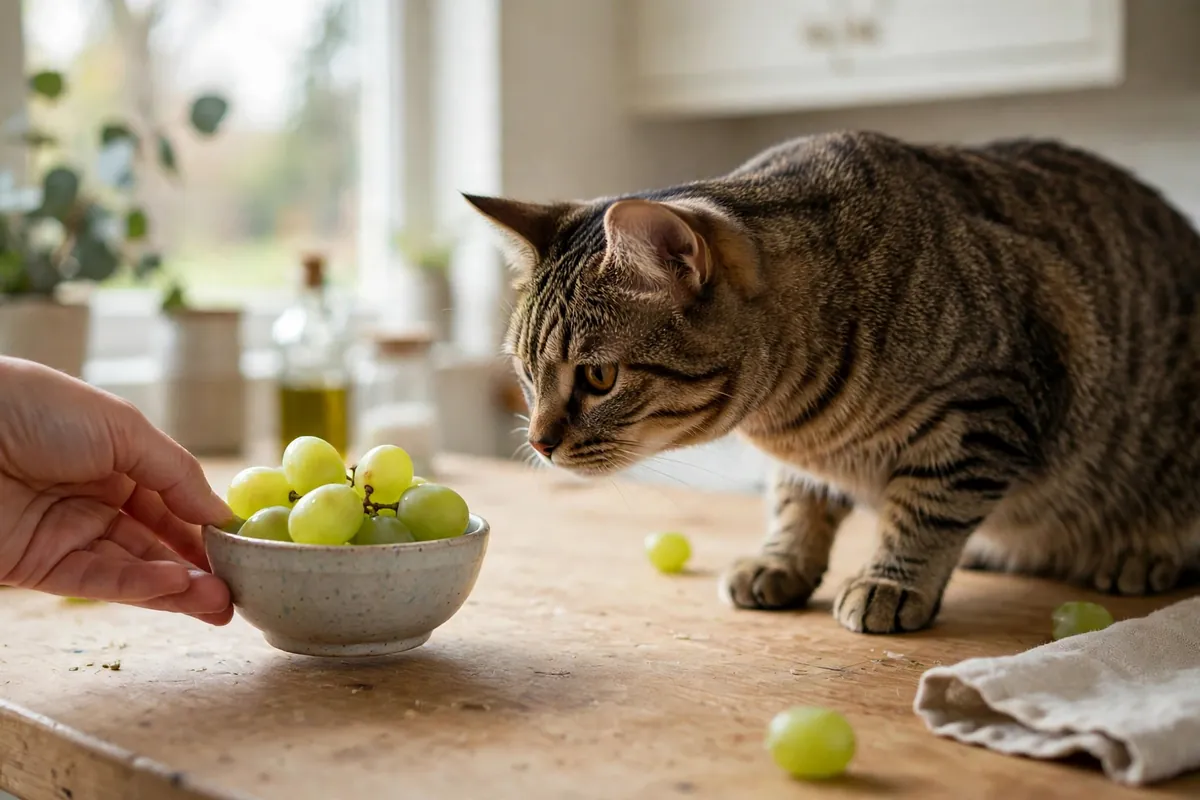
No — cats should not eat grapes, and they should not eat raisins either. Grapes and their dried forms are toxic to cats and can damage the kidneys, so they are never a safe treat, not even as a single grape offered as a joke or a taste. Cats are often less interested in fruit than dogs are, but a curious cat may still bat a grape across the floor, chew one that rolled off a plate, or steal a raisin from a snack bowl. If that happens, the safest response is not to wait and see — it is to call your veterinarian or a pet poison helpline straight away.
This guide explains why grapes are risky for cats, what the first 12 hours after eating them can look like, the hidden foods that contain grape ingredients, and exactly what to do if your cat eats one. It also covers the safe treats you can offer instead, so your cat never has to miss out.
Why Are Grapes Toxic to Cats?
Grapes have been linked to sudden kidney problems in dogs for many years, and veterinary guidance now treats them as toxic to cats as well. The exact substance in grapes that causes harm has not been fully identified, which is part of what makes them so tricky: there is no known safe amount, and sensitivity seems to vary from one animal to another. A cat that ate a grape once without obvious trouble cannot be assumed safe the next time.
Because the toxic component is still uncertain, veterinarians do not rely on the number of grapes eaten to decide whether to act. Even a small amount is treated seriously, especially in kittens, senior cats, and cats with existing kidney problems. The main danger is acute kidney injury, which can develop over hours to days and may not show obvious signs at first. That quiet start is exactly why early veterinary advice matters more than watching at home.
The First 12 Hours: What to Expect After a Cat Eats Grapes
Knowing what the first half-day can look like helps you act calmly and quickly. Timings vary between cats, and some cats show no early signs at all — a lack of symptoms in the first few hours does not mean your cat is in the clear.
- First hour: Your cat may seem completely normal, or may vomit, drool, or go off food. Note the time, what was eaten, and roughly how much — your vet will ask.
- Hours 1–6: Vomiting, diarrhea, lethargy, and loss of appetite are the most commonly reported early signs. Some cats become quiet, hide, or refuse water.
- Hours 6–12: Early stomach signs may settle, which can be misleading. Kidney-related problems often take longer to appear, so a cat that seems better is not necessarily out of danger.
- After 12 hours: Signs of kidney trouble can include drinking much more or much less than usual, urinating very little, abdominal discomfort, weakness, or a bad breath odor. These need urgent veterinary care.
The key point of this timeline is simple: do not use the first few hours as a test. Veterinary guidance for grape ingestion is to seek advice immediately, so treatment and monitoring can start before kidney damage has a chance to progress.
Symptoms of Grape Poisoning in Cats
Watch for vomiting, diarrhea, drooling, loss of appetite, lethargy, hiding, and abdominal pain. Later signs that suggest the kidneys are affected include reduced urination, increased thirst followed by little or no urination, weakness, trembling, and collapse. If your cat is straining to urinate, cannot urinate at all, or becomes very weak, treat it as an emergency and go to a veterinary clinic at once.
Symptoms can also overlap with other problems — a cat that vomits after eating something unusual may have a simple stomach upset, but with grapes you cannot safely assume that. Tell your vet exactly what happened, including whether the fruit was fresh grapes, raisins, or part of a baked food, so they can judge the risk properly.
Hidden Sources of Grapes and Raisins Many Owners Miss
Most grape accidents do not involve a bowl of fresh grapes. Cats usually get into dried fruit and baked goods where grape ingredients are easy to overlook. Competitor guides often focus only on fresh grapes, but these hidden sources are where many real-life exposures happen:
- Raisins, sultanas, and currants. All are dried grapes or closely related dried fruits, and they carry the same risk in concentrated form. Trail mix, granola, and fruit-and-nut snacks are common sources.
- Cream of tartar. This baking ingredient is derived from grapes. It appears in some baked goods, frostings, and homemade play dough, so check labels and keep baking supplies out of reach.
- Grape juice, jelly, and jam. These are made from grapes and are not safe cat treats, even in tiny licks.
- Baked goods. Raisin bread, fruit cake, hot cross buns, oatmeal-raisin cookies, and some muffins and scones contain raisins or currants.
- Grape leaves and vine fruit. Ornamental grapevines and leftover fruit from a garden harvest should be kept away from curious cats.
If you are unsure whether a food contains grape ingredients, check the label for grape, raisin, sultana, currant, or cream of tartar. When in doubt, keep it away from your cat and choose a treat made for cats instead.
What to Do Immediately If Your Cat Eats Grapes
Act quickly, stay calm, and follow these steps in order:
- Remove the food. Take away any remaining grapes, raisins, or the food that contained them so your cat cannot eat more.
- Call your vet or a pet poison helpline now. Do not wait for symptoms. Give the time of eating, the type of fruit, and your cat's age, weight, and any health conditions.
- Do not induce vomiting at home. Never give hydrogen peroxide, salt water, or any home remedy to make your cat vomit. These can cause serious harm, and vomiting should only be induced by a veterinarian when it is safe and appropriate.
- Do not give human medicines. Painkillers such as paracetamol and ibuprofen are toxic to cats and will only add to the problem.
- Follow your vet's instructions. They may ask you to come in for examination, blood tests, and monitoring, even if your cat looks well.
If your regular clinic is closed, call an emergency veterinary clinic or a poison helpline.
How Vets Treat Grape Ingestion
Treatment depends on how recently the grapes were eaten and how your cat is doing. Your vet may induce vomiting in the clinic if it is safe and soon enough after eating, give activated charcoal to reduce absorption, and start intravenous fluids to support the kidneys. Blood tests may be repeated over a day or two to check kidney function, and your cat may need to stay in the clinic for monitoring.
Some cats recover fully with prompt treatment, while others need longer care. There is no home remedy that replaces veterinary treatment for grape toxicity, and delaying care while trying home remedies can reduce the chances of a good outcome. Early treatment is the single most helpful thing an owner can do.
Safe Treat Alternatives to Grapes
Cats do not need fruit to be healthy — a complete, balanced cat food already covers their nutrition. If you enjoy sharing a treat moment, choose options made for cats: small commercial cat treats, a little plain cooked chicken or fish with no seasoning, or a lick of plain wet cat food.
For more ideas on what is safe to share, browse our Cat Food guides and visit the Purrfect Paws homepage for the latest articles.
Frequently Asked Questions
Can cats eat grapes?
No. Grapes and raisins are toxic to cats and can cause kidney damage. Do not feed them to your cat, even in small amounts.
What should I do if my cat eats a grape?
Call your veterinarian or a pet poison helpline right away, even if your cat looks fine. Do not try to make your cat vomit at home unless a veterinarian specifically tells you to.
Are raisins more dangerous than grapes for cats?
Raisins are dried grapes, so they carry the same risk in a more concentrated form. Currants and sultanas are also part of the same fruit family and should be treated as toxic.
Can cats eat grape-flavored treats or juice?
Avoid them. Grape juice, grape jelly, and foods made with grape or raisin ingredients are not safe treats for cats. Choose a plain, cat-safe treat instead.
How long after eating grapes can symptoms appear in cats?
Early signs such as vomiting or lethargy may appear within the first few hours, while kidney-related signs can take a day or more to develop. That delay is why early veterinary advice matters even when a cat seems well at first.