Cat UTI: 7 Symptoms and Treatment Options
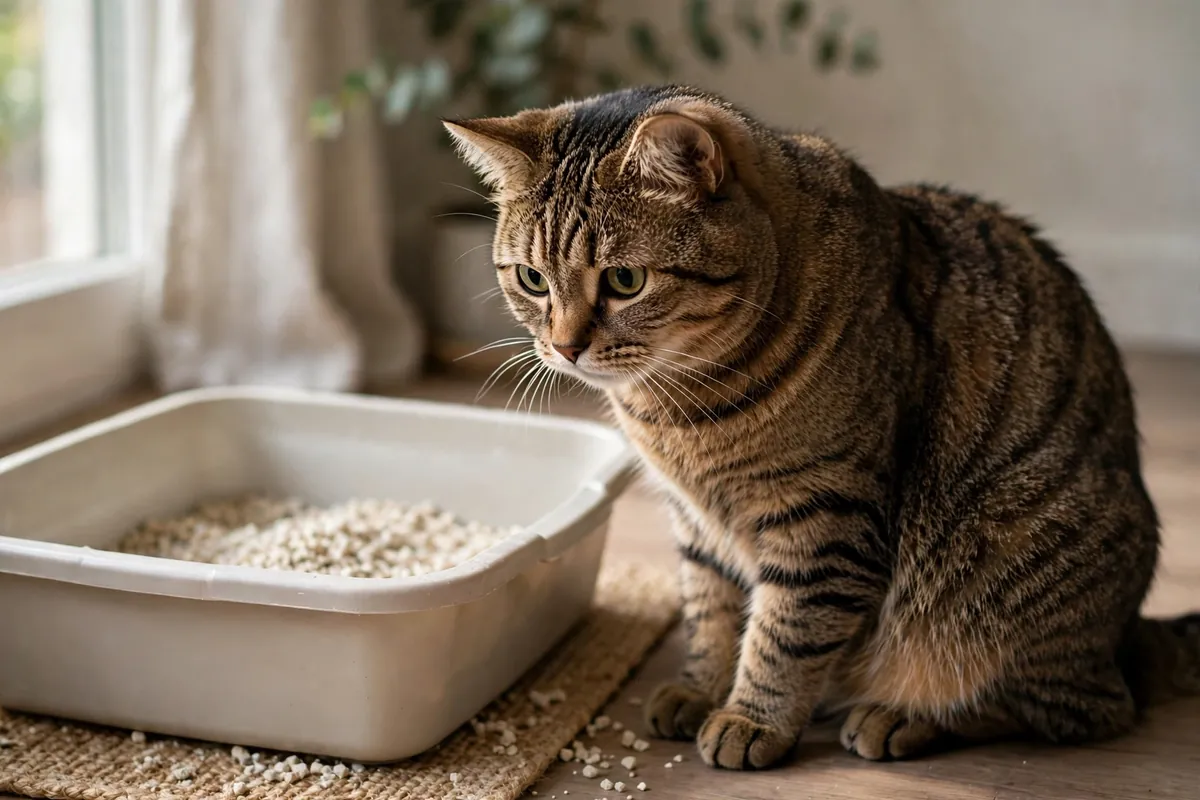
A urinary tract infection (UTI) can turn a perfectly litter-trained cat into one that visits the box a dozen times an hour. The seven symptoms are: straining to urinate, passing only tiny amounts very frequently, blood in the urine, crying out while peeing, excessive genital licking, urinating outside the litter box, and lethargy or loss of appetite.
One thing to know up front: true bacterial UTIs are actually less common in cats than many owners assume. Most feline urinary trouble falls under a broader umbrella called FLUTD (feline lower urinary tract disease), which includes crystals, sterile inflammation, and stress-related bladder problems. The symptoms look similar, but the treatments differ — which is why a vet visit matters. Below: each symptom, the likely causes, safe home support, and the red flags that mean do not wait.
7 Symptoms of a UTI in Cats
- Straining in the litter box. Long crouching, visible effort, little or no output. Mild straining suggests irritation; repeated straining with no urine at all is a medical emergency (more below).
- Frequent, tiny urinations. A healthy cat urinates two to four times a day in decent volumes. A cat with urinary trouble may visit the box every few minutes and leave only a few drops — many tiny clumps instead of a few normal-sized ones is a classic tell.
- Blood in the urine. Pink-tinged urine or reddish spots in the litter can indicate bladder inflammation. Even a small amount of blood deserves a vet's attention.
- Crying while urinating. A sharp cry, growl, or low moan in the litter box is a strong signal that peeing hurts. A previously silent cat that starts vocalizing should be examined.
- Excessive genital licking. Some post-box grooming is normal. Obsessive licking of the rear end, sometimes thinning the fur, often means the area feels irritated or painful.
- Urinating outside the box. A cat suddenly peeing on the bed, rug, or bathtub may associate the box with pain. Punishment makes it worse; a vet visit and a second clean box usually fix it.
- Lethargy and appetite loss. A cat with a painful urinary problem may go quiet, hide, skip meals, or stop playing — signs the problem has been brewing a while.
What Causes Urinary Problems in Cats?
When vets test a cat's urine, these are the usual findings:
- FLUTD (feline lower urinary tract disease). The umbrella term for most bladder and urethra problems in cats. It covers several distinct conditions, which is why a urine test — not guesswork — is needed to know which one your cat has.
- Urinary crystals. Tiny mineral crystals can form in concentrated urine and irritate the bladder wall, causing pain, blood, and straining — or clump into plugs that block the urethra.
- Bacterial infections. True bacterial UTIs are uncommon in young, healthy cats, but more likely in seniors, diabetic cats, or cats with kidney disease. Only a urine culture confirms bacteria; only vet-prescribed antibiotics clear them.
- Stress cystitis (FIC). One of the most common causes of all — a new pet, a move, or even rearranged furniture can trigger painful bladder inflammation with no bacteria and no crystals.
Risk factors include obesity, an all-dry diet with little water intake, a dirty litter box, and being male — male cats have a much narrower urethra and are far more vulnerable to blockages.
Safe Home Support While You Arrange a Vet Visit
Home care cannot replace diagnosis and treatment, but these supportive steps can keep your cat more comfortable before the appointment:
- Offer plenty of fresh water. More water dilutes urine and encourages flushing — try a second bowl in a new spot, a pet fountain, or a little water added to wet food.
- Keep the litter box spotless. Scoop once or twice a day during a flare-up. A cat in pain may hold urine longer if the box is dirty, which worsens irritation.
- Add a second box. One box per cat, plus one extra. A nearby, clean, low-sided box makes it easier for a sore cat to go.
- Reduce stress around the box. Keep it somewhere quiet and accessible — not next to the washing machine, the dog's bed, or a noisy doorway.
- No human medications or leftover antibiotics. Painkillers made for people are dangerous for cats, and the wrong antibiotic can worsen things and muddy the diagnosis.
- Track output. Note how often your cat visits the box, roughly how much urine, and whether there is blood or crying — genuinely useful for your vet.
🚨 Emergency Red Flags: The Blocked Bladder
This is the single most important part of this article. A male cat that keeps straining but produces no urine at all may have a blocked urethra — a plug sealing off the only exit for urine. This is a life-threatening emergency: toxins build up in the bloodstream, and a cat can go into cardiac arrest within 24 to 48 hours.
Get to an emergency vet immediately — do not wait for morning — if you see:
- Repeated straining with little or no urine coming out.
- Hiding, panting, or sudden weakness.
- A hard, swollen, painful belly — the bladder is full and cannot empty.
- Vomiting, collapse, or an inability to get comfortable.
Females can block too, though it is rarer. Any cat that cannot pass urine needs urgent care. The Cat Health section covers more urgent symptoms.
How Vets Treat a Cat UTI
Treatment depends on the tests — usually a physical exam, a urinalysis, and sometimes a urine culture or ultrasound:
- Bacterial infection: antibiotics matched to the bacteria on culture. Always finish the full course, even if your cat seems better after a few days.
- Urinary crystals: prescription urinary diets that dissolve crystals and prevent new ones, plus more water. Some crystal types do not dissolve — another reason proper diagnosis matters.
- Stress cystitis (FIC): pain relief, anti-spasm medication, and environmental changes to lower stress: more water sources, clean boxes, play sessions, hiding spots, predictable routines.
- Blockage: emergency unblocking under sedation or anesthesia, a catheter for a day or two, IV fluids, monitoring for kidney damage — then a prevention plan.
Most cats recover well once the cause is identified. The key variable is time — caught early, urinary problems are simple and inexpensive to treat; ignored for days, they can become emergencies. Read more in our Cat Health collection, or visit Purrfect Paws for our complete library of care guides.
Preventing Urinary Problems in Cats
Several habits genuinely lower the risk:
- Feed more wet food. The easiest way to raise daily water intake and dilute urine.
- Keep water fresh. Wash bowls daily, try a fountain, and keep water away from the food bowl — cats prefer a little separation.
- Scoop daily and keep weight healthy. A clean box encourages regular urination; overweight cats face higher urinary risk.
- Minimize stress. Predictable routines, hiding spots, and slow introductions to change help — especially for cats with stress cystitis history.
- Stick to vet-prescribed diets — they work only when fed consistently and exclusively.
After one urinary episode, stay alert: some cats are prone to flare-ups, and catching the next one early makes treatment far simpler.
Frequently Asked Questions
Can a cat UTI go away on its own?
Mild irritation sometimes settles on its own, but you cannot tell a harmless bout from a serious one by watching. Because blockages and infections can escalate fast, a cat with urinary symptoms should be examined by a veterinarian rather than left to "wait and see."
What does a cat UTI look like in the litter box?
Many small clumps instead of a few large ones, frequent visits with little output, crying or straining while urinating, and pink-tinged urine. A complete absence of urine despite repeated straining is an emergency.
Are male cats more at risk from urinary problems?
Yes. Male cats have a much narrower urethra, so they are far more likely to develop a urinary blockage — a life-threatening emergency where urine cannot pass at all. A male cat straining without producing urine needs an emergency vet immediately.
Does stress really cause bladder problems in cats?
Yes. Stress cystitis (FIC) is one of the most common causes of urinary symptoms in cats. Moving house, new pets, new routines, or even rearranged furniture can trigger painful bladder inflammation with no bacteria involved.
What food helps prevent urinary issues in cats?
Wet food helps most, because it increases water intake and dilutes urine. Some cats with recurrent problems do best on a vet-prescribed urinary diet. Always ask your veterinarian before switching — prescription diets are formulated for specific conditions and are not right for every cat.