Can Cats Eat Artichoke?
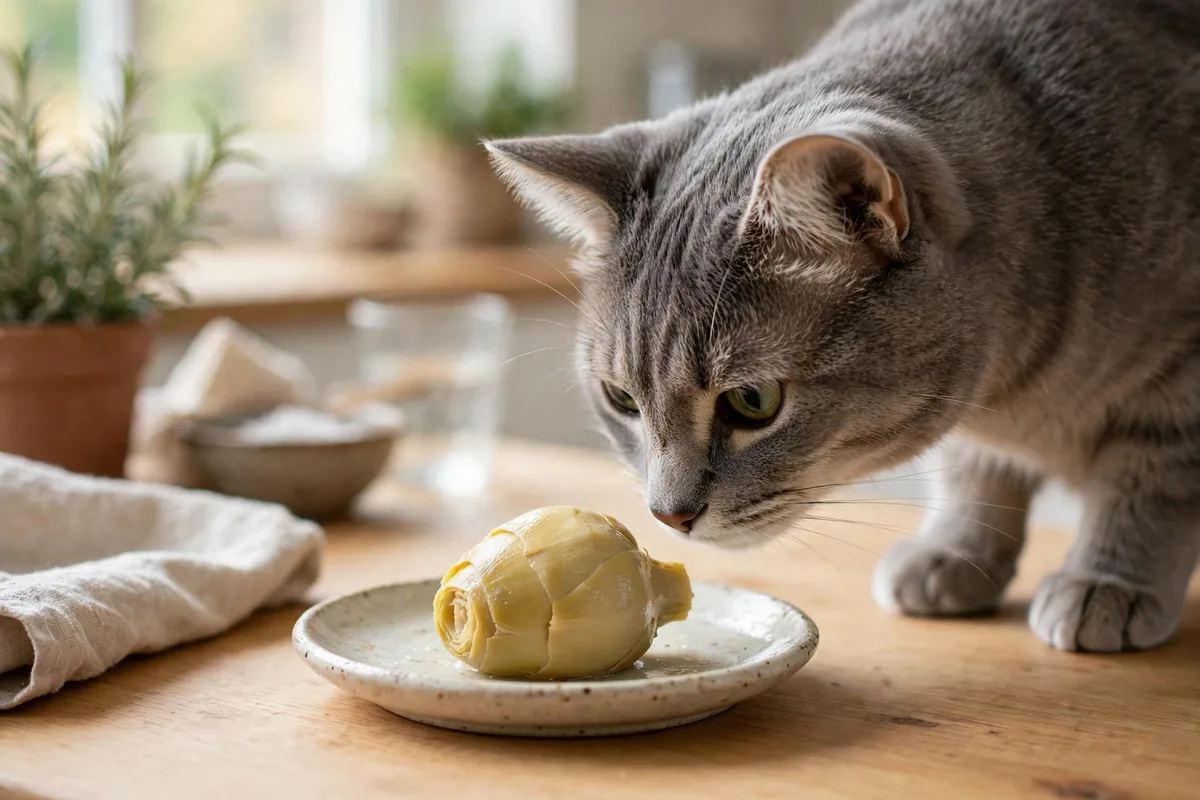
The Short Answer: Yes, Cooked Hearts Only, in Small Amounts
Yes, cats can eat artichoke — but only the cooked heart, served plain and in a small amount. A couple of small pieces of steamed or boiled artichoke heart, with the leaves, spines, and fuzzy choke removed and nothing added, is a safe occasional treat. Artichoke is not toxic to cats. The real danger is not the artichoke itself but the way it is usually served: dipped in butter, covered in sauce, or baked into a creamy dip with garlic and cheese.
Artichoke will never be a food your cat needs. Cats are obligate carnivores, which means meat-based food is their real diet, and vegetables are only ever a small extra. But if your cat shows interest in the artichoke on your plate, a plain cooked heart is a safe way to let them try it.
Is Artichoke Safe for Cats?
Artichoke is safe for cats. The cooked heart contains nothing toxic to them, it is low in calories, and it is gentle on the stomach when served plain. It sits alongside other safe vegetables such as zucchini and broccoli — fine as a small treat, but never a replacement for proper cat food.
That safety applies to one part only: the heart. The rest of the artichoke is not for cats, and the way artichoke is usually served is not for cats either. A heart dipped in melted butter, covered in aioli, or baked into a cheesy dip carries salt, fat, garlic, and dairy that a cat does not need. The rule is simple: if the artichoke has anything on it, it is not for your cat.
Which Part of the Artichoke Can Cats Eat?
Only the heart. The heart is the soft, meaty center of the artichoke, and once it is cooked it is tender enough to cut into small, safe pieces. It is the only part worth offering to a cat.
The leaves are tough and fibrous, and the tips carry sharp little spines that can scratch a cat's mouth or throat. The fuzzy choke in the center is inedible for people and a choking hazard for a cat. The stem is woody and hard to chew. When you prepare artichoke for your cat, strip away the leaves, scoop out the choke, trim the stem, and keep only the heart. If you are using canned or jarred artichoke hearts, check the label first: hearts packed in brine or oil with added salt, vinegar, or seasoning are not plain, and marinated hearts are not suitable for cats.
Why the Dip and Sauce Are the Danger
Artichoke is rarely eaten plain, and that is where the trouble starts. Melted butter adds fat a cat does not need, and most dips are worse. Artichoke dip is usually made with cream cheese, mayonnaise, and garlic, and it is often served with salt and extra cheese on top. Garlic is toxic to cats, and a creamy, salty dip can upset a small stomach even in a small amount.
Mayonnaise and aioli add oil and salt, and some contain garlic too. This is the most common way cats get into trouble with artichoke: not from the heart, but from the dip it was served in. If your cat steals a dipped piece, check the dip ingredients and watch for vomiting or diarrhea. If it contained garlic or onion, call your vet. Cut your cat's heart before the dip goes on, and keep the serving bowl out of reach.
Artichoke Nutrition for Cats
Artichoke hearts are mostly water and fiber, with small amounts of vitamins and minerals. The fiber can help with digestion in small amounts, and artichoke also contains small amounts of vitamin C, vitamin K, and folate. Its high water content adds a little moisture to a treat, which is useful for cats that do not drink enough.
None of that makes artichoke a health food for cats — a cat already gets those vitamins from a complete cat food. Think of artichoke as a harmless, hydrating snack rather than a supplement. Our Cat Food guides cover more safe vegetable options.
How Much Artichoke Can a Cat Eat?
One or two small pieces — about a tablespoon of chopped cooked artichoke heart — is a good serving for an adult cat, offered once or twice a week at most. Artichoke is light, but the ten-percent rule for treats still applies: all treats combined should stay under ten percent of your cat's daily calories, and artichoke should be only a small part of that.
Start with a single small piece the first time. Many cats will sniff artichoke and walk away, which is normal — cats are famously suspicious of new foods, and the soft, slightly bitter taste is not one every cat likes. If your cat eats it happily and its digestion stays normal, you can offer a full small serving next time.
How to Serve Artichoke to Your Cat
Steam or boil a whole artichoke until the heart is tender, then let it cool completely to room temperature. Pull off the leaves, scoop out the fuzzy choke, and trim the stem. Cut the heart into small pieces no bigger than a pea, and serve them plain in a small bowl — no salt, no butter, no oil, and no seasoning of any kind.
You can offer the pieces on their own, or mix one or two into your cat's regular food if your cat is suspicious of a new item. Do not serve artichoke straight from your plate: a heart that has touched dip, sauce, or seasoning is no longer plain.
Can Kittens Eat Artichoke?
Kittens can have a tiny taste of plain cooked artichoke heart once they are eating solid food, usually from around eight weeks old. Offer one small piece, cut tiny, and watch how they handle it. Kitten food should remain the center of a kitten's diet — artichoke is only a small extra, and a kitten's stomach is small.
Skip the leaves, spines, and choke for kittens entirely, since they are a choking hazard, and never offer artichoke dip. For kittens under eight weeks, skip vegetables altogether and stick to nursing or a kitten milk replacer as your vet advises.
What Happens If My Cat Eats Artichoke?
If your cat ate plain cooked artichoke heart, there is nothing to worry about. Most cats digest a small serving without trouble, and the worst outcome of overdoing it is a slightly softer stool. Offer fresh water and feed the next meal as normal.
If your cat ate artichoke with dip or sauce, check the ingredients. Garlic and onion are toxic to cats, so call your vet if either was in the dip. If it was only butter, cheese, or mayonnaise, watch for mild stomach upset. If your cat ate a leaf or a piece of choke, watch for coughing or trouble swallowing, and call your vet if your cat keeps pawing at its mouth.
Artichoke is a safe, simple treat for cats when it is the plain cooked heart, served in a small amount. A couple of steamed pieces once or twice a week add a little fiber and moisture without risk, while the leaves, spines, and choke are a choking hazard and the dip is the real danger. Keep it plain, keep it small, and artichoke becomes one of the easiest vegetable treats you can share.
Can cats eat artichoke?
Yes. Plain cooked artichoke hearts are safe for cats in small amounts. Serve them steamed or boiled, cut small, with no dip, sauce, or seasoning.
Is artichoke safe for cats?
Yes, the cooked heart is safe. Artichoke is not toxic to cats. The leaves, spines, and choke should be removed, and dips and sauces are the real danger.
Can cats eat artichoke leaves?
No. The leaves are tough and fibrous, and the spines and choke are a choking hazard. Only the soft cooked heart should be offered.
Can cats eat artichoke dip?
No. Artichoke dip usually contains cheese, cream, garlic, and salt — garlic is toxic to cats and the rest can upset their stomach. Offer plain hearts only.
Can kittens eat artichoke?
Yes, from around eight weeks old — one tiny piece of plain cooked artichoke heart. Kitten food should remain the main diet.
How much artichoke can a cat eat?
One or two small pieces, about a tablespoon, once or twice a week at most. Larger amounts can cause a softer stool.