Can Cats Eat Zucchini?
The Short Answer: Yes, One of the Easiest Vegetables to Try
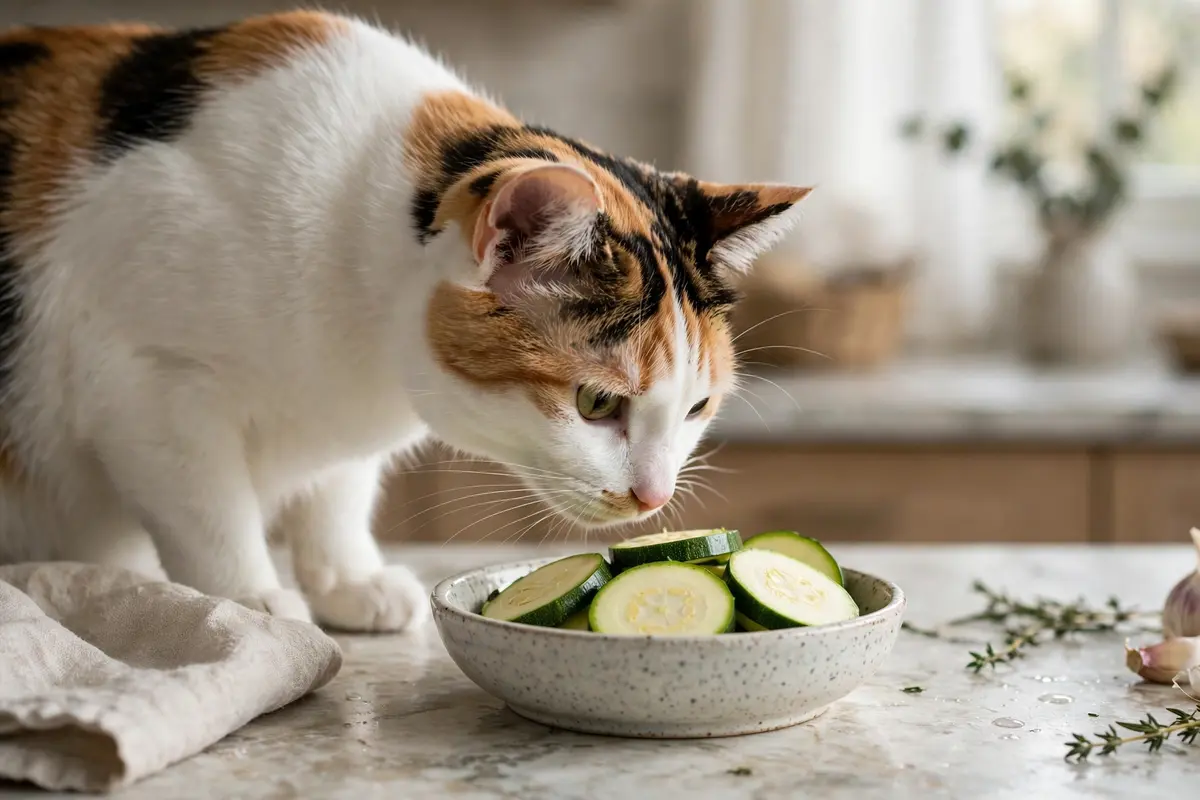
Yes, cats can eat zucchini. It is safe for cats, mild in flavor, soft in texture, and easy to prepare — which makes it one of the best first vegetables to offer a cat that has never tried one before. Cooked or raw, plain and unseasoned, a few small pieces of zucchini are a perfectly fine treat.
Zucchini is mostly water, with very few calories and a gentle effect on the stomach. It contains no compounds that worry vets, no sharp flavors that put most cats off, and no tough fibers that are hard to digest. If you have been curious about sharing a vegetable with your cat, zucchini is a sensible place to start.
Is Zucchini Safe for Cats?
Zucchini is safe for cats in both its cooked and raw forms, which sets it apart from many vegetables that must be cooked first. The flesh is soft, mild, and easy to chew, and it does not contain any toxin that affects cats. Zucchini belongs to the squash family, and like other summer squashes it is gentle on feline digestion.
One part deserves a note: the skin and the seeds. The skin is fine for cats and carries a little fiber, but it can be slightly bitter, and some cats will reject a piece because of it. The seeds are soft and small, and a few are harmless, but it is cleaner and safer to scoop them out before serving. The stem and the blossom end should be trimmed away.
A bitter zucchini is worth throwing out rather than serving. Very occasionally a zucchini grows unusually bitter because of natural compounds called cucurbitacins. A bitter taste is your warning sign — taste a small piece yourself before offering any to your cat, and discard the vegetable if it tastes sharply bitter.
Why Zucchini Works So Well for Cats
Zucchini is about ninety-five percent water, which makes it one of the lightest foods you can offer a cat. A few pieces add almost no calories, and they contribute a little hydration too — a small bonus for cats that do not drink enough water. For a cat that needs to lose a little weight, zucchini is a treat that does not fight against the goal.
It also brings small amounts of vitamins A and C, potassium, and fiber. As with every vegetable, these are bonuses rather than reasons to feed it: your cat's regular food already covers its nutrition. The real advantage of zucchini is its mildness. It rarely causes stomach upset, it is easy to prepare, and cats that refuse stronger-tasting vegetables will sometimes accept zucchini.
The soft texture helps too. A cooked piece of zucchini is easy for a senior cat with worn teeth or a kitten learning to eat solids to manage, and a raw piece is still soft enough for most adult cats to chew without trouble.
How Much Zucchini Can a Cat Eat?
A tablespoon of small zucchini pieces — roughly a few bite-sized cubes — is a good serving, offered two or three times a week at most. Keep all treats combined under ten percent of your cat's daily calories, and zucchini will sit comfortably inside that limit.
Start with one or two small pieces the first time. Most cats handle zucchini easily, but every cat is different, and a small first serving lets you check for a soft stool or a lack of interest before you offer more. If your cat eats it happily and its digestion stays normal, a full small serving next time is fine.
Do not replace meals with zucchini. A cat that fills up on watery vegetables eats less of the protein-rich food it actually needs, and over time that can cause real nutritional problems. Zucchini is a garnish on a proper diet, never a substitute for it.
How to Prepare Zucchini for Your Cat
Wash the zucchini well, trim both ends, and cut it into small pieces — cubes about the size of a pea are ideal. You can serve it raw, which keeps the light crunch some cats enjoy, or steam or boil it for two to three minutes until soft. Both are safe; cooked is the gentler option for kittens, seniors, and cats with sensitive stomachs.
Scoop out the soft seedy center if you like, and peel it if your cat seems put off by the skin. Serve it plain, at room temperature, with nothing added — no salt, no butter, no oil, no garlic, no onion, no seasoning. Zucchini bread, fried zucchini, and zucchini in a seasoned sauce are all off the menu: the added ingredients, not the zucchini, are the problem.
You can mix the pieces into your cat's regular food or offer them in a separate small dish. If your cat ignores them, try the other preparation — some cats prefer raw crunch, others prefer soft cooked pieces.
Can Kittens Eat Zucchini?
Kittens can have a tiny taste of cooked zucchini once they are eating solid food, usually from around eight weeks onward. Cook it until very soft, mash it or cut it into tiny pieces, and offer just one or two. A kitten's diet should stay centered on kitten food, which is built for growth — zucchini is only a small extra.
Raw zucchini is better left until a kitten is older and chewing confidently. For kittens under eight weeks, skip vegetables entirely and stick to nursing or a kitten milk replacer as your vet advises.
What Happens If My Cat Eats Zucchini?
If your cat ate plain zucchini, cooked or raw, there is almost certainly nothing to worry about. The most common result of eating too much is a slightly softer stool, which usually settles within a day. Offer fresh water and feed the next meal as normal.
If your cat ate zucchini from a seasoned dish — zucchini bread, fried zucchini, or zucchini in sauce — check what else was in it. Garlic and onion are toxic to cats, so call your vet if either was involved. Rich, buttery, or fried foods can also cause vomiting or diarrhea on their own.
If your cat ate a very bitter zucchini, watch for drooling, vomiting, or stomach discomfort and call your vet for advice. Bitter cucurbitacins can irritate the gut, though a few bites of a mildly bitter piece rarely cause more than a short stomach upset. When in doubt, a quick call to your vet is always the right move.
Zucchini is one of the safest and easiest vegetables to share with your cat — mild, watery, low in calories, and fine cooked or raw as long as it is plain and cut small. A tablespoon a few times a week is plenty, and a quick taste test for bitterness is the only real precaution. For a first vegetable, you could hardly pick a better one.
Can cats eat zucchini?
Yes. Zucchini is safe for cats, cooked or raw, as long as it is plain, unseasoned, and cut into small pieces.
Is raw zucchini safe for cats?
Yes, raw zucchini is safe for most adult cats. Cooked zucchini is gentler for kittens, seniors, and cats with sensitive stomachs.
How much zucchini can a cat eat?
About a tablespoon of small pieces, two or three times a week. Treats should stay under ten percent of your cat's daily calories.
Can kittens eat zucchini?
Yes, from around eight weeks old — a tiny amount of very soft cooked zucchini. Raw zucchini is better left until a kitten is older.
Is zucchini skin safe for cats?
Yes, the skin is safe, though some cats dislike its slightly bitter taste. You can peel it if your cat refuses pieces with the skin on.
What should I do if my cat eats seasoned zucchini?
Remove the rest and check the ingredients. Call your vet if garlic or onion was involved, or if your cat shows vomiting or diarrhea.