Can Cats Eat Green Beans?
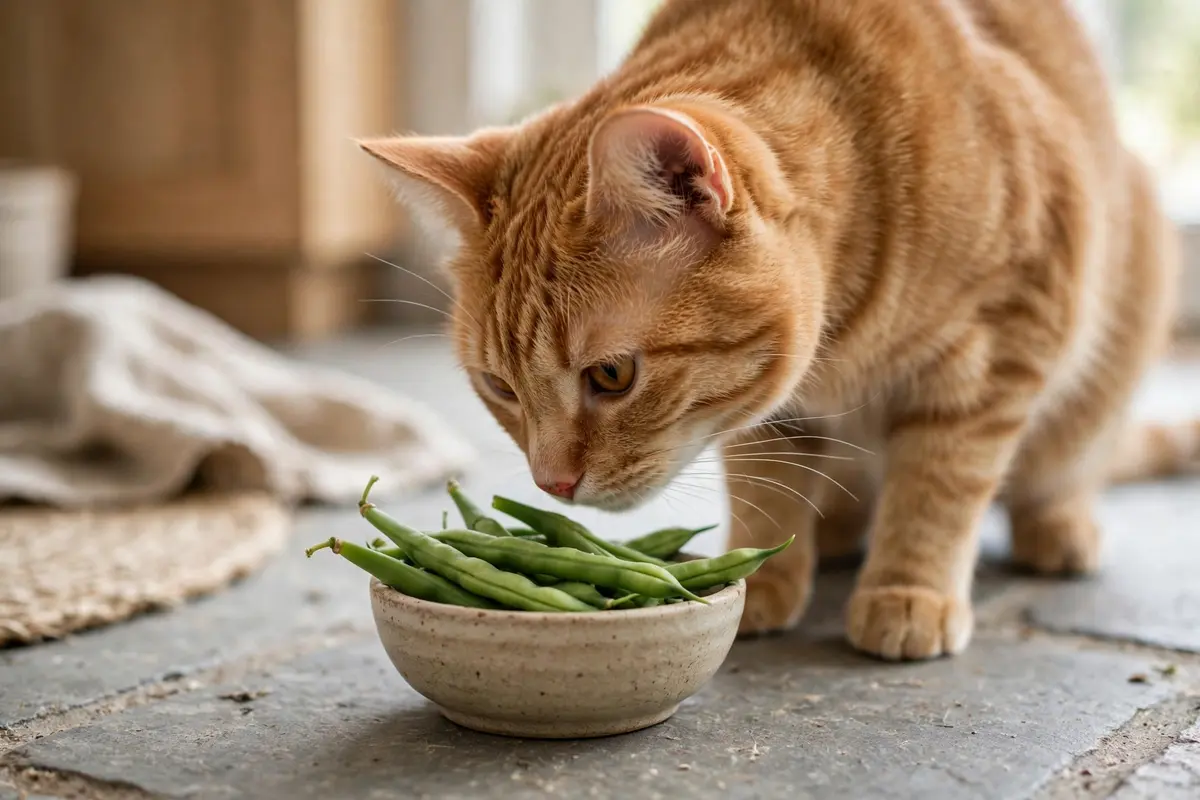
The Short Answer: Yes, With a Little Prep
Yes, cats can eat green beans — as long as they are cooked, plain, and cut into small pieces. Green beans are one of the safer vegetables you can offer a cat, and they make a light, low-calorie treat that will not upset most stomachs when served correctly.
The catch is in the details: fresh or frozen beans are best, canned beans are often packed in salty water, and seasonings, butter, garlic, and onion turn a safe vegetable into a risky one. Offered plain and in small amounts, though, green beans are a fine occasional snack.
Are Green Beans Safe for Cats?
Green beans are safe for cats when cooked and served plain. They are not toxic, they are gentle on digestion, and vets sometimes suggest them as a light treat for cats that need to watch their weight.
Raw green beans are a different story: tough, stringy, and hard to chew and digest, with a choking and stomach-upset risk. Cooking softens the bean and its string, making it much easier — and safer — for your cat to handle.
Green beans also contain lectins, which can irritate the gut when beans are eaten raw; cooking breaks most of them down. A steamed or boiled green bean, served plain and cut small, is a safe, simple treat.
Why Green Beans Make a Good Treat
Green beans are mostly water and fiber, which means they add very few calories while still giving your cat something satisfying to crunch. For a cat that is a little overweight, that matters: you can offer a few green beans as a treat without adding the calories that a commercial treat would bring. They will never replace a balanced cat food, but as an occasional snack they are one of the lightest options around.
They also bring small amounts of vitamins A, C, and K, plus manganese and potassium — a more useful snack than an empty-calorie biscuit, though never a reason to feed them daily.
Some cats simply enjoy the crunch. If your cat shows no interest, that is fine too — green beans are an optional extra, not a food your cat needs.
Fresh, Frozen, or Canned Green Beans?
Fresh green beans are the best choice. Look for beans that are firm, bright green, and snap cleanly when bent. Wash them well, trim the ends, and remove any tough string before cooking. Frozen green beans are nearly as good — they are picked and frozen at their freshest, and they are convenient to keep on hand. Just cook them from frozen and let them cool before serving.
Canned green beans are the weakest option because of salt: most sit in brine, and the sodium in a few beans is a meaningful amount for a small cat. If canned beans are all you have, drain and rinse them under running water for at least thirty seconds — and offer even fewer than you would of fresh beans.
Whatever form you choose, serve them plain: no salt, butter, oil, garlic, onion, or seasoning blends. Green bean casserole is off the menu too — the cream soup, fried onions, and seasonings are all wrong for cats.
How Much Green Beans Can a Cat Eat?
Think of green beans as a treat, not a meal. A good starting point is one or two small pieces — about a tablespoon of chopped beans — offered two or three times a week at most. Treats of every kind should stay under ten percent of your cat's daily calories, and green beans are no exception, even though they are low in calories.
Start with a single small piece the first time. Some cats love green beans immediately, some sniff and walk away, and a few will eat them and then have a softer stool the next day. A small first serving tells you which kind of cat you have without risking a stomach upset.
If your cat has kidney disease or is on a low-sodium diet, skip canned beans entirely and ask your vet before offering fresh ones.
How to Prepare Green Beans for Your Cat
Preparation takes only a few minutes, and it matters more than the bean itself. Wash the beans, trim both ends, and pull off any tough string. Steam or boil them in plain water until they are soft enough to cut easily — usually three to five minutes for fresh beans. Do not add salt to the water.
Let the beans cool completely, then cut them into pieces no longer than a fingernail — small pieces remove the choking risk of a whole bean. Mix them into your cat's regular food or offer them in a separate small dish.
Serve them at room temperature, never hot from the pot, and keep your cat's portion plain from start to finish.
Can Kittens Eat Green Beans?
Kittens can have a tiny taste of cooked, plain green beans once they are eating solid food, usually from around eight weeks onward, but there is no reason to rush it. A kitten's small stomach is better spent on kitten food, which is packed with the protein, fat, and calcium a growing body needs. Green beans add almost nothing a kitten requires.
If you do offer a piece, make it very small and very soft, and watch for any stomach upset. One tiny piece is plenty. If your kitten is under eight weeks old or still nursing, skip vegetables entirely and stick to its mother's milk or a kitten milk replacer as your vet advises.
What Happens If My Cat Eats Green Beans?
If your cat ate plain cooked green beans, there is usually nothing to worry about. Most cats digest a few beans without any trouble at all, and the worst you are likely to see is a slightly softer stool or a bit of extra gas. Offer fresh water and feed the next meal as normal.
Seasoned beans deserve more attention. If your cat ate green beans cooked with garlic or onion, butter, salt, or a seasoning blend — or helped itself to green bean casserole — watch for vomiting, diarrhea, loss of appetite, or lethargy, and call your vet. Garlic and onion are toxic to cats, so any amount is worth a phone call.
A cat that swallowed a whole raw bean or a long string may gag, cough, or paw at its mouth; if your cat is choking or struggling to breathe, get to a vet immediately. Note what was eaten, how much, and when, so you can give your vet clear information.
Green beans are a safe, light treat for cats when they are cooked, plain, and cut small — and fresh or frozen beans beat canned ones, which carry too much salt. Keep portions to a tablespoon or two, a few times a week, skip the seasoning and the casserole, and you have one of the simplest healthy snacks you can offer your cat.
Can cats eat green beans?
Yes. Cooked, plain green beans are safe for cats in small amounts. Fresh or frozen beans are best; canned beans are often too salty.
Are raw green beans safe for cats?
No. Raw green beans are tough and stringy, hard to digest, and a choking risk. Always cook them until soft and cut them into small pieces.
Are canned green beans safe for cats?
Not ideal — canned beans are packed in salty brine. Drain and rinse them well and offer only a very small amount.
How much green beans can a cat eat?
About a tablespoon of chopped, cooked green beans, two or three times a week. Treats should stay under ten percent of your cat's daily calories.
Can kittens eat green beans?
A kitten over eight weeks old can have one tiny, very soft piece of plain cooked green bean, but kitten food should come first. Skip vegetables for kittens under eight weeks.
What should I do if my cat eats seasoned green beans?
Remove the rest and call your vet, especially if garlic or onion was involved. Note what was eaten and how much, and watch for vomiting, diarrhea, or lethargy.