Can Cats Eat Carrots? Vet Answer
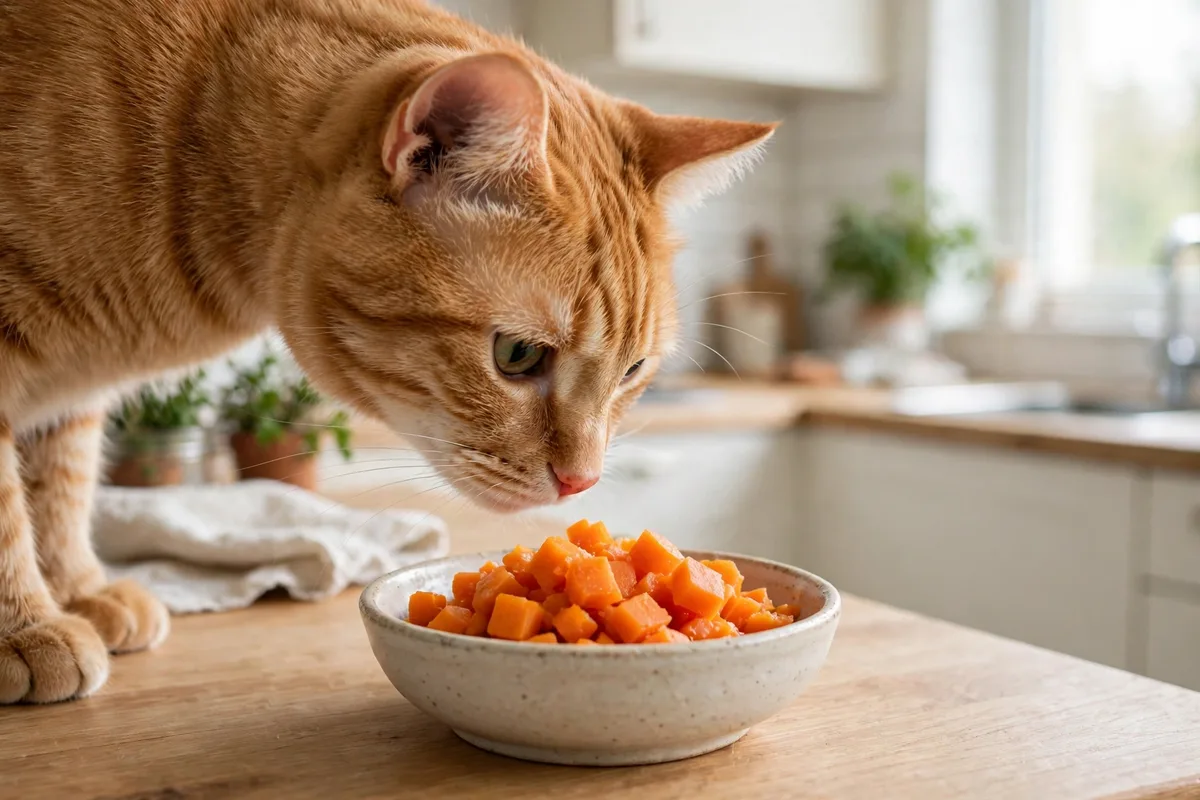
Yes, cats can eat carrots — and cooked carrots are the safest way to offer them. Carrots are not toxic to cats, and a small piece of soft, plain, cooked carrot makes a perfectly fine occasional treat. They will never replace meat in your cat's diet, because cats are obligate carnivores, but as a rare crunchy-or-soft snack, carrots are one of the safer vegetables you can share.
The short version is this: offer carrots cooked, plain, and in tiny pieces, and only as a treat — never as a meal. Raw carrots are much harder for a cat to chew and digest, and seasoned, glazed, or buttered carrots from your own plate are not suitable. If your cat has diabetes, kidney disease, or a sensitive stomach, check with your veterinarian first, since even a healthy vegetable can be the wrong choice for an individual cat.
Are Carrots Safe for Cats?
Carrots are not on any list of foods that are poisonous to cats. Unlike onions, garlic, grapes, and lilies, which are genuinely dangerous, carrots contain no compound known to poison cats. That is why you will sometimes see small amounts of carrot in commercial cat foods — it is used as a source of fiber and color, not as a main ingredient.
Safe does not mean ideal, though. A cat's digestive system is built for animal protein and fat, not for breaking down plant fiber. Cats lack some of the enzymes that help humans and dogs digest vegetables efficiently, so a large portion of carrot may pass through mostly undigested or cause a soft stool. That is the main reason portion size matters so much more than the vegetable itself.
Carrots Nutrition: What Is Actually in Them?
Carrots are mostly water and fiber, with a modest amount of natural sugars and a good supply of beta-carotene, which the body converts into vitamin A. They also contain small amounts of vitamin K, potassium, and antioxidants. For a human, that is an excellent nutritional profile. For a cat, it is mostly irrelevant — a complete cat food already supplies vitamin A in the animal-based form cats actually use well.
The one genuinely useful quality carrots offer a cat is fiber. A small amount of soft, cooked carrot can add a little bulk to the diet, which some owners find helps a cat that is prone to hairballs or mild constipation. This is not a treatment, and it should never replace veterinary advice for a cat with ongoing digestive problems, but as an occasional addition it is a reasonable, low-calorie option.
Raw vs Cooked Carrots: Which Is Better for Cats?
Cooked carrots win clearly, for two reasons: safety and digestibility. Steaming or boiling a carrot until it is soft makes it easy to chew, easy to swallow, and much easier on a cat's stomach. Raw carrot is hard, and a cat that gulps food — as many cats do — can choke on a firm chunk or swallow a piece too large to digest comfortably.
If you do offer raw carrot, it should be grated or cut into pieces smaller than a pea, and only a tiny amount. Even then, raw carrot is more likely to cause vomiting or an upset stomach than cooked carrot, because the tough cell walls are harder to break down. For kittens, senior cats, and cats with dental problems, raw carrot should be avoided altogether.
How to Serve Carrots to Your Cat
Keep it plain and simple. Peel the carrot, then steam or boil it until it is completely soft — soft enough to mash easily with a fork. Let it cool fully to room temperature, then cut it into pea-sized pieces. Offer just one or two pieces to start, mixed into or placed beside your cat's regular food, and watch how your cat responds over the next day.
A good rule is the treat rule that vets recommend for all extras: treats should make up no more than about 10 percent of your cat's daily calories. In practice, for carrots, that means a teaspoon or so of cooked carrot pieces, a couple of times a week at most — not daily, and never a whole carrot. More is not better here; a larger serving mainly increases the chance of gas, soft stools, or a skipped meal because your cat filled up on vegetables instead of its proper food.
Can Cats Eat Carrot Greens and Carrot Juice?
Carrot juice is a different story. It concentrates the sugars from many carrots into a small volume while removing most of the fiber, which is the opposite of what you want in a cat treat. It offers no benefit and adds unnecessary sugar, so skip it. The same goes for carrot cake, carrot muffins, and any baked good containing carrot — the sugar, flour, butter, and spices make those human foods, not cat treats.
Risks and When to Skip Carrots
The most common problem with carrots is digestive upset: vomiting, gas, or loose stools after eating too much or eating raw pieces. This usually settles on its own once the carrot is out of the diet, but if vomiting or diarrhea lasts more than a day, or your cat stops eating or drinking, call your veterinarian.
Choking is the more serious risk, especially with raw or large pieces. If your cat coughs, paws at its mouth, or seems distressed after eating, stay calm, keep your hands out of its mouth unless you can clearly see and remove the piece, and seek emergency veterinary help if breathing is affected.
Skip carrots entirely if your cat has diabetes and your vet has advised a strict low-carbohydrate plan, if your cat has chronic kidney disease and is on a prescribed diet, or if your cat has a known sensitive stomach and reacts to new foods. Cats on prescription diets should generally not get extras at all without veterinary approval, because even a small addition can unbalance a carefully formulated diet.
What If My Cat Ate a Lot of Carrots?
Try not to panic. Carrots are not toxic, so a cat that raids a bowl of cooked carrots is unlikely to be poisoned. The likely outcome is a stomach upset — vomiting, soft stools, or a skipped next meal. Remove any remaining carrots, make sure fresh water is available, and offer the normal food at the next mealtime.
Call your vet if your cat vomits repeatedly, has diarrhea for more than 24 hours, refuses food for more than a day, seems lethargic or in pain, or if the carrots were seasoned or cooked with onion, garlic, or other unsafe ingredients. In that last case, the seasoning matters far more than the carrot, so tell the vet exactly what was in the dish.
Frequently Asked Questions
Can cats eat raw carrots?
They can in tiny, finely grated pieces, but cooked carrots are much safer. Raw carrot is hard and can be a choking hazard, and it is harder for cats to digest. Steam or boil carrots until soft, cool them fully, and cut them into pea-sized pieces.
How many carrots can a cat eat?
Very few — about a teaspoon of cooked carrot pieces, a couple of times a week at most. Treats of all kinds should stay within roughly 10 percent of your cat's daily calories, and carrots should never replace a meal of complete cat food.
Are carrots good for cats?
Carrots are safe and low in calories, and they add a little fiber, but they are not an important food for cats. Cats get the nutrients they need from meat-based cat food. Think of carrots as an occasional harmless treat, not a health food for cats.
Can kittens eat carrots?
A tiny piece of soft, cooked carrot is unlikely to harm a healthy kitten, but kittens have small mouths and sensitive stomachs, so the choking and upset-stomach risks are higher. Most vets would say there is no need to offer carrots to a kitten at all — their kitten food already covers their nutrition.
What should I do if my cat vomits after eating carrots?
Remove any remaining carrot, offer fresh water, and feed normally at the next meal. If vomiting happens more than once, diarrhea lasts over a day, or your cat stops eating or drinking, contact your veterinarian.