Can Cats Eat Bananas? Vet Answer
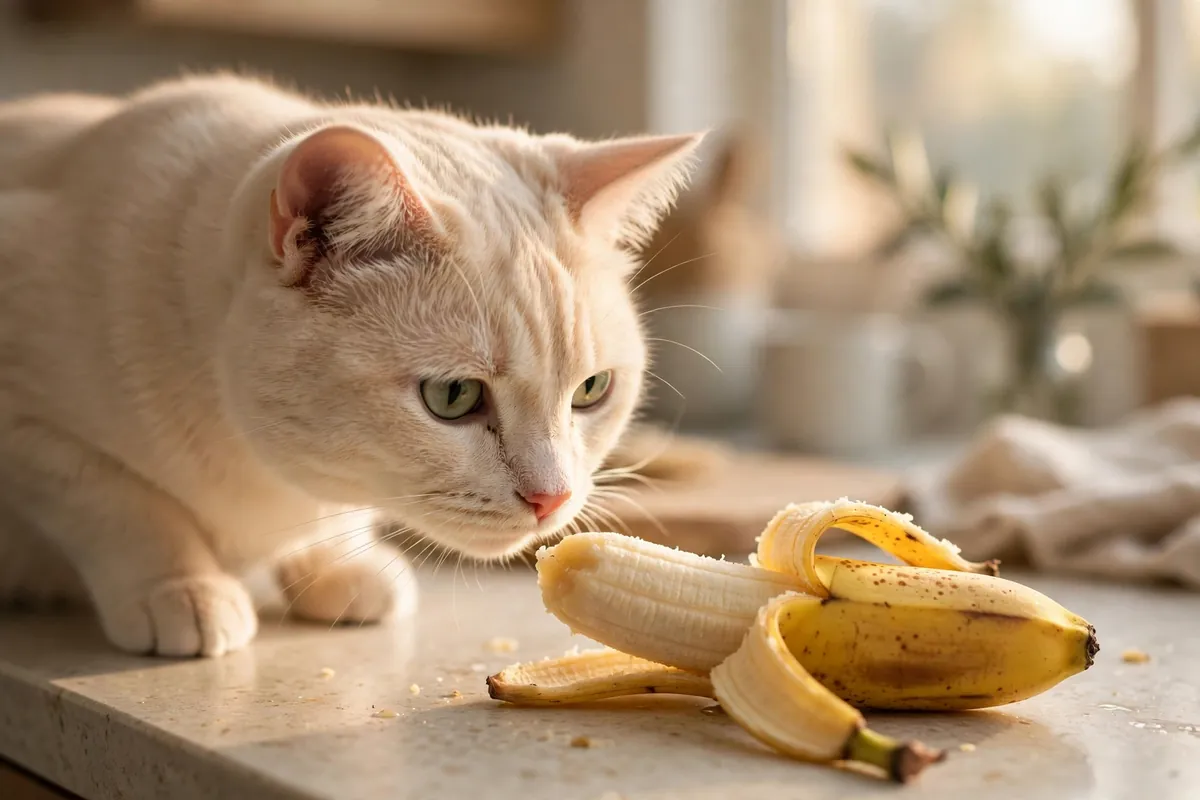
You are peeling a banana for your morning snack when you notice your cat watching with unusual intensity. Maybe she bats at the peel, maybe she gives the fruit a long, thoughtful sniff — and suddenly you are asking the question every cat parent eventually asks: can cats eat bananas? The short answer is reassuring: bananas are not toxic to cats, so a tiny taste will not poison your cat. But there is a longer answer that matters much more, because bananas are sugary, starchy, and nutritionally empty for an animal built to eat meat. In this guide we will explain what bananas actually do in a cat's body, how much is too much, which parts to keep away, and the smarter treats your cat will enjoy far more.
The Vet Answer: Are Bananas Safe for Cats?
Bananas do not appear on any major toxic-food list for cats. The ripe flesh of a banana contains no compound known to poison felines, which puts it in a very different category from genuinely dangerous foods like onions, garlic, grapes, and chocolate. If your cat has already stolen a lick of your banana, there is no need to panic — a small amount will not send you rushing to the emergency clinic.
But "safe" and "good for them" are two very different things. Cats are obligate carnivores, meaning their entire digestive system — from their teeth to their gut enzymes — is designed to run on animal protein and fat. Bananas are almost entirely water, starch, and sugar, with a little potassium and fiber thrown in. Your cat gets nothing from a banana that they do not already get, in far better form, from their regular food. A banana is not a treat in the way a piece of cooked chicken is a treat; it is closer to an empty curiosity that passes through the body without contributing anything useful.
It also helps to know that your cat cannot even taste what makes a banana special to us. Cats lack the taste receptors for sweetness, so the sugary, creamy flavor you love registers as almost nothing to them. When a cat shows interest in a banana, it is usually the smell, the texture, or simple curiosity — not a craving. Many cats sniff once and walk away, and that is completely normal.
Why Bananas Don't Belong in a Cat's Diet
To understand why bananas are a poor fit for cats, it helps to think about how a cat's body handles food. A cat's liver and pancreas are tuned for processing protein and fat, not carbohydrates. Fruit sugars like fructose and glucose, which a human body uses easily for energy, are simply extra work for a cat — and in larger amounts they can ferment in the gut and cause digestive trouble.
Bananas are one of the higher-sugar fruits. A single medium banana contains roughly the same amount of sugar as a couple of spoonfuls of honey — a trivial amount for a human, but enormous relative to a cat that weighs eight or ten pounds. For a small animal whose diet should contain very little carbohydrate, even a few bites of banana represent a noticeable sugar load.
There is also a nutritional opportunity cost. Every bite of banana your cat eats is space in a small stomach that could have held something genuinely nourishing. A complete, balanced cat food — whether wet or dry — is carefully formulated with the amino acids, vitamins, and minerals cats need, like taurine, vitamin A, and arachidonic acid. Bananas provide none of these. So while a banana is not harmful in a tiny quantity, it actively displaces nutrition when given regularly. Our Cat Food guides explain what a truly balanced feline diet looks like if you want to dig deeper.
How Much Banana Can a Cat Have?
If your cat seems genuinely interested and you want to let them try it, keep the portion truly tiny: a piece no bigger than your fingernail, offered once in a while. Think of it as a tasting experience for a curious cat, not a snack. Mash the piece well or offer a paper-thin slice so there is no choking risk, and always serve plain, fresh banana — never banana chips (which are often fried and salted), banana bread, or banana-flavored sweets.
Frequency matters just as much as portion size. An occasional fingernail-sized taste every few weeks is harmless for a healthy adult cat. Anything more frequent — a few bites every day, for example — starts to add up: extra sugar, extra calories, and extra fiber in a digestive tract that was never meant to handle fruit. Treats of any kind should only ever make up a tiny share of your cat's daily food intake, and fruit treats deserve the strictest limit of all.
Kittens deserve extra caution. A young kitten's digestive system is still maturing, and their growth depends on nutrient-dense kitten food. Fruit offers a kitten nothing and can easily upset a sensitive tummy, so it is best to wait until they are adults — and even then, keep it rare. If you are ever unsure about a new food, the safest move is to ask your veterinarian before offering it.
The Parts of the Banana to Keep Away: Peel and Strings
While the flesh is non-toxic, the rest of the banana is a different story. The peel is thick, fibrous, and extremely difficult for a cat to digest. If a cat manages to chew and swallow a piece of peel, it can cause vomiting, diarrhea, or — in a worst case — an intestinal blockage that needs veterinary care. Peels can also carry pesticide residues from conventional farming, which is another reason to keep them out of reach.
Those little stringy bits on the banana — the phloem bundles — are not dangerous in the same way, but many cats find them texturally unpleasant, and they offer nothing of value. Peel the banana, scrape away the strings, and only ever offer the soft inner flesh. And do not leave a banana peel in an open trash can if your cat is the curious, trash-raiding type; cats have been known to chew on peels simply because they are novel, and a blocked gut is an emergency no one wants.
One more thing worth knowing: some cats react strongly to the smell of banana peel. Banana peels release a waxy scent that some cats find genuinely repulsive, and you may see your cat hiss, recoil, or even drool after sniffing one. This is a sensory reaction, not poisoning — but it is a good reminder that cats experience fruit very differently from us.
Signs Your Cat Ate Too Much Banana
Most cats who overindulge in banana simply end up with a grumpy stomach. Because bananas are rich in sugar and fiber — two things a feline gut handles poorly — eating more than a small taste can lead to noticeable digestive upset within a few hours. Watch for:
- Vomiting or regurgitation — the most common reaction, usually the body's way of rejecting unfamiliar food.
- Diarrhea or soft stools — the fruit sugars and fiber draw water into the gut and speed things along.
- Gas and bloating — fermentation of fruit sugars in the gut can leave your cat gassy and uncomfortable.
- Loss of appetite — a cat with an upset stomach may turn away from their regular food for a meal or two.
- Lethargy — mild stomach upset can make a cat want to curl up and rest it off.
Mild symptoms like these usually pass within a day as the banana works its way through. Make sure fresh water is available, and offer their normal food once they seem interested again. But call your veterinarian if vomiting or diarrhea is severe or does not settle within a day, if your cat refuses all food and water, or if they seem to be in pain, are straining, or are very lethargic. Those signs can point to something more serious than a fruit-induced tummy ache, and prompt care is always the safer choice.
Cats Who Should Skip Bananas Entirely
For some cats, even a tiny taste of banana is not worth the risk. If your cat falls into any of these groups, keep bananas off the menu completely:
- Diabetic cats. Sugar is the enemy of blood-sugar control, and bananas are a concentrated source of it. Even a small piece can cause an unwanted spike.
- Overweight cats. Extra calories from sugar add up quickly in a cat that is already carrying too much weight. Weight management works best when every calorie counts toward nutrition.
- Cats with sensitive stomachs or chronic digestive issues. If your cat already struggles with vomiting, diarrhea, or inflammatory bowel disease, novel sugary foods are an invitation for a flare-up.
- Cats with kidney disease. Bananas are rich in potassium, and cats with kidney problems often need carefully managed potassium levels — something only your vet can judge.
- Kittens under six months. Growing kittens need every bite to count. Fruit displaces the protein and fat their bodies are building with.
If your cat has any ongoing health condition, check with your veterinarian before introducing any new food — even one that is technically non-toxic. What is harmless for a healthy adult cat can be genuinely unhelpful for a cat managing a medical condition.
Better Treat Alternatives Your Cat Will Actually Love
Here is the good news: your cat does not want the banana. They want the ritual — the attention, the special moment, the feeling of getting something extra. You can give them all of that with treats their bodies are actually built to enjoy:
- Tiny pieces of plain cooked chicken or turkey. The gold standard of cat treats: high in protein, easy to digest, and irresistible to almost every cat.
- A flake or two of plain cooked salmon. Rich in the omega fatty acids cats use well, and the smell alone will bring your cat running.
- Freeze-dried meat treats. Single-ingredient treats made from chicken, turkey, or fish give you the convenience of a packaged treat with nutrition a cat can actually use.
- A spoonful of plain pumpkin purée. For cats who enjoy plant textures, plain canned pumpkin (not pie filling) is a gentler, lower-sugar fiber option many vets recommend.
- Commercial cat treats in moderation. Look for treats where meat is the first ingredient and keep the portions small.
The guiding rule is simple: the best treats for a cat look like what a cat would hunt — meat, in small amounts, given with love. A cat who gets a shred of chicken during your banana breakfast will be far happier, and far healthier, than a cat handed a slice of the banana itself. For more ideas on building a healthy treat routine, browse our Cat Food section or start from the Purrfect Paws homepage.
Frequently Asked Questions
Are bananas toxic to cats?
No. Bananas are not on any major toxic-food list for cats. The flesh of a ripe banana is considered non-toxic, which is why a small taste will not poison your cat.
Can cats eat banana peels?
They should not. Banana peels are tough, fibrous, and difficult for cats to digest, which can lead to vomiting or diarrhea. Peels may also carry pesticide residues, so keep them out of your cat's reach.
How much banana can I give my cat?
Keep it to a tiny piece — no bigger than your fingernail — offered only once in a while. Bananas are high in sugar and carbohydrates, which cats do not need, so they should never become a regular snack.
Why does my cat sniff bananas and walk away?
Cats cannot taste sweetness the way humans do, so the sugary appeal of a banana is lost on them. Many cats also dislike the waxy smell of banana peels. A sniff and a walk-away is completely normal.
My cat ate a whole banana — should I worry?
A whole banana is a lot of sugar and fiber for a cat's small digestive system. Watch for vomiting, diarrhea, gas, or loss of appetite over the next day. If symptoms are severe or do not settle within a day, call your veterinarian.