How Much Should I Feed My Cat? Portion Guide
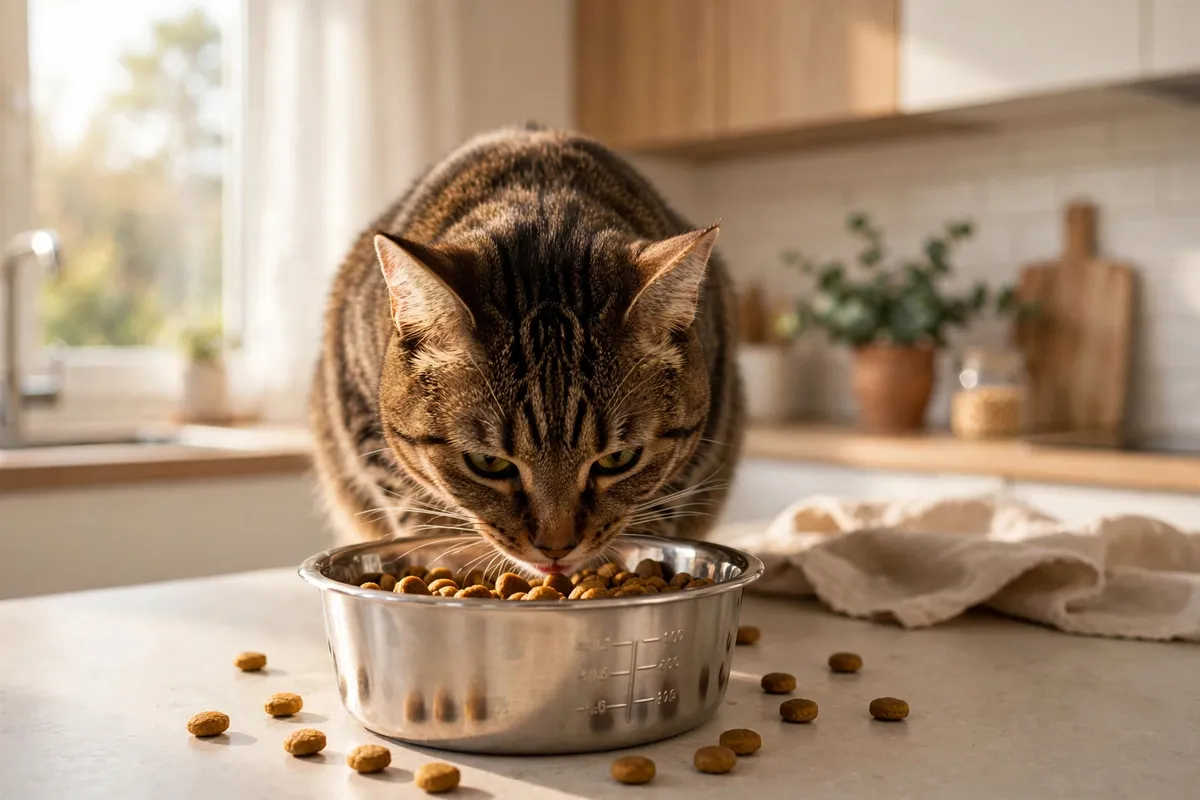
Most cat owners overfeed without realizing it — and the bag's feeding chart is only a starting point, not a prescription. As a rough guide, an average adult cat needs about 20 to 30 calories per pound of body weight per day (roughly 200 to 300 calories for a 10-pound cat), with indoor and neutered cats at the lower end. But the right portion for your cat depends on age, weight, activity level, and whether they eat wet or dry food, so use this guide to dial in the right amount — and ask your vet for an exact calorie target.
Getting portions right matters more than most owners think. Underfeeding a growing kitten can slow development, while chronic overfeeding is the number one driver of feline obesity — and obesity raises the risk of diabetes, arthritis, and urinary problems. This guide covers calorie needs by life stage, how to translate calories into actual cups and cans, why a kitchen scale beats a measuring cup, how many meals to serve, and how to adjust portions safely over time.
How Many Calories Does a Cat Need?
Calories are the real currency of feeding — cups and cans are just the packaging. A widely used rough guide for an average adult cat is 20 to 30 calories per pound of body weight per day. For a 10-pound cat, that is roughly 200 to 300 calories daily. Where your cat falls in that range depends on lifestyle:
- Indoor, neutered, or couch-loving cats: aim for the lower end (around 20 calories per pound). Neutering lowers energy needs, and indoor cats simply burn less.
- Active, intact, or indoor-outdoor cats: aim for the higher end (around 25–30 calories per pound).
- Pregnant or nursing queens: needs climb dramatically — nursing mothers can need two to four times their normal intake. This is a case for direct vet guidance.
These are starting estimates, not medical advice. Body condition matters more than the math: a lean, muscular 12-pound cat and a chubby 12-pound cat need different amounts. Your veterinarian can assess your cat's body condition score and set an exact daily calorie target — that single number makes everything below much easier.
Portion Guide by Life Stage
Kittens (under 12 months). Kittens are growing machines and need calorie-dense kitten food fed in generous amounts — typically three to four meals a day until about six months, then two to three meals until their first birthday. Most kitten foods print age-based feeding charts on the bag; follow them, and let a hungry kitten eat a little more rather than a little less. Underfeeding during growth can cause real developmental problems.
Adults (1–7 years). This is the maintenance phase where portions matter most. Using the 20–30 calories-per-pound guide, a 10-pound indoor neutered cat lands around 200–250 calories a day. Translate that into food using the calorie content printed on the package (listed as kcal per cup or per can), and split it into two meals about 12 hours apart.
Seniors (7+ years). Older cats often need slightly fewer calories as metabolism slows, but protein needs stay high to protect muscle. Many seniors do better with three smaller meals a day, and some develop conditions (like kidney disease or hyperthyroidism) that change their needs entirely — so a senior cat's portions deserve a vet check at least yearly. Watch for unintentional weight loss in older cats; it is always worth investigating.
Wet Food vs. Dry Food: Translating Calories to Portions
Wet and dry foods pack calories very differently, which is why "one cup" means nothing without the label:
- Dry kibble is calorie-dense — typically around 300–450 calories per cup, depending on the recipe. A 10-pound indoor cat's whole day might be just over half a cup. It is easy to over-pour, which is why dry food is the usual suspect in feline weight gain.
- Wet food is mostly water (around 75–80%), so a standard 3-ounce can usually holds only 70–100 calories. That same 10-pound cat might need two to three cans a day — which surprises owners who assume one can is a full meal.
- Mixed feeding is a popular middle ground: for example, one can of wet food plus a measured quarter-cup of kibble. Just add the calories from each part and keep the total at your cat's daily target.
Always check the calorie content on your specific product — two "indoor cat" kibbles can differ by 100 calories per cup. Treats count too: keep them to no more than about 10% of daily calories (for a 250-calorie cat, that is roughly 25 calories of treats — just a few small ones).
Measuring Cups vs. a Kitchen Scale
If you take one habit from this article, make it this: weigh the food, don't scoop it. Studies on pet food measuring have repeatedly shown that a "cup" of kibble can vary enormously depending on the scoop, the kibble size, and how tightly it is packed. A cheap digital kitchen scale removes all the guesswork — weigh the daily portion in grams once, note it down, and repeat.
If you must use cups, use a proper dry measuring cup (not a coffee mug), level it off, and use the same scoop every time. And whatever you measure, measure the whole day's food at once into a container in the morning — then divide it across meals. That way, an extra top-up at dinner is a conscious decision, not an accident.
How Many Meals a Day?
- Adult cats: two meals a day, about 12 hours apart, works for most households and most cats. Put the food down, give them 20–30 minutes, then pick up leftovers. This "meal feeding" also makes it obvious immediately if your cat's appetite drops — an early warning sign of illness.
- Kittens under 6 months: three to four small meals daily. Their stomachs are tiny and their energy needs are huge.
- Seniors and cats with medical conditions: smaller, more frequent meals are often easier to digest — ask your vet what schedule fits your cat.
What about free-feeding (leaving dry food out all day)? It is convenient, and a rare self-regulating cat does fine with it — but most cats graze past their needs, and it is the most common feeding pattern behind feline obesity. If weight is a concern at all, switch to measured meals.
Signs You're Overfeeding Your Cat
Cats gain weight so gradually that owners often don't notice until the vet mentions it. Run this quick check monthly:
- The rib test: run your hands along your cat's sides. You should be able to feel the ribs under a thin layer of fat without pressing hard. If you have to dig, your cat is likely carrying extra weight.
- The waist test: viewed from above, there should be a visible inward curve (a waist) behind the ribs. From the side, the belly should tuck upward — not hang low or sway when walking.
- Behavioral clues: reduced interest in play, difficulty grooming the belly and hindquarters, heavy breathing after mild activity, or reluctance to jump.
If the checks suggest extra weight, don't crash-diet your cat — rapid weight loss can trigger fatty liver disease. A safe rate is roughly 1–2% of body weight per week, achieved by trimming daily calories by about 10–20% and increasing play. Your vet can build the actual plan.
How to Adjust Portions Safely
Cats thrive on gradual change. Whether you are reducing portions for weight loss, increasing them for a growing kitten, or switching foods entirely, change the amount by small steps over 7 to 10 days. Weigh your cat every two weeks during any adjustment (a bathroom scale works: weigh yourself holding the cat, then without, and subtract).
Reassess portions at every life change: after neutering or spaying (needs drop), when a kitten becomes an adult (switch from kitten to adult food around 12 months), as activity changes with the seasons, and at every senior wellness visit. The "right" portion is a moving target — the owners who get it right are the ones who keep checking.
Frequently Asked Questions
How many times a day should I feed my cat?
Most adult cats do well on two meals a day, roughly 12 hours apart. Kittens under six months need three to four smaller meals daily because of their tiny stomachs and high energy needs. Seniors also often do better with smaller, more frequent meals. Consistency matters more than the exact schedule — feed at the same times each day.
How many calories does an indoor cat need per day?
A rough guide is about 20 to 30 calories per pound of body weight per day for an average adult cat, which works out to roughly 200 to 300 calories for a 10-pound cat. Indoor, neutered, or less active cats usually need the lower end, while active or intact cats need more. Your veterinarian can set an exact calorie target for your cat's weight and body condition.
Is it better to feed cats wet food or dry food?
Both can be part of a healthy diet. Wet food provides much-needed moisture, which supports urinary and kidney health, while dry food is convenient and calorie-dense. Many vets recommend a mix — wet food as the base with a measured amount of dry food. The key is measuring portions rather than free-feeding, whichever type you choose.
Should I leave food out for my cat all day?
Free-feeding (leaving dry food out all day) is the most common cause of feline weight gain. Most cats graze beyond their needs when food is always available. Measured meals — where you put down a set portion and pick up leftovers after 20 to 30 minutes — give you real control over how much your cat eats.
How do I know if my cat is overweight?
Run your hands along your cat's ribs — you should be able to feel them under a thin layer of fat without pressing hard. Looked at from above, your cat should have a visible waist behind the ribs, and from the side the belly should tuck up rather than hang. If you cannot feel the ribs or there is no waistline, talk to your vet about a weight plan.