Can Cats Eat Tuna? The Truth About Cats and Fish
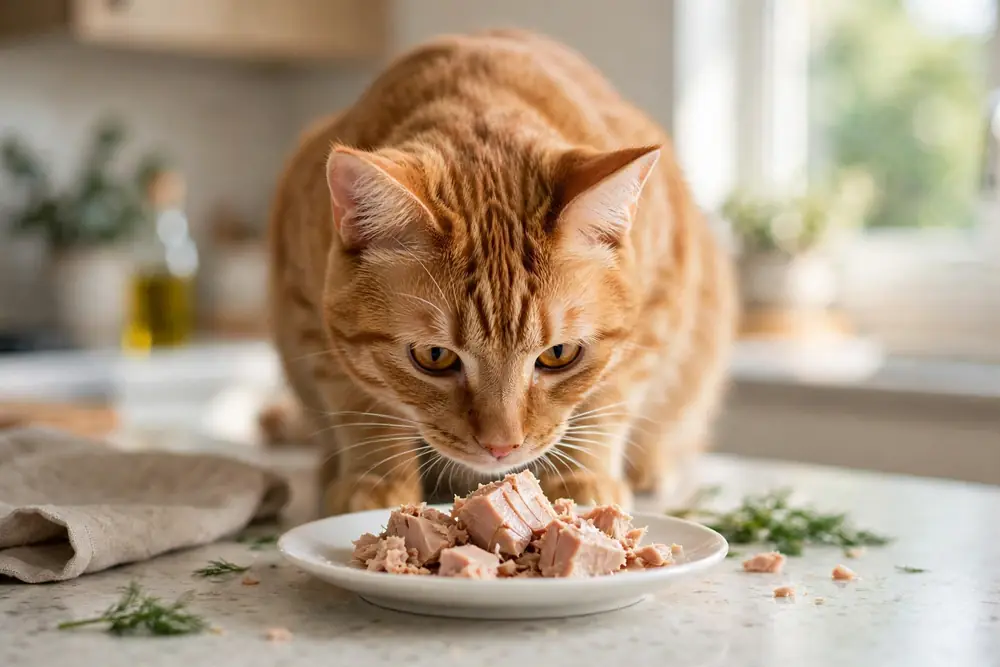
If your cat goes wild at the sound of a can opening, you've probably wondered: can cats eat tuna? The honest answer: yes, cats can eat tuna in small amounts as an occasional treat — but it should never become a regular part of their diet. Too much tuna carries real risks, from mercury exposure to nutritional deficiencies and even a stubborn "tuna addiction" that makes cats refuse proper food. Here's the full truth about cats and tuna, and how to share it safely.
The confusion is understandable. Tuna is fish, cats famously love fish, and pet food aisles are full of tuna-flavored products. But the tuna in your sandwich can is very different from a balanced cat food — and understanding that difference keeps your cat safe while still letting them enjoy an occasional nibble.
Why Cats Love Tuna So Much
It comes down to biology. Cats are obligate carnivores with a powerful sense of smell — and tuna is intensely aromatic, rich in protein, and packed with the umami flavors cats are wired to crave. The strong smell hits their nose before the can is even fully open, which is why "tuna" might as well be a dinner bell in most cat households.
Pet food companies know this too, which is why tuna flavoring appears in so many cat foods. But there's a big difference between tuna-flavored cat food (formulated to be nutritionally complete) and actual canned tuna from your pantry.
The Risks of Too Much Tuna
- Mercury accumulation. Tuna are large predatory fish, and mercury builds up in their tissues through the food chain. Occasional nibbles are not a concern, but regular tuna feeding can lead to mercury accumulation in your cat over time — and cats are small, so it adds up faster than in humans.
- Nutritional deficiency. Plain tuna — whether canned for humans or fresh — is not a complete diet. It lacks sufficient vitamin E, taurine in the right balance, and other nutrients cats need. A cat fed mostly tuna can develop deficiencies, including steatitis ("yellow fat disease") from vitamin E deficiency.
- Tuna addiction. This is real and surprisingly common. Cats fed tuna regularly can become so fixated that they refuse balanced cat food entirely. Breaking the habit later is genuinely difficult — prevention is far easier.
- Too much sodium and additives. Human canned tuna is packed for human taste: added salt, and sometimes onion or garlic flavoring, both of which are toxic to cats. Even "in water" varieties are saltier than ideal.
- Raw tuna risks. Raw tuna can contain thiaminase, an enzyme that destroys thiamine (vitamin B1). Thiamine deficiency in cats causes serious neurological problems. Always cook fish served to cats.
How to Feed Tuna Safely
Want to share a little? Follow these rules:
- Occasional treat only — a teaspoon-sized nibble now and then, not a meal and not daily.
- Choose tuna in water with no added salt, and drain it well. Avoid tuna in oil, brine, or any flavored/salted variety.
- Skip anything with onion or garlic — check flavored tuna pouches carefully; both are toxic to cats.
- Use it as a lure, not a diet. A little tuna water drizzled over regular food is a great trick to tempt a picky or recovering cat to eat.
- Kitten caution: kittens have even less margin for nutritional imbalance — keep tuna to the tiniest taste.
Think of tuna the way you'd think of ice cream for yourself: a delightful occasional treat, a terrible staple food.
Better Fish Options for Cats
If your cat is a fish fanatic, these are safer everyday choices:
- Complete cat foods with fish — salmon, whitefish, or tuna-based cat foods that are labeled "complete and balanced." The formulation does the nutritional heavy lifting for you.
- Small, cooked fish like salmon or sardines (in water, no salt) as occasional treats — smaller fish accumulate less mercury than tuna.
- Commercial cat treats in fish flavors, fed within treat limits (under 10% of daily calories).
The pattern is simple: fish flavor is fine, fish as the whole diet is not. Let the balanced cat food do the nutrition work, and let real fish be the exciting bonus.
Tuna Cat Food vs. Human Tuna: What's the Difference?
This is where most confusion lives, so let's be precise. When a can says "tuna" in the pet aisle, it's a different product from the tuna in your pantry:
- Tuna-flavored or tuna-based cat food starts with fish but is then fortified with taurine, vitamins, minerals, and balanced fat levels to meet complete-nutrition standards. The tuna is an ingredient, not the whole recipe.
- Human canned tuna is just tuna plus water or oil plus salt — nutritionally incomplete for cats no matter how much they love it.
So yes, you can absolutely buy tuna-based cat food as part of a normal rotation — just check for the "complete and balanced" statement. Variety is actually good: rotating proteins (chicken, turkey, fish-based formulas) provides a broader nutrient profile and keeps picky cats interested.
One more nuance: some cats develop sensitivities to fish-heavy diets — occasional skin itchiness or softer stools. If you notice that after switching to a fish-based food, try rotating back to poultry for a few weeks and see if it resolves. Every cat's gut is a little different.
Bottom line: tuna as a flavor in proper cat food = great. Tuna from your sandwich can as a meal = treat only. Keep the two in separate mental boxes and you'll never go wrong.
The One-Tuna Rule to Remember
If all of this feels like a lot to remember, keep just one rule: tuna is a treat, never a meal. A teaspoon-sized nibble of tuna in water (no salt) as an occasional delight is perfectly fine and will make you your cat's favorite human for the afternoon. A bowl of tuna as dinner — regularly — is where every problem in this article begins. Treat, not meal. That's the whole philosophy in four words.
Frequently Asked Questions
Can kittens eat tuna?
Only the tiniest taste as a rare treat. Kittens are growing fast and need precisely balanced nutrition — even small dietary imbalances matter more for them. Stick to kitten-formulated food as the staple.
Is tuna in oil or tuna in water better for cats?
Tuna in water (no added salt) is the better choice. Tuna in oil adds unnecessary fat and calories, and flavored oils may contain ingredients that aren't cat-safe.
My cat refuses everything except tuna — what do I do?
This is tuna addiction, and it's fixable but takes patience: gradually mix increasing amounts of balanced wet food into the tuna over 1–2 weeks. Warm the new food to boost aroma. If your cat holds out beyond 24 hours without eating, consult your vet — don't let them starve into compliance.
Are tuna-flavored cat foods safe?
Yes — commercial cat foods labeled "complete and balanced" are formulated to meet all nutritional needs regardless of flavor. The risks discussed here apply to human canned tuna, not properly formulated cat food.
Can cats eat raw tuna / sushi?
No. Raw tuna can contain thiaminase, which destroys vitamin B1 (thiamine) and can cause serious neurological issues in cats, plus the usual raw-fish parasite and bacteria risks. Always cook fish for cats.