Best Cat Food for Indoor Cats in 2026
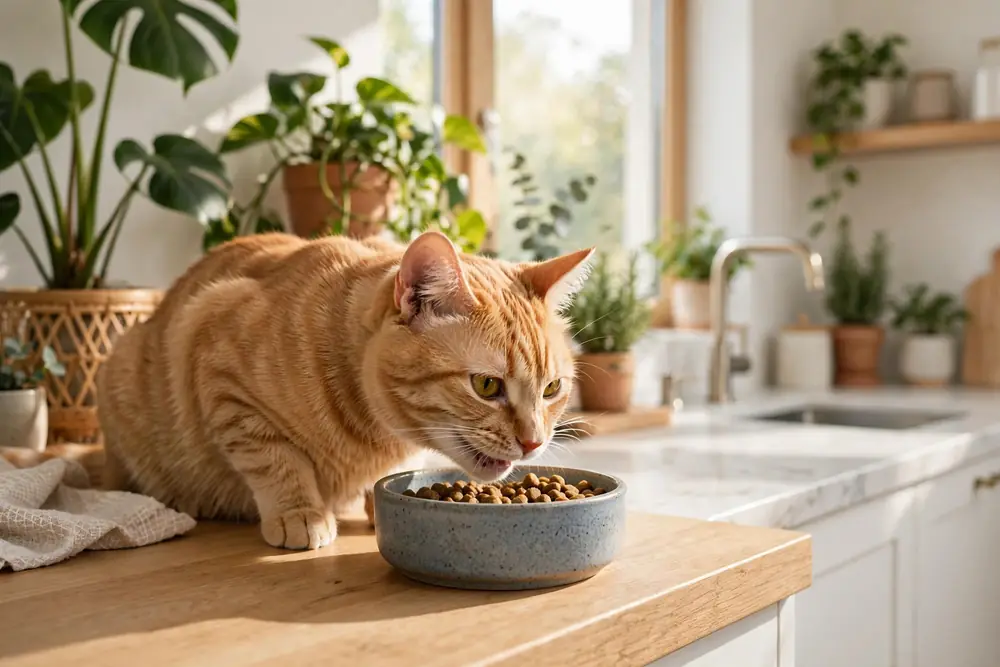
Indoor cats live longer, safer lives than outdoor roamers — but their lifestyle creates specific nutritional needs. The short answer to "what's the best food for indoor cats": look for a complete, balanced food formulated for indoor cats, with controlled calories, good fiber for hairballs, and nutrients supporting urinary health. This guide explains exactly what those labels mean, what to prioritize, and how to pick the right food without drowning in marketing claims.
An indoor cat burns fewer calories, grooms more (hello, hairballs), and can be prone to weight gain and urinary issues. The right food addresses all three — but the pet food aisle makes it deliberately confusing. Let's cut through the noise with what actually matters.
Why Indoor Cats Need Different Food
Life indoors changes a cat's needs in three key ways:
- Lower activity, lower calorie needs. An indoor cat may burn significantly fewer calories than an active outdoor cat. Fed the same portions, indoor cats gain weight — and feline obesity drives diabetes, joint problems, and liver disease.
- More hairballs. Bored indoor cats groom more, swallowing more fur. Indoor formulas typically include extra fiber to help move hair through the digestive tract.
- Urinary health. Indoor cats — especially males — can be prone to urinary crystals and blockages, influenced by diet mineral balance and water intake. Many indoor formulas adjust mineral levels and pH to support urinary tract health.
What to Look For on the Label
- "Complete and balanced." This is non-negotiable. It means the food meets established nutritional standards for your cat's life stage. Without this statement, it's a treat or supplement, not a diet.
- Named animal protein first. Look for "chicken," "turkey," "salmon" — not vague "meat by-products" or "poultry meal" as the lead ingredient. Cats are obligate carnivores; protein should dominate.
- Calorie control. Indoor formulas are typically slightly lower in fat and calories. Check the kcal/kg on the label and match portions to your cat's ideal weight, not their current appetite.
- Fiber for hairballs. Look for natural fiber sources (beet pulp, cellulose, psyllium) in indoor formulas — they help ingested fur pass through instead of coming back up.
- Life-stage match. Kitten, adult, and senior foods differ meaningfully. An indoor adult formula is the right default for cats aged 1–7; seniors (11+) often do better on senior-specific food.
- Moisture matters. Wet food (or a wet/dry mix) dramatically increases water intake, which supports kidneys and urinary health. Many vets recommend at least some wet food daily for indoor cats.
Wet vs. Dry for Indoor Cats
Both can work — the best choice is often a mix:
- Wet food pros: high moisture (great for urinary/kidney health), usually higher in protein, more filling per calorie — excellent for weight management.
- Wet food cons: more expensive, spoils if left out, can contribute to dental tartar without dental care.
- Dry food pros: convenient, cost-effective, good for puzzle feeders and enrichment, some formulas have dental benefits.
- Dry food cons: low moisture, calorie-dense (easy to overfeed), some cats drink too little water to compensate.
A practical middle ground many vets suggest: measured dry food for daytime grazing plus a wet meal morning and evening. Whatever you choose, measure portions — "free-feeding" dry food is the fastest route to an overweight indoor cat.
How Much to Feed (and How to Switch)
Start with the feeding guide on the package for your cat's ideal weight — then adjust. You should be able to feel (not see) the ribs, and there should be a visible waist from above. If you're unsure, your vet can confirm ideal weight at a checkup.
When switching foods, transition over 7–10 days: mix a little new food into the old, gradually increasing the ratio. Abrupt switches cause vomiting and diarrhea in many cats — and a hunger strike in picky ones.
Weigh the food with a kitchen scale for the first week if you can. "A scoop" is notoriously inaccurate, and for indoor cats, a 10% overfeed every day adds up to real weight gain over months.
Red Flags on Cat Food Labels
- No "complete and balanced" statement — it's not a full diet.
- Sugar, caramel color, or "animal digest" high on the list — palatability tricks, not nutrition.
- Miracle claims ("cures urinary problems," "vet-recommended" without specifics) — marketing, not medicine.
- Boutique/exotic ingredients with no feeding trials — novel isn't automatically better.
Price correlates weakly with quality — some mid-priced foods with feeding-trial backing outperform luxury brands. The label statements matter more than the price tag.
A Simple Indoor Feeding Schedule That Works
Theory is nice; here's what a practical day looks like for an average indoor adult cat:
- Morning (around 7–8am): wet food meal — roughly half the day's wet portion. Serve, then pick up leftovers after 30 minutes.
- Midday: a measured portion of dry food in a puzzle feeder. This adds enrichment and slows eating — indoor cats need the mental workout as much as the calories.
- Evening (around 6–7pm): the second wet food meal. Cats are crepuscular (most active at dawn and dusk), so evening is when appetite peaks.
- Fresh water refreshed twice daily — and consider a fountain; many indoor cats drink noticeably more from moving water.
Adjust timing to your routine — consistency matters more than the exact hour. The keys are: measured portions (a kitchen scale removes all guesswork), no all-day grazing bowl of dry food, and wet food anchoring at least one meal.
For multi-cat homes: feed in separate spots, ideally separate rooms. You can't manage portions or spot appetite changes if everyone eats from a communal bowl — and the shy cat often gets bullied away from food without you ever seeing it happen.
Reassess every few months: feel the ribs, check the waistline from above, and adjust portions up or down by about 10%. Indoor cats' needs shift with age, seasons, and activity — the schedule should flex with them.
Frequently Asked Questions
Do indoor cats really need special "indoor" formula food?
Not strictly — a high-quality regular adult food fed in correct portions works too. But indoor formulas are genuinely useful: they typically address the big three indoor issues (weight, hairballs, urinary health) in one bag, which is convenient.
How much should I feed my indoor cat per day?
It depends on the food's calorie density and your cat's ideal weight — start with the package guide for ideal weight, then adjust based on body condition. Most indoor adult cats do well on roughly 200–250 calories daily, but confirm with your vet.
Is wet food or dry food better for indoor cats?
Wet food has the edge for hydration and weight control, which matter a lot indoors. A mix of both — measured dry food plus daily wet meals — gives you the benefits of each.
My indoor cat is overweight — should I buy diet food?
First, measure current portions accurately — most "diet" needs are actually portion problems. If portions are correct and weight still climbs, talk to your vet before switching; therapeutic weight-loss foods work best under veterinary guidance.
Can indoor cats eat the same food as outdoor cats?
They can, but outdoor formulas assume higher calorie burn. Feeding an outdoor-activity formula to a couch-loving indoor cat usually leads to weight gain. Match the food to the lifestyle.