Wet vs Dry Cat Food: Which Is Better?
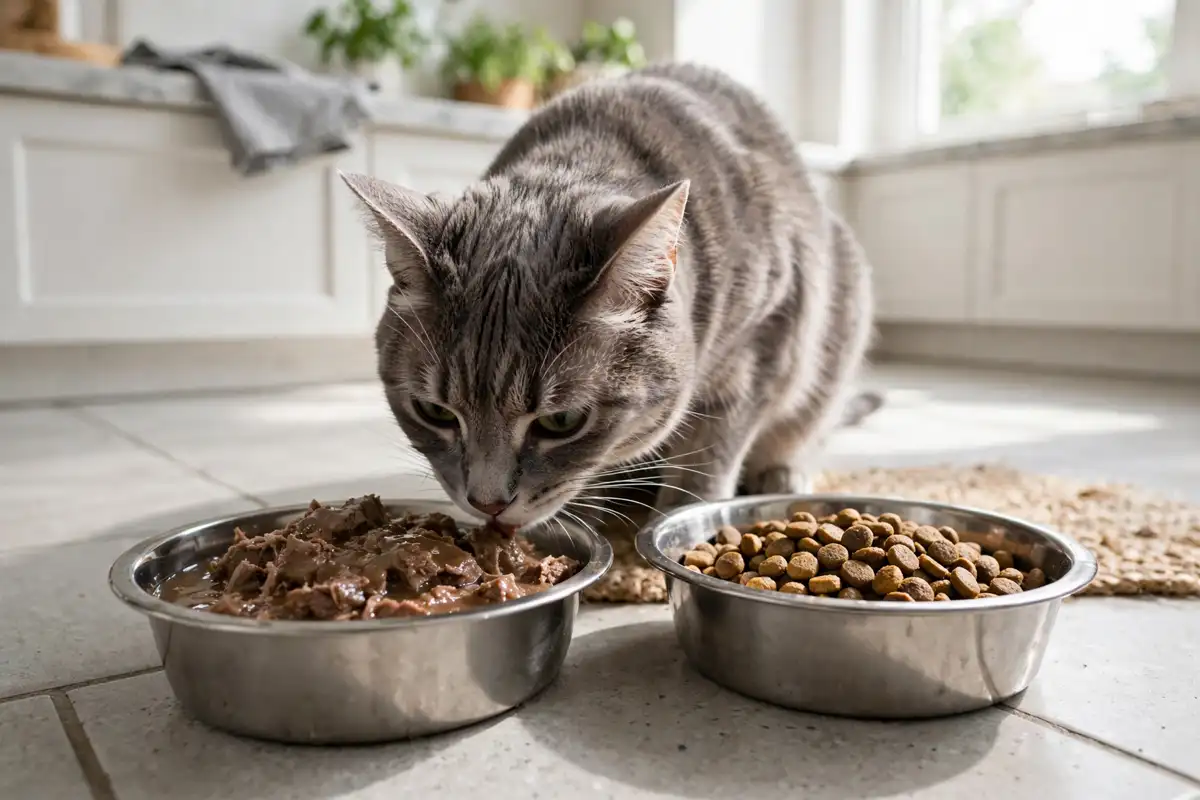
Walk down the cat food aisle and you face a wall of choices — but one question divides cat owners more than any other: is wet or dry cat food better? Here is the honest answer up front: for most cats, wet food has the nutritional edge, mainly because of its high moisture content. But a high-quality dry food beats a poor-quality wet food every time, and many veterinarians recommend feeding a mix of both. The format matters less than the quality of what is inside the bag or can. Below, we compare wet and dry cat food on nutrition, hydration, cost, convenience, and dental health — so you can choose with confidence.
The Short Answer: Wet Edges Ahead on Nutrition, Dry Wins on Convenience
If forced to pick a winner on nutrition alone, wet food usually comes out on top. It is roughly 70–80% water, which supports hydration and urinary tract health — a real advantage for a species descended from desert animals that never evolved a strong thirst drive. Wet foods also tend to be higher in animal protein and lower in carbohydrates than dry foods. Dry food, on the other hand, wins on practicality: it is cheaper per calorie, easy to store, simple to portion, and works well for cats who like to graze. Neither format is "wrong," and the best choice often depends on your cat, your budget, and your routine.
Why Wet Cat Food Is Often Recommended
Veterinary nutritionists lean toward wet food for several well-established reasons:
- Hydration. Cats are notoriously reluctant drinkers. A diet built on wet food delivers a large share of their daily water through meals, which helps dilute urine and supports kidney and urinary tract health — particularly valuable for male cats, who are prone to urinary blockages.
- Higher animal protein. Wet recipes generally contain more meat-based protein and fewer fillers than kibble, which suits an obligate carnivore's biology.
- Lower carbohydrates. Dry food needs starch to hold the kibble together, so it almost always contains more carbs. Wet food typically keeps carbs lower, which many vets prefer for cats.
- Palatability. The aroma and texture of wet food tempt picky eaters, senior cats, and cats recovering from illness — which is exactly when eating well matters most.
The Case for Dry Cat Food
Dry food gets plenty of criticism online, but it has genuine, practical strengths:
- Cost. Calorie for calorie, dry food is significantly cheaper than wet food — a real factor when you are feeding multiple cats or a very hungry teenager of a cat.
- Convenience. Kibble can sit in the bowl for hours without spoiling, making it ideal for working owners and for grazing cats. It is also the easiest format for puzzle feeders and automatic feeders.
- Calorie density. Because it contains little water, a small scoop of kibble packs a lot of energy — useful for underweight cats that need to gain.
A premium dry food that is complete and balanced can absolutely support a healthy cat — especially one that drinks plenty of water from a bowl or fountain.
Downsides of Wet Cat Food
Wet food is not perfect either, and the drawbacks are mostly practical:
- Price. Feeding wet food exclusively can cost several times more than a dry diet over a month, particularly for large or multi-cat households.
- Spoilage. Once opened, wet food must be refrigerated and used within a couple of days. Food left in the bowl should be discarded after about two hours at room temperature.
- Odor. Open cans of fish-flavored food have a distinctive smell that not every household enjoys — and some cats will reject refrigerated leftovers unless warmed to room temperature.
Downsides of Dry Cat Food
The main concerns with an all-dry diet are nutritional:
- Low moisture. Dry food is only about 10% water. Cats eating dry food alone get far less water from meals, and many do not drink enough from the bowl to fully compensate — which is linked to more concentrated urine and a higher risk of urinary and kidney problems over time.
- Higher carbohydrate content. Kibble manufacturing requires starch, so dry foods generally carry more carbs than wet foods. A very high-carb diet is not ideal for an obligate carnivore, especially for overweight or diabetic cats.
What About Dental Health?
You may have heard that crunchy kibble cleans a cat's teeth. Unfortunately, the evidence is weak: most cats swallow kibble whole or crack each piece once, so it spends almost no time scrubbing tooth surfaces. If dental health is your concern, do not rely on kibble — regular tooth brushing with cat-safe toothpaste and vet-recommended dental products are far more effective.
The Best of Both Worlds: How to Combine Wet and Dry
Here is the approach many veterinarians actually recommend: feed both. A common pattern is wet food for the main meals (breakfast and dinner, when hydration matters most) plus a measured portion of dry food for daytime grazing or enrichment. This gives your cat the moisture and protein of wet food with the convenience and cost savings of dry.
The key is adjusting total calories so you are not accidentally feeding two full diets. Start with the feeding guides on both products, then scale so the combined portions match your cat's daily needs — an average indoor adult cat needs roughly 200–250 calories per day, though your vet can fine-tune this for your cat's weight and activity. And always provide fresh water regardless of diet.
Transitioning Between Food Types
Cats are famous for rejecting sudden change — switching foods overnight often ends with a hunger strike and an upset stomach. Transition gradually over 7 to 10 days:
- Days 1–3: mix about 25% new food with 75% old food.
- Days 4–6: move to a roughly 50/50 split.
- Days 7–9: shift to 75% new, 25% old.
- Day 10: fully on the new food.
If your cat gets diarrhea or refuses to eat at any stage, slow down and spend extra days at the previous ratio. A healthy adult cat should never go more than 24 hours without eating — fasting can trigger a dangerous liver condition called hepatic lipidosis — so never let a transition turn into a standoff.
How to Read a Cat Food Label
Format aside, quality varies enormously within both categories. A few label-reading basics from our broader cat food guides:
- Look for the AAFCO statement. It should say the food is "formulated to meet the nutritional levels established by the AAFCO Cat Food Nutrient Profiles" for a specific life stage (growth, adult maintenance, or all life stages). This is the single most important line on the label.
- Named animal protein first. Look for a specific named protein — chicken, turkey, salmon — as the first ingredient, rather than vague terms like "meat" or "animal digest."
- Check life-stage fit. Kitten food, adult food, and senior formulas differ meaningfully; feeding the right life stage matters more than the wet/dry debate.
- Ignore marketing fluff. Terms like "gourmet," "premium," and "natural" have no regulated nutritional meaning. The guaranteed analysis and the AAFCO statement tell you far more.
Frequently Asked Questions
Is wet cat food actually better than dry?
For most cats, yes — wet food's high moisture content supports hydration and urinary health, and it tends to be higher in animal protein with fewer carbohydrates. That said, a high-quality complete dry food is far better than a poor-quality wet food, so the specific product matters as much as the format.
Can I feed my cat both wet and dry food?
Absolutely. Many owners and veterinarians recommend a combination — for example, wet food for the main meals and a measured amount of dry food for grazing or enrichment. Just adjust the portions so the total daily calories stay in the right range for your cat's size and activity level.
How much wet food should I feed my cat each day?
It depends on the food's calorie content and your cat's needs, but an average-sized indoor adult cat needs roughly 200 to 250 calories per day. Check the feeding guide on the can as a starting point, then adjust based on your cat's weight and body condition — your vet can confirm the right target.
Does dry cat food clean my cat's teeth?
Not really. Most cats swallow kibble whole or crack it once, so it provides very little scrubbing action — and the idea that dry food keeps teeth clean is not well supported by evidence. Regular tooth brushing and vet-recommended dental products are far more effective.
How long can wet cat food sit out in the bowl?
Discard uneaten wet food after about two hours at room temperature — bacteria multiply quickly in moist food. Refrigerate opened cans promptly and warm refrigerated portions to room temperature before serving, since many cats dislike cold food.