Automatic Cat Feeder Buying Guide 2026
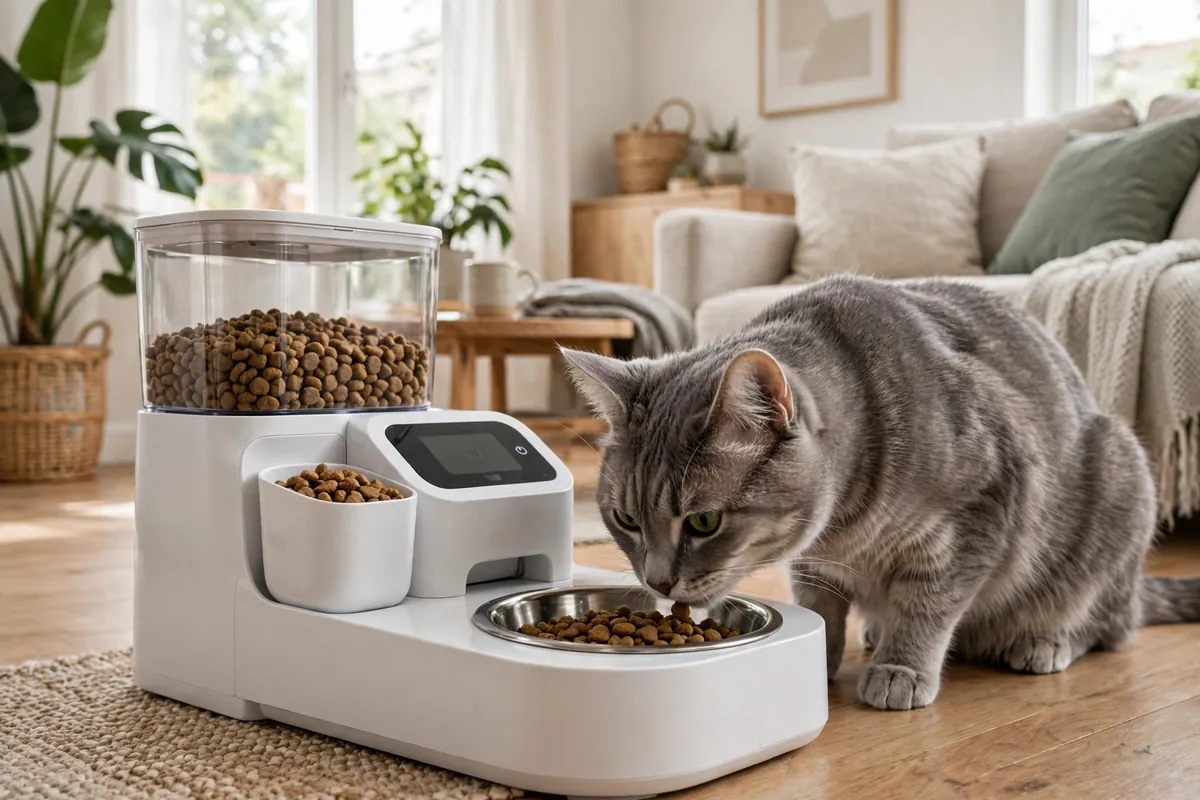
The short answer: automatic cat feeders dispense measured meals on a set schedule, in three main types: gravity (simple, always-full bowls), programmable (timed portions, the most popular), and smart (app-controlled, sometimes with cameras). For most owners, a programmable feeder with adjustable portions, a reliable timer, and battery backup is the sweet spot. This guide walks you through each type, the 7 features that actually matter, who benefits most, and how to get your cat happily eating from one.
An automatic feeder isn't about being lazy — it's about consistency. Cats thrive on routine, and timed meals help with weight management, early-morning wake-up calls, and unpredictable schedules. But not all feeders are equal: a cheap gravity feeder and a well-designed programmable one solve very different problems. Here's how to choose.
The 3 Types of Automatic Cat Feeders
- Gravity feeders. The simplest design: a hopper of dry food sits above a bowl, and gravity refills the bowl as your cat eats. They're inexpensive, silent, and need no power. The catch: there's no portion control — the bowl is always full — so they're a poor fit for overweight cats or multi-cat homes where one cat hogs the food. Food also sits exposed and goes stale faster.
- Programmable (timed) feeders. The workhorse category. You set specific meal times and portion sizes, and the feeder dispenses on schedule — typically from a sealed hopper holding several days of kibble. Most run on batteries or mains power with battery backup. These are the best choice for weight management, consistent routines, and owners who work irregular hours.
- Smart feeders. Programmable feeders plus connectivity: Wi-Fi/app control, meal notifications, and sometimes a camera or two-way audio so you can check in remotely. Premium models add microchip recognition, feeding only the right cat — ideal for multi-cat homes with different diets. The trade-offs are higher cost, dependence on your Wi-Fi, and more setup.
One more niche: wet-food feeders with timed lids and ice packs, for wet-food cats. They keep food fresh only about a day — a supplement to, not a replacement for, a sitter on longer trips. Whatever type you consider, start with our cat food guides to make sure the diet going into the feeder is a good one.
7 Key Features That Actually Matter
- Portion control. The single most important feature. Look for adjustable meal sizes and multiple meals per day — ideally 4 or more. Precise portions turn a feeder into a weight-management tool rather than an all-you-can-eat buffet.
- Reliable timer and scheduling. The feeder should keep its schedule even through power blips. Check that meal times are easy to set, that the clock doesn't drift, and that settings survive a battery change.
- Battery backup. Mains-powered feeders should have battery backup, and battery-only feeders should have a low-battery indicator. A feeder that dies silently while you're at work is worse than no feeder — your cat misses meals with no one noticing.
- Anti-jam design. Kibble pieces vary in size and shape, and cheap dispensing mechanisms jam. Look for an agitator or rotating mechanism that keeps food flowing, and confirm compatibility if your cat eats unusually large or oddly shaped kibble.
- Sealed, fresh-keeping hopper. A hopper with a decent seal and a desiccant compartment keeps kibble fresher and crunchier for days. Avoid designs where food sits in an open tray — stale food is one of the fastest ways to put a cat off the feeder entirely.
- Easy cleaning. Food-contact parts should come apart easily and be washable — dishwasher-safe bowls and hoppers are a big plus. Kibble oils go rancid over time, so a feeder you dread cleaning quietly becomes a hygiene problem.
- Cat-proofing. Clever cats learn to paw, nudge, or tip feeders to shake out extra food. A stable base, a locking lid, and a dispensing mechanism that can't be fished with a paw will save you from 3 a.m. "bonus meals."
Who Benefits Most From an Automatic Feeder?
- Owners with irregular schedules. Shift workers and commuters — the feeder keeps mealtimes consistent even when life isn't.
- Cats on a diet. Measured portions remove the guesswork (and the guilt) of portioning. Combined with a proper feeding routine, timed meals are one of the most effective weight-management tools.
- Early-morning wake-up cats. If your cat yowls at 5 a.m. for breakfast, a feeder that dispenses at 5 a.m. breaks the "human = food" association — and lets you sleep.
- Multi-cat households with different diets. Microchip-recognition feeders let a senior cat get kidney-friendly food while a kitten gets growth formula, with no policing required.
- Cats on timed medication. When pills must be given with food at set times, a feeder guarantees the meal part happens on schedule.
One honest caveat: a feeder is not a pet sitter. Beyond a day or two, you still need a human checking in — feeders jam, water bowls get knocked over, and no machine notices illness.
How to Transition Your Cat to an Automatic Feeder
Most cats accept a feeder within a few days if you introduce it gradually:
- Let them investigate first. Place the feeder (turned off) next to the regular bowl for a day or two so your cat can sniff it and decide it's not scary. A treat placed on top helps.
- Run it alongside the old routine. For the first few days, let the feeder dispense one meal while you still hand-feed the others. Your cat learns the machine's sound means food.
- Shift meals over one at a time. Move breakfast to the feeder first, then dinner a few days later. Abrupt full switches stress some cats into skipping meals.
- Keep the same food. Don't change the food and the delivery method at once — too many changes at once is the classic recipe for a hunger strike.
- Monitor intake for a week. Check that portions look right, nothing is jamming, and your cat is actually eating the dispensed meals (not just staring at the machine in betrayal).
Nervous cats may need a slower timeline — a week of "off" investigation before the first timed meal is fine. Patience now prevents a feeder that sits unused in a closet.
Cleaning and Maintenance Tips
- Wash food-contact parts weekly. Bowls and dispensing chutes collect oily residue from kibble; warm soapy water (or the dishwasher, if parts allow) keeps them hygienic.
- Empty and wipe the hopper monthly. Crumbs and dust collect at the bottom — a full empty-and-wipe keeps the mechanism smooth and the food fresh.
- Check for jams regularly. Peek into the dispensing area when you refill — a stuck piece of kibble caught early is a two-second fix; caught late, it's a missed meal.
- Test the schedule after battery changes. Replacing batteries can reset clocks or meal programs on some models. Always run a manual test dispense afterward.
- Keep the area clean. Crumbs around the feeder attract ants and encourage floor-grazing instead of bowl-eating. A quick daily sweep does it.
- Watch portions over time. As seasons change and your cat's activity shifts, the "right" portion may need adjusting — re-weigh your cat every month or two and tweak as needed.
Frequently Asked Questions
Are automatic cat feeders safe to leave my cat alone with?
For daily use while you're at work, yes — a well-maintained feeder with battery backup is reliable. But they're no substitute for human care on multi-day trips: mechanisms jam, water bowls get knocked over, and no feeder notices illness. Beyond a day or two, arrange a sitter.
Can automatic feeders dispense wet food?
Standard hopper feeders are dry-kibble only. Dedicated wet-food feeders with timed lids and ice packs keep food fresh roughly a day — fine for daily scheduling, not weekends away.
Will an automatic feeder help my overweight cat lose weight?
It helps enormously with the consistency part: measured portions on a fixed schedule remove free-feeding and "a little extra" creep. But portions still need to match your vet's recommendation — a feeder dispensing too much, too often, just automates overfeeding.
My cat is scared of the feeder's noise — what should I do?
Slow the transition: run it unplugged for days, place treats near (then on) it, and trigger manual dispenses while present so your cat links the sound with food. Most cats adjust within a week; a very noise-sensitive cat may do better with a quiet gravity-style or low-noise model.
How many meals per day should I program?
Most vets recommend at least two meals a day for adult cats, and three to four smaller meals are closer to a cat's natural grazing pattern. Kittens need more frequent meals. Program around your cat's age, health, and your vet's advice — the feeder's flexibility is the point.