Can Cats Eat Watermelon?
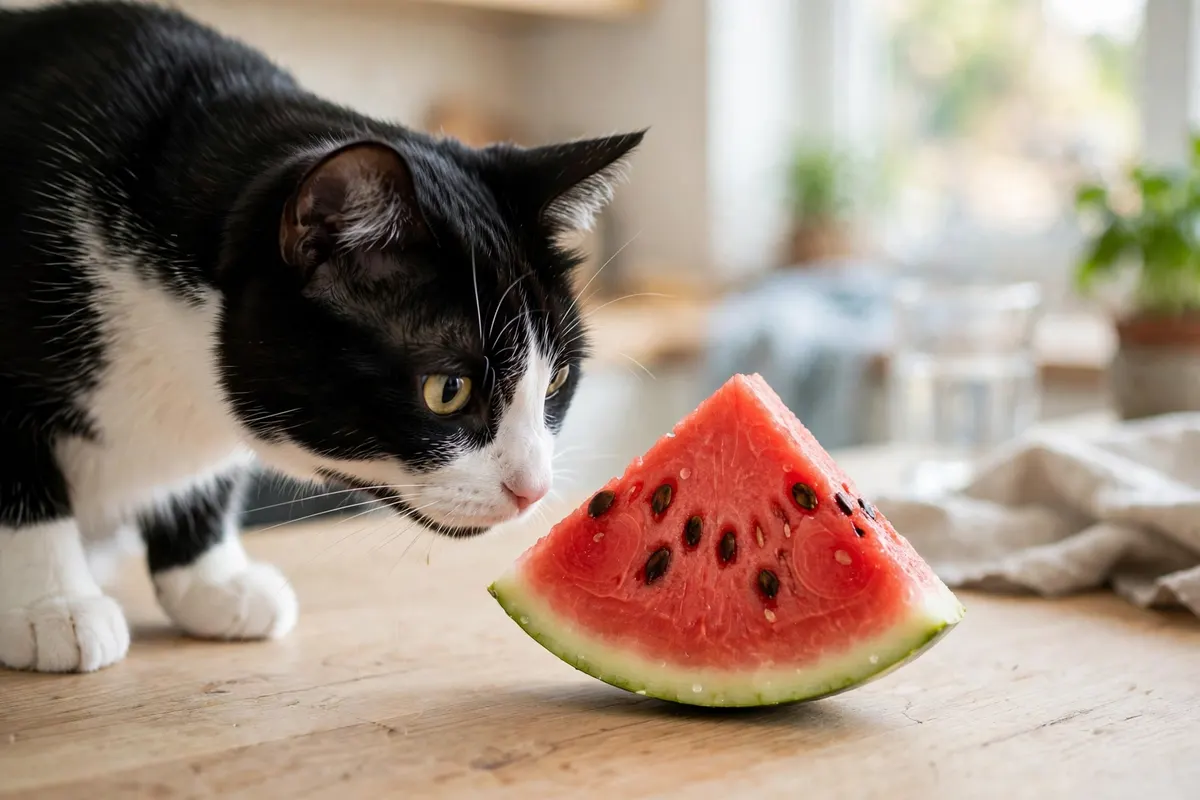
Yes — cats can eat watermelon, but with conditions. Small amounts of plain, seedless watermelon flesh are generally considered safe for cats. The seeds and the tough green rind should always be removed, and watermelon should stay an occasional treat rather than a regular snack. Cats are obligate carnivores, meaning they get everything they need from meat — fruit is never a nutritional requirement for them.
That said, many cats find a cold cube of watermelon on a hot day genuinely interesting, and there is one real benefit worth knowing about: hydration. Watermelon is about 92% water, which can be a small bonus for cats that don't drink enough. This guide covers exactly which parts of watermelon are safe, how to serve it, how much is okay, and the situations where you should skip it entirely.
Is Watermelon Safe for Cats?
The soft red or pink flesh of a watermelon is not toxic to cats. Unlike grapes, raisins, and certain other fruits, watermelon contains nothing that poisons cats in normal amounts. The risks come from the parts around the flesh — seeds, rind — and from overdoing the quantity.
One thing to keep in mind: cats can't taste sweetness the way we do. They lack the taste receptors for sweet flavors, so a cat that seems enthusiastic about watermelon is probably reacting to the cold temperature, the interesting texture, or simply curiosity — not to the sugar. Don't assume eagerness means it's good for them; portion discipline still applies.
The One Real Benefit: Hydration
Many cats are chronically under-hydrated, especially those eating mostly dry food. Cats evolved from desert animals and have a naturally low thirst drive, which is one reason urinary and kidney issues are so common in the species. Anything that adds a little extra water to the day is a small win.
A few cubes of watermelon contribute a bit of fluid along with small amounts of vitamins A and C. It's not a meaningful source of nutrition — your cat's balanced cat food already covers that — but as a hydrating summer treat, watermelon beats most alternatives. Think of it as a fun supplement to fresh water, never a replacement for it.
How to Serve Watermelon to Your Cat
Preparation matters more than most people expect. Follow these steps:
- Choose fresh, ripe watermelon. Cut it yourself rather than using pre-cut tubs, which may have been washed in solutions or mixed with other fruits.
- Remove every seed. Pick out all the dark seeds (the tiny white immature seeds are generally considered harmless, but removing the dark ones is the important part). Seedless watermelon varieties make this much easier.
- Cut away all rind. The green rind and the pale white layer beneath it are tough, fibrous, and hard for cats to digest. Trim generously — when in doubt, cut deeper into the flesh.
- Cut into small cubes. Pieces about the size of a pea or a small dice are right for a cat's mouth. This also makes it easy to control the amount.
- Serve plain and fresh. No salt, no sugar, no lime juice, no Tajín or other seasonings. Room temperature or slightly chilled is fine.
Wash your hands and the cutting surface before prep, the same as you would for your own food. And if your cat sniffs the cube and walks away? That's a perfectly valid answer — not every cat cares about fruit, and there's no reason to push it.
How Much Watermelon Can a Cat Eat?
Keep it tiny. A good rule of thumb is that treats of any kind — including fruit — should make up no more than about 10% of your cat's daily calories. In practical terms, that means just a few small cubes, offered occasionally rather than daily.
For an average adult cat, two or three pea-sized cubes once or twice a week is plenty. More than that doesn't add benefits and increases the chance of an upset stomach. If you're unsure about portions in general, our cat feeding portion guide walks through daily calorie needs by weight and activity level.
Parts to Avoid: Seeds, Rind, and Artificial Anything
- Seeds. Watermelon seeds are a choking hazard for cats and can contribute to intestinal blockages if swallowed in quantity. They also contain trace amounts of cyanogenic compounds — the amounts in a few seeds are minuscule, but there's no reason to test it. Remove them all.
- Rind. The rind is the most common cause of watermelon-related stomach trouble in cats. It's fibrous and difficult to digest, and eating it frequently leads to vomiting or diarrhea.
- Watermelon-flavored products. Juices, candies, flavored yogurts, and "watermelon" pet treats often contain added sugars — and some sugar-free versions contain xylitol, which is toxic to pets. If it didn't come off a real melon, don't share it with your cat.
When Cats Should Skip Watermelon
Watermelon is a sugary fruit, and sugar is never ideal for cats. Skip it — or check with your vet first — in these cases:
- Diabetic cats. The natural sugars in watermelon can affect blood glucose. Cats with diabetes or pre-diabetes should avoid fruit treats unless the vet approves.
- Overweight cats on a diet plan. Extra calories from treats work against a weight-loss plan. Stick to the vet-approved diet.
- Cats with sensitive stomachs. If your cat vomits easily or has chronic digestive issues, introducing any new food — even a safe one — can trigger a flare-up.
- Cats on restricted diets. Prescription diets for kidney, urinary, or allergy issues are carefully balanced. Random additions can interfere, so ask the vet first.
Healthy adult cats with none of these issues can enjoy the occasional cube without worry.
Signs Your Cat Had Too Much Watermelon
Most watermelon mishaps are mild and resolve on their own, but watch for these signs after your cat eats some:
- Vomiting or regurgitation within a few hours
- Loose stool or diarrhea
- Noticeable lethargy or hiding
- Refusing their next regular meal
A single episode of vomiting after a new treat often settles by itself. Call your vet if vomiting or diarrhea continues for more than 24 hours, if your cat stops drinking water, or if you know they ate a large amount of rind or seeds. As with any food question, your vet knows your cat's history best.
Curious about other human foods? See our guides on whether cats can eat tuna and whether cats can eat eggs for more "can cats eat..." answers.
Frequently Asked Questions
Can cats eat watermelon rind?
No. The tough green rind is hard to digest and commonly causes vomiting or diarrhea in cats. Always cut the rind away completely and offer only the soft red or pink flesh.
Are watermelon seeds dangerous for cats?
They can be. Seeds are a choking hazard, can cause intestinal blockages, and contain trace amounts of cyanogenic compounds. The amounts in a few seeds are tiny, but the safest approach is to remove every seed before offering watermelon to your cat.
Is watermelon good for a dehydrated cat?
It can help a little — watermelon is about 92% water, so a few cubes add some extra fluid. But it is not a treatment for real dehydration. A dehydrated cat needs fresh water and veterinary attention, not fruit.
Can kittens eat watermelon?
A tiny piece of seedless flesh is unlikely to harm a kitten, but kittens have sensitive digestive systems and get all the nutrition they need from kitten food. There's no benefit in offering fruit to kittens, so most owners simply wait until the cat is older.
Can cats have watermelon juice or watermelon-flavored treats?
Skip them. Commercial watermelon juices and flavored snacks usually contain added sugars, and some sugar-free products contain xylitol, which is toxic to pets. If you want to share watermelon with your cat, stick to plain fresh fruit with the seeds and rind removed.