Can Cats Eat Salmon? Raw vs Cooked
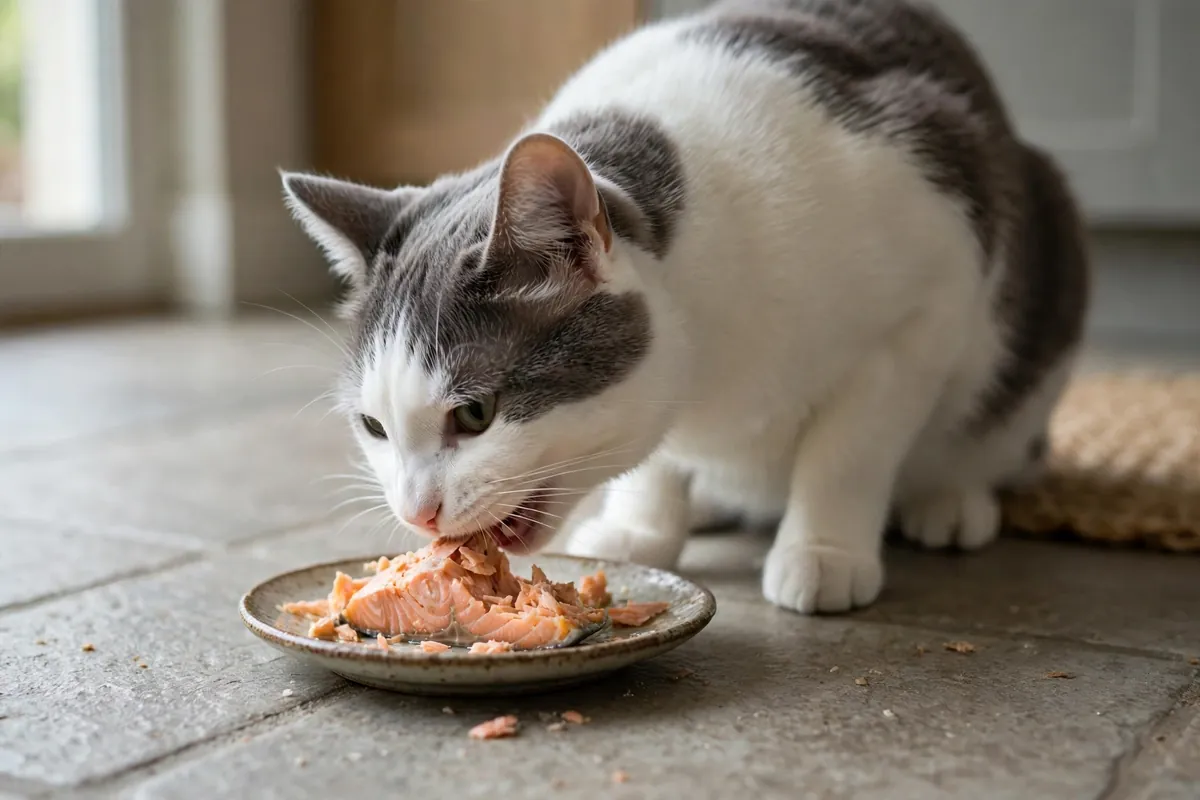
Yes, cats can eat salmon — but only when it is cooked, plain, boneless, and served in small amounts. Cooked salmon is a protein-rich fish that many cats love, and it can be a healthy occasional treat. Raw salmon, on the other hand, is a different story: it can carry bacteria and parasites, and it contains an enzyme that interferes with an essential vitamin. That single difference — raw versus cooked — is what makes salmon safe or risky for your cat.
If you are wondering whether the salmon on your own plate, a tin from the cupboard, or a salmon-flavored cat treat is suitable, this guide covers it all: the nutritional upsides, the real risks of raw fish, how to cook and serve salmon safely, sensible portions, and the types of salmon to skip entirely.
Why Cats Love Salmon (and What It Offers)
Cats are drawn to salmon for the same reason many people are: it smells strong, tastes rich, and is packed with protein. As obligate carnivores, cats need animal protein as the foundation of their diet, and salmon delivers it in a highly digestible form. It also provides omega-3 fatty acids, which support skin and coat health, and a range of B vitamins, potassium, and selenium.
Omega-3s help keep skin supple and coats glossy. Still, salmon is a supplement to a complete cat food, not a replacement for it — treats like salmon should never crowd out a balanced daily diet.
Raw Salmon: Why It Is Risky for Cats
Wild cats eat raw fish, so it is natural to assume raw salmon is fine for a house cat — but raw fish from a shop can carry risks a house cat's stomach is not protected against.
Bacteria and parasites. Raw salmon can harbor bacteria such as Salmonella and Listeria, as well as parasites that can cause digestive illness. Freezing can reduce some parasite risk, but it does not eliminate bacterial risk, and home freezing is not always cold or long enough to be reliable. A cat that eats contaminated raw fish may develop vomiting, diarrhea, lethargy, or loss of appetite.
Thiaminase. Raw fish contains thiaminase, an enzyme that breaks down thiamine (vitamin B1). Thiamine is essential for nerve and brain function, and a deficiency over time can cause serious neurological problems, including loss of coordination and seizures. Cooking inactivates thiaminase, which is one of the strongest practical reasons to always cook salmon for cats.
Salmon poisoning disease. In some regions, particularly the Pacific Northwest of the United States, raw salmon and trout can carry a parasite that causes salmon poisoning disease, a serious and potentially fatal illness in dogs that is also a concern for other animals eating raw freshwater fish. This is another reason raw fish of any kind is not worth the gamble for a pet cat.
The bottom line is simple: raw salmon, sushi-grade salmon, and raw salmon scraps from food preparation should not be given to cats. Cooking removes the main risks and costs nothing in flavor as far as your cat is concerned.
How to Cook and Serve Salmon Safely
- Cook it thoroughly and plainly. Bake, grill, steam, or poach salmon until it flakes easily and is cooked all the way through, with no raw center. Use no oil, butter, salt, garlic, onion, lemon, herbs, or sauces — plain is the only safe seasoning for cats.
- Remove every bone. Fish bones are small, sharp, and easy to miss. They can choke a cat, scratch the mouth or throat, or cause internal injury. After cooking, flake the salmon apart with a fork and check carefully for bones before serving, even if you bought a supposedly boneless fillet.
- Let it cool completely. Serve salmon at room temperature or slightly cool, never straight from the pan. Hot food can burn a cat's mouth, and cats are often impatient around fish.
- Keep the skin off, or check it carefully. Cooked salmon skin is not toxic, but it is fatty and can be hard to digest in larger pieces. For most cats, skinless flakes are the safer choice.
- Serve it fresh. Offer salmon the same day it is cooked, and discard any uneaten portion after a short time at room temperature. Do not leave fish sitting in the bowl for hours, especially in warm weather.
How Much Salmon Can a Cat Eat?
Salmon is an occasional treat, not a daily staple. For most adult cats, about a tablespoon of cooked, boneless salmon once or twice a week is plenty. Smaller cats need less, and larger, more active cats can handle a little more, but there is no benefit in offering large portions. Fish is rich, and too much at once can cause vomiting or loose stools, even in cats that love it.
All treats and extras combined should stay under about ten percent of your cat's daily calories, so salmon should fit inside that allowance rather than being added on top.
Watch your cat after the first taste. Some cats are sensitive to fish or develop a food allergy to it, with signs like itchy skin, ear irritation, vomiting, or diarrhea after eating. If you notice a pattern, stop offering salmon and talk to your veterinarian about whether a fish-free diet makes sense.
Salmon Products: Canned, Smoked, and Cat Treats
Canned salmon. Plain canned salmon packed in water can be offered in small amounts, but read the label first. Many canned fish products are high in sodium, and flavored or brined varieties are unsuitable. If you use canned salmon, rinse it well, remove any bones, and keep the portion small.
Smoked salmon and lox. Best avoided. Smoked salmon is usually very salty, and cold-smoked salmon is not fully cooked, so it can still carry bacteria. A tiny accidental lick is unlikely to cause serious harm, but it should never be a regular treat.
Salmon cat treats and salmon oil. Commercial salmon treats made for cats are generally a safer bet than human salmon products because they are portioned and formulated for cats — but they still count toward the daily treat allowance. Salmon oil supplements are sometimes recommended for coat health; if you are considering one, ask your vet for a suitable product and dose rather than pouring cooking oil or human supplements over food.
When to Skip Salmon Entirely
Skip salmon if your cat has a known fish allergy, chronic digestive problems that flare up with new proteins, or kidney disease that requires a controlled diet — fish is relatively high in phosphorus, which matters in kidney management. Cats on a prescription diet should also stay on that diet unless their vet approves extras. And if your cat is a kitten, stick to kitten food: kittens need precise nutrition for growth, and treats are rarely worth the stomach upset.
Finally, never offer salmon that has been seasoned, marinated, breaded, or cooked with garlic or onion. Garlic and onion are toxic to cats, and marinades often contain salt, sugar, and other ingredients that have no place in a cat's bowl. When in doubt, plain and cooked is the rule.
Frequently Asked Questions
Can cats eat raw salmon?
Raw salmon is not recommended for cats. It can carry bacteria and parasites, and it contains an enzyme called thiaminase that breaks down thiamine, an essential B vitamin. Cooking salmon destroys the parasites and bacteria and inactivates thiaminase, making it much safer.
Can cats eat canned salmon?
Plain canned salmon packed in water, with no added salt or flavorings, can be offered in small amounts, but canned salmon is often high in sodium. Rinse it well, check the label, and keep portions small. Salmon packed in oil or brine, or flavored varieties, are best avoided.
Can cats eat smoked salmon?
Smoked salmon is best avoided. It is usually very high in salt and may contain other seasonings, and cold-smoked salmon is not fully cooked, so it can still carry bacteria. A tiny accidental taste is unlikely to cause serious harm, but it should not be offered as a treat.
How much salmon can a cat eat?
Salmon should be an occasional treat, not a daily meal. A small piece, roughly a tablespoon of cooked, boneless salmon once or twice a week, is plenty for most adult cats. All treats together should stay under about ten percent of daily calories.
Can kittens eat salmon?
Kittens should stick to a complete kitten food formulated for their growth. A tiny taste of plain cooked salmon is unlikely to harm an older kitten, but it is not needed and can upset a sensitive stomach, so it is best to wait until they are adults and check with your veterinarian first.