Can Cats Eat Shrimp? Cooked vs Raw, Vet-Approved Answer
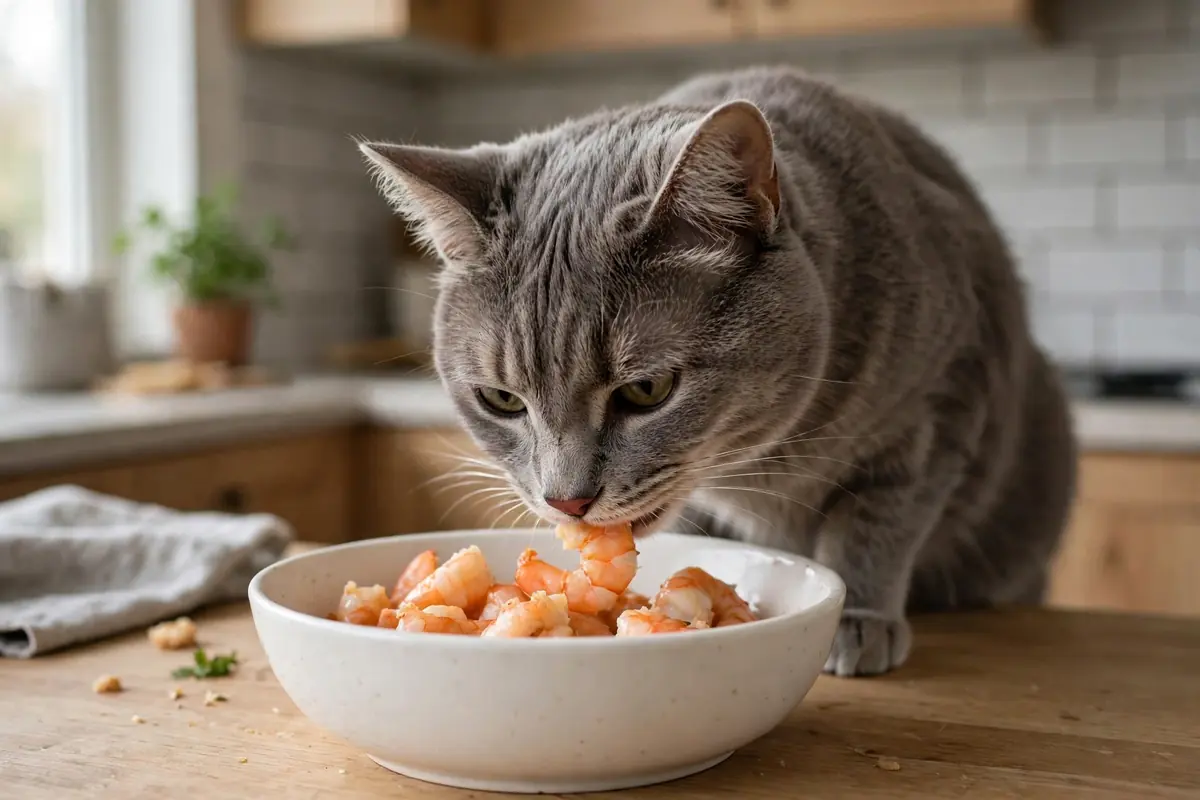
Short answer: yes — cats can eat shrimp, but only when it is plain, fully cooked, peeled, and served as an occasional treat. That one sentence covers the whole answer, yet most of the confusion online comes from the details: cooked versus raw, shells versus peeled, how much is too much, and which shrimp dishes (looking at you, shrimp cocktail and fried shrimp) should never reach your cat's bowl.
Cats are obligate carnivores, which means animal protein is the center of their diet. Shrimp is pure animal protein with very little fat, so it seems like a natural fit — and plenty of cats go wild for the smell of it. But shrimp also comes with real risks when it is raw, seasoned, or served with the shell on. This guide breaks down exactly how to share shrimp with your cat safely, what to avoid, and when to skip the treat entirely.
The Short, Vet-Backed Answer
Plain, cooked shrimp is generally considered safe for cats in small amounts. Boil or steam it with no butter, no garlic, no salt, and no seasoning of any kind. Let it cool completely, peel it, remove the tail and the dark digestive vein, and chop it into small pieces your cat can handle easily.
Raw shrimp is a different story. Uncooked seafood can carry bacteria such as Salmonella and Listeria, plus parasites that cooking destroys. Cats have hardier digestive systems than humans, but they are not immune — foodborne illness in cats causes vomiting, diarrhea, and lethargy, and it is completely avoidable by cooking the shrimp to an internal temperature of 145°F (63°C).
The same rule applies to every seafood treat in your Cat Food routine: preparation matters far more than the protein itself.
Health Benefits of Shrimp for Cats
Shrimp is not a superfood, and it should never replace a balanced cat food. But as an occasional treat, it does bring some genuine nutritional value:
- Lean protein. Shrimp is high in protein and low in fat, which fits a cat's carnivore diet. Protein supports muscle maintenance, healthy skin, and a shiny coat.
- Omega-3 fatty acids. Shrimp contains small amounts of omega-3s, which support skin health and a healthy inflammatory response. The amounts are modest, but every bit counts in a treat.
- Minerals and vitamins. Shrimp naturally contains selenium, vitamin B12, phosphorus, and iodine — nutrients that play roles in immune function and energy metabolism. The quantities in a single treat-sized portion are small, but they are a bonus on top of the protein.
- High moisture content. Cooked shrimp is about 75% water, which helps a little with hydration. This is especially useful for cats that drink reluctantly — a useful trick covered more in our broader Cat Food guides.
None of this makes shrimp a meal. Think of it as a bonus snack — the feline equivalent of splitting a treat with a friend, not a dietary staple.
Cooked vs Raw Shrimp: What the Difference Really Means
This is the question most cat owners actually mean when they ask whether shrimp is safe. Here is a side-by-side look:
- Plain boiled or steamed shrimp — safest. Cooking to 145°F (63°C) kills harmful bacteria and parasites. No oil, no seasoning, no batter. This is the only version you should offer your cat.
- Raw shrimp — avoid. Raw shrimp can harbor Salmonella, Listeria, and parasites. Some owners argue that raw diets are natural, but veterinary guidance consistently treats uncooked seafood as an unnecessary risk with no proven benefit over cooked.
- Fried shrimp — avoid. Breading and frying oil add fat and calories that can upset your cat's stomach and, over time, contribute to weight gain and pancreatitis risk.
- Seasoned shrimp (garlic butter, Cajun, Old Bay) — avoid. Garlic and onion are toxic to cats, damaging their red blood cells. Heavy salt is also hard on their kidneys. Even a little seasoned shrimp from your plate is not worth the risk.
- Shrimp cocktail / shrimp scampi — avoid. Cocktail sauce commonly contains horseradish, onion, and garlic. Scampi is drenched in butter and garlic. Neither belongs near your cat.
If the shrimp was prepared for humans with anything beyond water and heat, do not share it. When in doubt, cook a separate plain piece just for your cat.
Shells, Tails, Heads, and Veins: What to Remove
Never serve shrimp with the shell, tail, or head on. Shells and tails are choking hazards, and their sharp edges can scratch the mouth, throat, or digestive tract on the way down. Heads carry the same risks plus a concentration of impurities. Always remove them before serving.
Also remove the dark vein running along the back of the shrimp — that is the digestive tract, and while it is not poisonous, it can contain grit and waste that may cause digestive upset. Deveined, peeled, cooked shrimp, chopped into cat-sized pieces, is the correct serving form every time.
How Much Shrimp Can a Cat Eat?
Shrimp is a treat, and treats should make up no more than about 10% of your cat's daily calories. In practical terms, that means one or two small shrimp (chopped into pieces), a few times a week at most. For kittens, senior cats, or cats with kidney or digestive conditions, check with your veterinarian first — high-protein treats can complicate some medical diets.
A good method: introduce shrimp for the first time with a single small piece. Watch your cat for a few hours. If there is no vomiting, diarrhea, itching, or swelling, you can offer it again another day. This slow introduction also lets you spot shellfish sensitivity, which some cats do have.
Also remember that shrimp should be served at room temperature or slightly warm — never straight from the refrigerator's coldest shelf and never hot off the stove. Extreme temperatures can startle a cat or burn their mouth.
Signs of Trouble After Eating Shrimp
Most cats handle plain cooked shrimp without any problem. But stop offering shrimp and call your vet if you notice any of the following after a shrimp treat:
- Vomiting or diarrhea within a few hours of eating.
- Itching, hives, or swelling around the face or paws (possible shellfish allergy).
- Lethargy, refusal to eat, or hiding that does not pass quickly.
- Coughing, gagging, or pawing at the mouth (possible piece stuck or shell fragment).
- Labored breathing or facial swelling — treat as urgent and seek emergency care.
These reactions are uncommon, but knowing the signs matters. The general rule for any new food in your cat's diet: small first serving, close observation, and a vet call if anything looks off.
Frequently Asked Questions
Can cats eat shrimp every day?
Shrimp should stay an occasional treat, not a daily food. Offer one or two small pieces a few times a week at most, and keep treats under about 10% of your cat's total daily calories so their balanced diet is not pushed aside.
Is cooked shrimp better than raw shrimp for cats?
Yes. Plain boiled or steamed shrimp with no seasoning is the safest way to serve it. Raw shrimp can carry bacteria and parasites, so cooking to an internal temperature of 145°F (63°C) removes that risk.
Can cats eat shrimp shells, tails, or heads?
No. Shells, tails, and heads are choking hazards and can scratch or irritate the digestive tract. Always remove the shell, tail, head, and the dark vein before offering shrimp to your cat.
Are fried shrimp or shrimp cocktail safe for cats?
No. Fried shrimp contains oil and batter that can upset your cat's stomach, and shrimp cocktail sauce has ingredients like onion and garlic that are toxic to cats. Only plain, unseasoned cooked shrimp is safe.
Can shrimp cause allergies in cats?
Some cats can be sensitive or allergic to shellfish. The first time you offer shrimp, give just a tiny piece and watch for itching, swelling, vomiting, or digestive upset over the next few hours. Stop serving it if any reaction appears.