Can Cats Eat Chicken? Raw vs Cooked
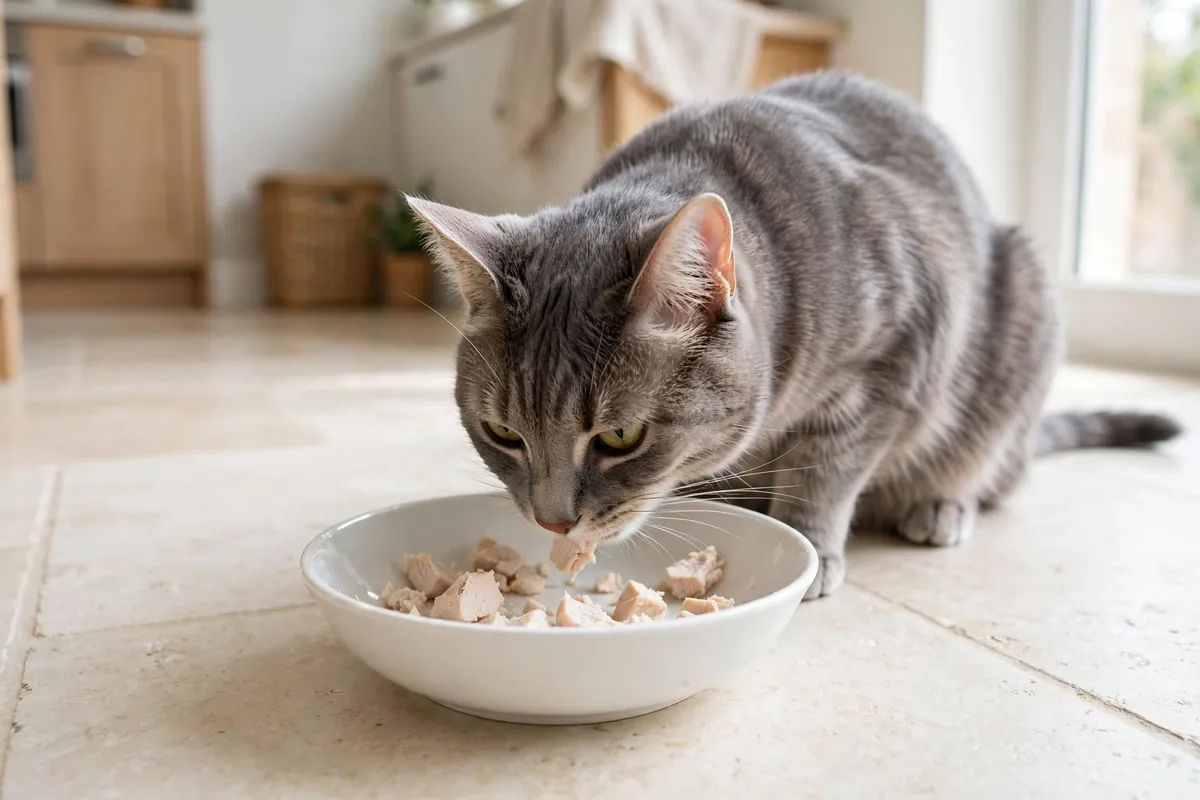
Yes — cats can eat chicken, but how you prepare it matters enormously. Plain, cooked, boneless, skinless chicken is one of the safest and most nutritious human foods you can share with your cat. It is lean animal protein, which is exactly what an obligate carnivore is built to digest. Raw chicken, on the other hand, carries bacterial risks like Salmonella, and cooked bones can splinter into dangerous shards. Seasonings, onion, and garlic are also off-limits.
If you have ever looked down at dinner to find your cat's eyes locked on your plate, this guide is for you. We will walk through why chicken suits a cat's biology, the real risks of raw chicken, why bones and seasonings are dangerous, how to prepare chicken safely at home, and how much is appropriate as an occasional treat alongside a complete balanced cat diet.
Why Chicken Suits a Cat's Biology
Cats are obligate carnivores, which means their bodies are designed to get essential nutrients from animal tissue rather than plants. They need nutrients like taurine, arachidonic acid, and vitamin A in forms that come primarily from meat, and they cannot synthesize enough of these on their own. Chicken breast, in particular, is lean animal protein — high in the amino acids cats use for energy, muscle maintenance, and tissue repair, and naturally low in fat when the skin is removed.
This is also why chicken so often appears first on commercial cat food labels — it matches the nutritional profile a cat's metabolism expects. A small amount of plain cooked chicken at home simply extends that logic to a fresh treat.
Cooked vs Raw Chicken: The Important Difference
Cooked chicken: the safe option
Cooking chicken to a safe internal temperature destroys the bacteria that make raw poultry risky. A plain chicken breast, boiled, baked, steamed, or poached without any oil, salt, butter, or spices, is a perfectly safe treat for a healthy cat. Cooking also softens the meat, making it easy to shred into small, cat-friendly pieces that are gentle on teeth and easy to swallow.
Raw chicken: why vets say skip it
Raw chicken can harbor bacteria such as Salmonella and Campylobacter, along with other pathogens. Raw poultry can still cause vomiting and diarrhea in cats, and a cat eating raw chicken can shed bacteria in its stool — a contamination risk for children, seniors, and anyone with a weakened immune system.
Some raw-feeding advocates argue that freezing reduces risk, but freezing does not reliably kill all pathogens in poultry. The straightforward, low-risk choice is cooked. Your cat will be just as enthusiastic about plain cooked chicken — most cats cannot tell the difference between raw and cooked when it comes to enthusiasm.
Chicken Bones Are Dangerous — Never Feed Them
Whether raw or cooked, chicken bones should never go to your cat. Cooked chicken bones are especially hazardous because cooking makes them brittle; they splinter into sharp fragments when chewed. Those splinters can cut the mouth and throat, cause choking, or puncture the esophagus and intestines — potentially life-threatening injuries.
Raw bones still carry bacterial risks and can pose a choking hazard, so skip them too. The rule is simple and absolute: any chicken you share with your cat must be completely boneless. Feel through the meat with your fingers before serving — it takes seconds and removes the biggest physical danger entirely.
Seasonings, Onion, Garlic, and Skin: What to Avoid
The chicken on your dinner plate is rarely cat-safe, and the problem is usually not the chicken — it is everything around it. Common cooking additions are unhealthy or outright toxic for cats:
- Onion and garlic (including onion powder and garlic powder) damage cats' red blood cells and can cause serious anemia. Even small amounts in a marinade or spice rub count.
- Excess salt strains the kidneys and can worsen existing kidney or heart conditions.
- Butter, oils, and rich sauces add fat that can trigger digestive upset or, in sensitive cats, pancreatitis.
- Chicken skin is fatty and often seasoned — remove it before sharing.
- Rotisserie and deli chicken are almost always seasoned with salt, garlic, onion, or spice blends. Skip them.
If you want to share from a family meal, cook a small unseasoned portion separately for your cat first. Boiling a plain chicken breast in water takes about the same time as preparing your own dinner, and it guarantees the piece your cat gets is completely clean.
How to Serve Chicken to Your Cat the Right Way
Preparing chicken for a cat is refreshingly simple — the less you do to it, the better:
- Choose boneless, skinless chicken breast. Thigh meat is acceptable too, but breast is leaner. Trim any visible fat.
- Cook it plain. Boil in water, bake, steam, or poach — no oil, no salt, no spices, no sauces. Cook to an internal temperature of 165°F (74°C).
- Let it cool completely to room temperature before serving. Hot food can burn a cat's mouth.
- Remove every bone and shred or dice the meat into small, pea-sized pieces so it is easy to chew and swallow.
- Serve fresh and discard leftovers. Refrigerate any uneaten cooked chicken promptly and use it within a day or two; discard anything that smells off, just as you would for yourself.
How Much Chicken Can Cats Eat?
Chicken is a treat, not a meal replacement. The widely used guideline is the 10% rule: treats and extras should make up no more than about 10% of your cat's total daily calories, with complete, balanced cat food providing the other 90%. For a typical indoor adult cat, that translates to roughly a tablespoon or two of plain cooked chicken per day at most — and many cats are perfectly happy with less.
Why the limit? Chicken alone is not a complete diet. It lacks the precise balance of vitamins, minerals, and fatty acids that formulated cat food provides, and it is notably short on calcium and certain nutrients when fed as plain muscle meat. A cat that fills up on chicken and skips its regular food can develop nutritional gaps over time. Think of chicken the way you think of dessert in your own diet — a welcome addition in small amounts, never the main event. Our guide to how much to feed your cat can help you keep portions on track.
When Chicken Is NOT a Good Idea for Your Cat
Plain cooked chicken is safe for most healthy cats, but there are situations where you should skip it or check with your vet first:
- Cats with chicken allergies or food sensitivities. Chicken is actually one of the more common food allergens in cats — ironic, given how often it appears in cat food. If your cat develops itchy skin, ear inflammation, or digestive upset after eating chicken, stop and talk to your vet.
- Cats with kidney disease or pancreatitis. Higher-protein extras can complicate the careful diets these conditions require.
- Overweight cats on a weight-management plan. Extra treats, even healthy ones, add calories that can stall weight loss.
- Cats on prescription diets. Adding extras can dilute the therapeutic effect of a diet your vet chose for a specific condition.
When in doubt, a quick call to your veterinary clinic settles the question. And remember the broader rule for anything from your kitchen: if a food is richly seasoned or you are unsure about an ingredient in it, check our guide to human foods that are poisonous to cats before sharing — Purrfect Paws has plenty more feeding guides to explore.
Frequently Asked Questions
Is cooked chicken good for cats?
Yes. Plain, cooked, boneless, skinless chicken is a safe and nutritious occasional treat for cats. It is lean protein that matches their needs as obligate carnivores. Just keep it unseasoned and limit it to a small portion of their overall diet.
Can cats eat raw chicken?
Raw chicken is not recommended. It can carry Salmonella, Campylobacter, and other bacteria that can make both your cat and your family sick. Cooking chicken to a safe internal temperature removes that risk.
Can cats eat chicken bones?
No. Cooked chicken bones splinter easily and can cause choking, mouth injuries, or damage to the throat and digestive tract. Always remove all bones before offering chicken to your cat.
How much chicken can I give my cat?
Treats — including chicken — should make up no more than about 10% of your cat's daily calories. For most adult cats, that means a tablespoon or two of plain cooked chicken per day at most, with complete cat food providing the rest.
Can cats eat rotisserie or seasoned chicken?
No. Rotisserie and seasoned chicken often contain salt, garlic, onion, and other spices that are unhealthy or toxic for cats. Only offer plain, unseasoned chicken that you have cooked yourself or confirmed is seasoning-free.