Can Cats Eat Pumpkin? Benefits for Digestion
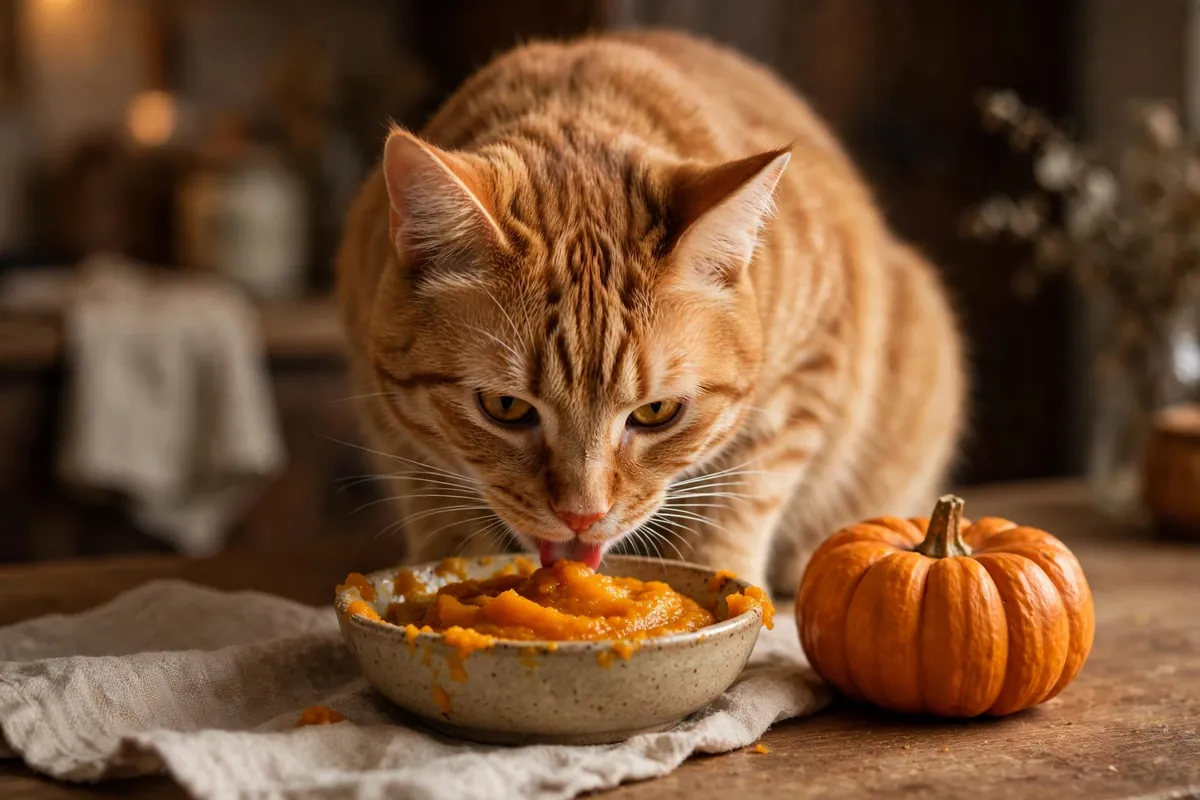
Yes, cats can eat pumpkin — as long as it is plain, cooked, and served in small amounts. Pumpkin is not toxic to cats, and many veterinarians recommend a little plain pumpkin puree as a gentle, natural way to support digestion. It will not replace a balanced cat food, and it is not a medicine, but for a cat with mild constipation, loose stools, or a hairball problem, a spoonful of pumpkin can genuinely help.
The key word is plain. Fresh pumpkin that has been baked or steamed until soft, or canned pumpkin puree with nothing else added, is fine. Pumpkin pie filling, spiced pumpkin lattes, and anything sweetened or seasoned is not. This guide explains why pumpkin helps cat digestion, how much to offer, how to serve it safely, and when a tummy problem needs a vet rather than a kitchen remedy.
What Is in Pumpkin That Helps Cats?
Pumpkin is mostly water and fiber, with a modest amount of vitamins A and C, potassium, and beta-carotene, the pigment that gives it its orange color. For cats, the star nutrient is soluble fiber. Soluble fiber absorbs water in the gut and forms a soft gel, which helps stool hold together without becoming hard or dry. That is why the same food can help at both ends of the digestive spectrum: it can firm up loose stools and soften hard ones.
Pumpkin is also low in fat and calories, so a teaspoon adds almost nothing to daily intake. Remember, though, that cats are obligate carnivores: meat-based protein must come first, and pumpkin can only ever be a small supplement, never the main event.
Pumpkin Benefits for Cat Digestion
Mild constipation. When a cat is constipated, stools become dry and hard to pass. The soluble fiber and water in pumpkin add bulk and moisture, which can help things move along more comfortably. This is the most common reason owners reach for pumpkin, and it is also the use with the most practical support behind it.
Loose stools and mild diarrhea. It sounds contradictory, but the same fiber that softens hard stools can also absorb excess water in the gut during a mild bout of loose stools. Pumpkin is often suggested alongside a bland, easily digestible diet while a cat recovers from a short stomach upset. It is not a treatment for persistent diarrhea, infections, or parasites, and those always need veterinary attention.
Hairballs. Cats swallow hair while grooming, and most of it passes through the digestive tract without trouble. Fiber helps keep that hair moving through the gut rather than collecting in the stomach, which may reduce how often hairballs are coughed up. Pumpkin will not eliminate hairballs entirely, especially in long-haired breeds, but regular grooming plus a little fiber is a sensible combination.
How Much Pumpkin Can a Cat Eat?
Start small and stay small. A good starting point for an average adult cat is about one teaspoon of plain cooked pumpkin puree mixed into their regular food, once a day or a few times a week. Larger cats may tolerate up to a tablespoon, but there is no need to push toward the higher end — more pumpkin does not mean more benefit, and too much fiber can cause gas, bloating, or loose stools of its own.
Introduce pumpkin gradually. Offer a tiny amount first and watch for the next day or two. If your cat eats it happily and their stools stay normal, you can keep it at that level. If they refuse it, do not force it — some cats simply do not like the taste or texture, and that is fine. Never replace a meal with pumpkin, and keep all extras, including pumpkin, to no more than about ten percent of daily calories so the main diet stays balanced.
Kittens, senior cats, and cats with chronic digestive conditions deserve extra caution — when in doubt, check with your vet first.
How to Serve Pumpkin to Your Cat Safely
- Cooked fresh pumpkin: Bake, steam, or boil pumpkin flesh until very soft, then mash it into a smooth puree. Remove all skin, seeds, and stringy parts first, and let it cool completely before serving.
- Plain canned pumpkin puree: This is the easiest option for most owners. Check the label carefully — the ingredients list should say pumpkin and nothing else. Store an opened can in the fridge and use it within a few days, or freeze the rest in small portions.
- Mixed into wet food: Stirring pumpkin into wet food hides the texture and makes it more appealing to picky cats. It also adds a little extra moisture, which is helpful for cats that do not drink much water.
- As a standalone treat: Some cats will lick plain pumpkin straight from a spoon or a small dish. If yours does, that is perfectly fine — just keep the portion small.
Raw pumpkin is not recommended. It is hard, difficult to digest, and can be a choking risk, especially in chunks. The skin and stem should never be offered, and pumpkin seeds should be left out too: plain cooked seeds are not toxic, but whole seeds are hard to digest and can pose a choking hazard, while salted or seasoned seeds are unsuitable for cats.
Types of Pumpkin Cats Should Avoid
Pumpkin pie filling. This is the big one to avoid. Pie filling is sweetened and spiced with cinnamon, nutmeg, ginger, and sometimes other flavorings, and some products contain sweeteners that are not safe for cats. It looks similar to plain puree on the shelf, so always read the can.
Spiced and sweetened pumpkin products. Pumpkin spice lattes, pumpkin bread, pumpkin muffins, and pumpkin-flavored treats made for humans all contain sugar, dairy, spices, or other ingredients that can upset a cat's stomach. Sharing a bite may seem harmless, but these foods are designed for people, not cats.
Decorative and carved pumpkins. A pumpkin that has been sitting carved on a porch may carry bacteria or mold, and decorative gourds are often treated or simply not meant to be eaten. Do not let your cat nibble on Halloween decorations, and keep lit candles inside pumpkins well away from curious paws.
Seasoned or salted seeds and snacks. Roasted pumpkin seeds sold as snacks are usually salted or flavored. Salt in quantity is not good for cats, and flavorings add unnecessary risk for no benefit.
When Pumpkin Is Not Enough: See Your Vet
Pumpkin is a gentle dietary aid, not a cure. Call your veterinarian if your cat has diarrhea lasting more than a day or two, blood in their stool or vomit, persistent straining without passing stool, vomiting alongside digestive changes, a swollen or painful belly, or a sudden loss of appetite. The same applies if constipation keeps coming back — recurring digestive problems can point to dehydration, hairballs blocking the gut, kidney disease, or other conditions that need diagnosis.
It is also worth mentioning pumpkin to your vet at your cat's next checkup, especially if you plan to offer it regularly. A vet who knows your cat's full diet can confirm the portion makes sense alongside any medications or prescription food they are already on.
Frequently Asked Questions
Can cats eat pumpkin every day?
A small amount of plain pumpkin can be offered daily, but it should stay a tiny part of the diet. For most cats, a teaspoon or so mixed into food a few times a week is plenty, and a complete, balanced cat food should always be the main meal.
Is canned pumpkin safe for cats?
Plain canned pumpkin puree with no added sugar, spices, or salt is safe in small amounts. Do not use pumpkin pie filling, which contains sugar, spices, and sometimes sweeteners that are not suitable for cats.
Can pumpkin help a constipated cat?
Pumpkin can help mild constipation because its soluble fiber absorbs water and adds bulk to the stool, while its moisture content supports hydration. If constipation lasts more than a day or two, or your cat is straining, vomiting, or not eating, see a veterinarian.
Can cats eat pumpkin seeds?
Plain, unsalted, cooked pumpkin seeds are not toxic, but they are not ideal for cats. Whole seeds can be a choking hazard and are hard to digest, so the soft cooked flesh is a much safer choice. Never offer salted or seasoned seeds.
Can kittens eat pumpkin?
Kittens can have a very small amount of plain cooked pumpkin once they are eating solid food, but it is rarely needed. Kittens have sensitive stomachs and specific nutritional needs, so check with your veterinarian before adding anything new to a kitten's diet.