Can Cats Eat Cucumber? Vet Answer
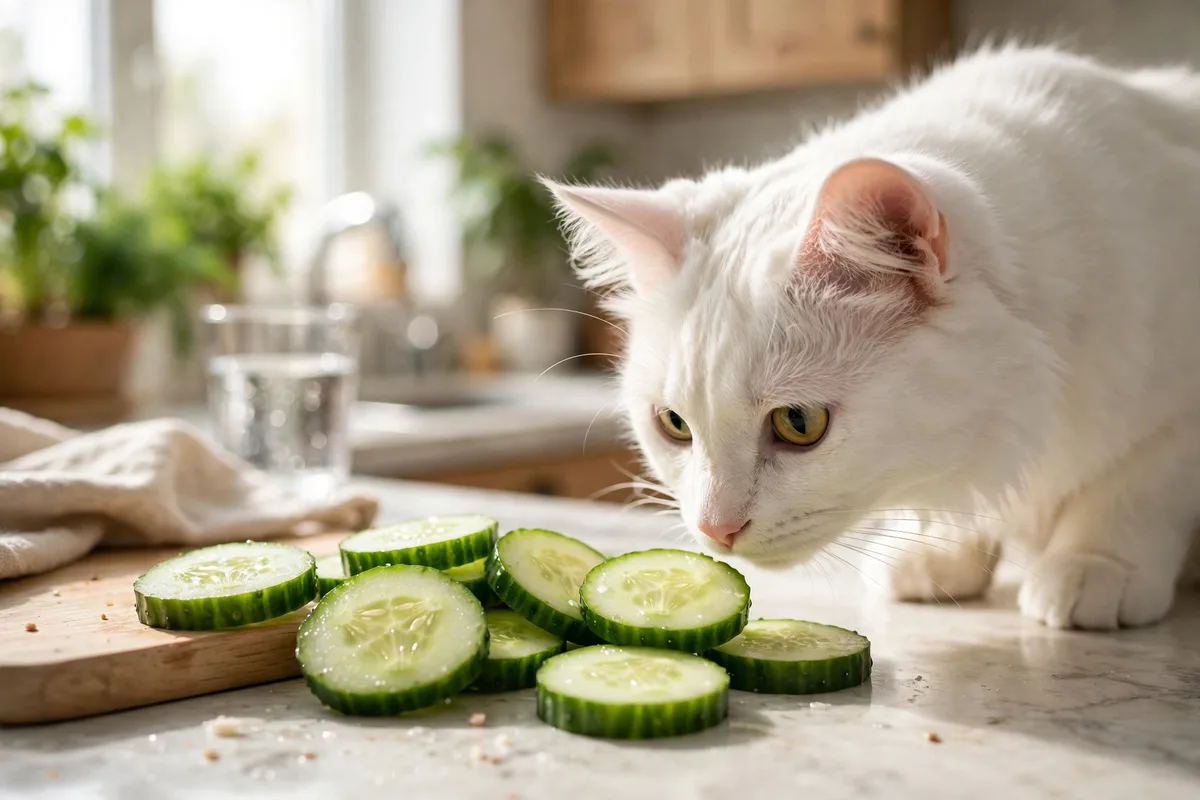
Yes, cats can eat cucumber — and it is one of the gentler vegetables you can offer. Cucumber is not toxic to cats, it is mostly water, and a few small, peeled, seedless pieces make a light, hydrating occasional treat. As with any vegetable, it is a snack, not a food group: your cat still needs a complete meat-based diet, and cucumber should only ever be an extra.
The key rules are simple. Serve cucumber raw or lightly prepared, peeled, with the seeds removed, cut into small pieces, and completely plain — no salt, vinegar, dressing, or pickling brine. Pickled cucumbers, or pickles, are a different food entirely and are not suitable for cats. If your cat has kidney disease, diabetes, or a sensitive stomach, check with your veterinarian before adding any new food.
Is Cucumber Safe for Cats?
Cucumber is safe for cats in small amounts. It contains no compound known to poison cats, unlike onions, garlic, grapes, and lilies. It is also very low in calories and fat, which is why it sometimes appears in weight-management discussions for pets. A few pieces will not unbalance a healthy cat's diet.
That safety comes with a practical caveat: cucumber is about 95 percent water. That makes it hydrating, but it also means it offers very little nutrition a cat actually needs. Cats are obligate carnivores, which means their bodies are designed to get protein, fat, and certain vitamins from animal tissue. Cucumber can be a refreshing extra, but it contributes almost nothing to a cat's nutritional requirements.
Cucumber Nutrition and the Hydration Bonus
The main benefit of cucumber for cats is hydration. Many cats do not drink enough water, especially cats that eat mostly dry food, and low water intake is linked to urinary problems over time. A few pieces of cucumber add a small amount of water to the diet in a form some cats find more appealing than a water bowl.
Cucumber also contains small amounts of vitamin K, vitamin C, potassium, and magnesium, plus a little fiber from the flesh. None of these are present in quantities that matter much for a cat eating a complete diet, but they do no harm in small servings. The fiber may help a cat that is mildly constipated, though cucumber should never be used as a treatment for ongoing digestive problems.
How to Serve Cucumber to Your Cat
Wash the cucumber thoroughly, peel it, and slice it lengthwise so you can scoop out the seeds. The peel can carry pesticide residue and is tougher to digest, and the seeds can upset a sensitive stomach, so both are best removed. Then cut the flesh into small, pea-sized pieces — never offer a whole slice or a long stick, which a cat could choke on or swallow awkwardly.
Offer one or two small pieces at first, either on their own or mixed into wet food, and watch for any digestive reaction over the next 24 hours. If all is well, a teaspoon or so of cucumber pieces a few times a week is a reasonable upper limit. As with all treats, extras should stay within roughly 10 percent of daily calories, and cucumber's low calorie count makes that easy to respect.
Why Are Cats Afraid of Cucumbers? The Viral Video Explained
You have probably seen the videos: a cat turns around, spots a cucumber behind it, and leaps into the air. It looks hilarious, but it is not actually about cucumbers. Behaviorists explain it as a startle response — the cat turns and suddenly finds an unfamiliar object in a spot it expected to be empty. The same reaction can happen with a banana, a shoe, or any unexpected item placed silently behind a cat.
That does not make it harmless fun. Repeatedly startling a cat this way raises its stress levels and can damage its trust in you and in its environment. A stressed cat may start hiding more, eating less, or avoiding the spot where it was scared. So enjoy the videos if you like, but do not stage the trick on your own cat. If you want to offer cucumber, place it calmly in front of your cat in its food bowl, where it can investigate at its own pace.
Cucumber Risks: Pickles, Pesticides, and Upset Stomachs
The biggest cucumber mistake is offering pickles. Pickled cucumbers are soaked in vinegar and salt, and often contain garlic, dill, sugar, and spices. The salt load alone makes them unsuitable for cats, and garlic is toxic to cats even in small amounts. Sweet pickles add sugar as well. If it came from a pickle jar, it is not a cat treat, no matter how much your cat begs.
Pesticide residue is the second concern, which is why washing and peeling matter. Organic cucumbers reduce this worry but should still be washed. Also avoid cucumbers from a salad that has dressing on it — ranch, vinaigrette, and creamy dressings add fat, salt, and often onion or garlic powder.
Digestive upset is the most common real risk: eating too much cucumber, or eating it with peel and seeds, can cause gas, soft stools, or vomiting. This usually settles quickly once cucumber is removed from the diet. Choking is less likely with cucumber than with hard vegetables, but large pieces still pose a risk, especially for kittens and cats that gulp their food.
How Much Cucumber Can a Cat Eat?
A few small pieces, a few times a week, is plenty. Think of a teaspoon of diced cucumber as a serving, not a bowlful. More than that mainly increases the chance of loose stools without adding any real nutrition, and it can fill a small stomach that should be filled with complete cat food instead.
Cucumber should never replace water, wet food, or veterinary treatment. If your cat is not drinking, is urinating less, straining in the litter box, or showing signs of dehydration such as a dry mouth or lethargy, cucumber will not fix it — call your veterinarian. Those symptoms need proper diagnosis, not a hydrating snack.
Cats with kidney disease or on a prescription diet need extra caution. Even a low-salt, watery food like cucumber can interfere with a carefully managed diet or add potassium your vet would rather control. When in doubt, a quick call to your vet's office settles the question in a minute.
What If My Cat Ate Pickles or a Lot of Cucumber?
If your cat ate a small piece of pickle, do not panic, but do watch closely. A single small bite is unlikely to cause serious harm, though the salt and vinegar may cause vomiting or a stomach upset. Remove any remaining pickles, offer fresh water, and monitor for repeated vomiting, diarrhea, lethargy, or refusal to eat or drink.
Call your veterinarian promptly if your cat ate a larger amount of pickles, if the pickles contained garlic, if vomiting or diarrhea lasts more than a day, or if your cat stops drinking. Tell the vet exactly what kind of pickles they were and roughly how much was eaten — that detail matters far more than the fact that cucumber was involved.
Frequently Asked Questions
Can cats eat cucumber skin?
It is best to peel it. The skin can carry pesticide residue and is tougher to digest than the flesh. Wash the cucumber, peel it, remove the seeds, and cut the flesh into small pieces.
Can cats eat pickles?
No. Pickles are cucumbers soaked in vinegar, salt, and often garlic and spices. The salt load is too high for cats and garlic is toxic to them. Only plain, fresh cucumber is suitable.
Is cucumber good for cats that do not drink enough water?
It can add a small amount of water to the diet, which may help a cat that eats mostly dry food, but it is not a substitute for fresh water, wet food, or veterinary care. If your cat is drinking very little or showing urinary symptoms, see your vet.
How much cucumber can I give my cat?
About a teaspoon of small, peeled, seedless pieces, a few times a week at most. Start with one or two pieces and watch for digestive upset before offering more.
Why did my cat jump when it saw a cucumber?
That is a startle response to an unexpected object appearing behind the cat, not a fear of cucumbers specifically. Do not repeat the trick — startling a cat repeatedly raises stress and can damage its trust.