Can Cats Eat Brussels Sprouts?
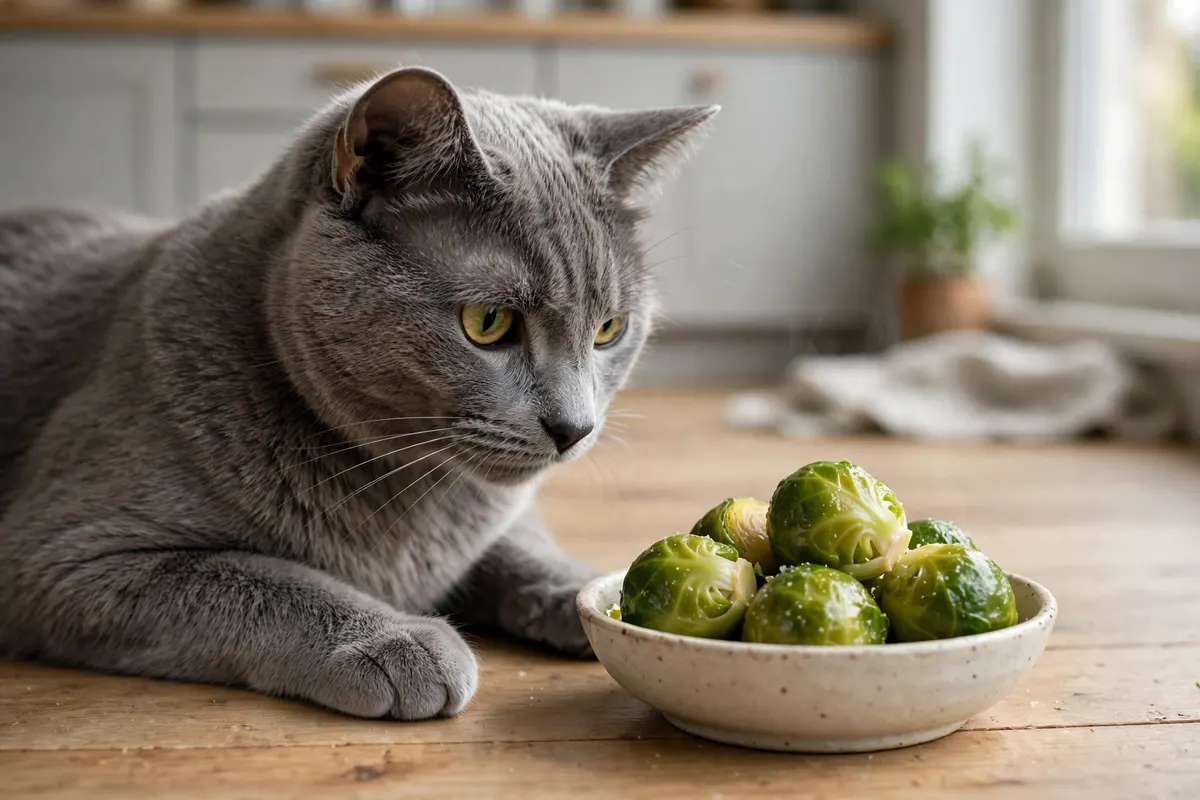
The Short Answer: Cooked Only, Half a Sprout Max
Yes, cats can eat Brussels sprouts — but only cooked, only plain, and only in a very small amount. Half a sprout is the maximum for one serving, and even that is generous for most cats. Raw Brussels sprouts are too tough and too gassy for a cat's stomach, and a whole sprout is far more than a cat needs.
Brussels sprouts are not toxic to cats, which is good news, but they are famous for causing gas — and in a small animal with a short digestive tract, that gas can mean real discomfort. If you want to share a sprout with your cat, steam it until soft, chop it into tiny pieces, and keep the portion to half a sprout or less. Read on for why sprouts cause gas, how to prepare them, and what to do if your cat eats too many.
Are Brussels Sprouts Safe for Cats?
Brussels sprouts are safe for cats in the sense that they contain no compounds that poison cats. They are a cruciferous vegetable, in the same family as broccoli, cabbage, and cauliflower, and like those vegetables they are full of fiber and plant compounds that a cat's digestive system is not really designed to handle. Cats are obligate carnivores, so their stomachs are built for meat, and a fibrous vegetable is a guest that overstays its welcome.
That is why the safety of Brussels sprouts comes with conditions rather than a simple yes. Cooked and tiny, they are a harmless occasional treat. Raw, whole, or seasoned, they are a stomach upset waiting to happen. The sprout itself is not the danger — the dose and the preparation are — so this is one of those vegetables where how you serve it matters more than whether you serve it.
Why Brussels Sprouts Cause Gas: Isothiocyanates Explained
Brussels sprouts contain sulfur compounds called glucosinolates, which break down into isothiocyanates when the vegetable is chewed or cut. These are the same compounds that give sprouts their sharp, slightly bitter smell, and they are also what makes sprouts famously gassy. In the gut, the tough fiber in sprouts ferments, and the isothiocyanates add to the effect — the result is gas, bloating, and stomach rumbling.
In people, this is a familiar and mostly harmless side effect. In cats, the same process happens in a much smaller digestive system, so a portion that would be a minor inconvenience for a person can leave a cat uncomfortable, restless, or hiding under the bed. Cooking helps: steaming or boiling softens the fiber and reduces some of the gas-forming compounds, which is why cooked sprouts are the only kind worth offering. Raw sprouts keep their full fiber and full bite, and they are the worst option for a cat.
How Much Brussels Sprouts Can a Cat Eat?
Half a sprout is the maximum serving for an adult cat, offered no more than once or twice a week. That may sound stingy, but a Brussels sprout is a dense little ball of fiber, and a cat's stomach is small. Cut the half sprout into pea-sized pieces so your cat can chew and swallow them easily, and do not be tempted to offer a second half because your cat seemed to enjoy the first.
The ten-percent rule for treats still applies — all treats combined should stay under ten percent of your cat's daily calories — but with sprouts the real limit is the gas, not the calories. If your cat has a sensitive stomach, a history of digestive problems, or is prone to vomiting, skip Brussels sprouts altogether. There are gentler vegetables, like steamed zucchini, that offer the same kind of treat without the same risk of an upset stomach.
How to Prepare Brussels Sprouts for Your Cat
Start with a fresh sprout and wash it well. Trim the tough stem end and peel away any yellowed outer leaves. Steam or boil it until it is completely soft — about ten minutes of steaming usually does it — then let it cool to room temperature and cut half of it into tiny pieces. Serve it plain, with nothing added: no salt, no butter, no oil, no dressing, and no garlic or onion.
Roasted sprouts from the dinner table are not suitable, because they are usually cooked in oil and seasoned, and a sprout tossed in a sauce or glaze is even worse. Cut your cat's piece before you season the rest of the batch, and use a clean knife and board. If your cat sniffs the sprout and walks away, that is a perfectly normal reaction — many cats are suspicious of new vegetables, and there is no reason to push it.
Can Kittens Eat Brussels Sprouts?
Kittens should not eat Brussels sprouts. A kitten's digestive system is still developing, and a fibrous, gassy vegetable is a poor choice for a small stomach that needs easily digested kitten food. A tiny piece of steamed sprout is unlikely to poison a kitten, but it can easily cause gas, bloating, and diarrhea, and there is no nutritional reason to offer it at all.
Wait until your cat is a healthy adult before offering any vegetable treat, and even then start with a gentler option. If your kitten is chewing on things around the house, offer safe kitten toys rather than food from the kitchen, and keep raw vegetables and dinner leftovers out of reach.
What Happens If My Cat Eats Brussels Sprouts?
If your cat ate half a cooked sprout, plain, there is nothing to worry about. Most cats digest a tiny serving without any trouble, and the worst outcome is a little extra gas or a slightly softer stool. Offer fresh water, feed the next meal as normal, and your cat should be fine within a day.
If your cat ate raw sprouts, a large amount, or sprouts cooked with seasoning, watch for bloating, gas, vomiting, or diarrhea. Check what the sprouts were cooked with: garlic and onion are toxic to cats, so call your vet if either was in the dish. If your cat ate several sprouts at once — for example, by getting into a bowl left on the counter — keep an eye on it for a day and call your vet if the stomach upset lasts more than a day or your cat stops eating and drinking.
Brussels sprouts are a cautious yes for cats — cooked only, plain, and no more than half a sprout at a time. Their isothiocyanates and tough fiber are a recipe for gas and stomach upset when they are raw or over-served, so the portion and the preparation are everything. Offer a tiny steamed piece now and then if your cat is interested, skip them entirely if your cat has a sensitive stomach, and never let a seasoned or buttery sprout from the dinner table pass as a cat treat.
Can cats eat Brussels sprouts?
Yes, but only cooked, plain, and in a very small amount — half a sprout at most. Raw sprouts are too tough and gassy for cats.
Are Brussels sprouts toxic to cats?
No, Brussels sprouts are not toxic to cats. The concern is gas and stomach upset from their fiber and isothiocyanate compounds, not poisoning.
Can cats eat raw Brussels sprouts?
No. Raw Brussels sprouts are hard to digest and much more likely to cause gas and bloating. Always steam or boil them until soft first.
How much Brussels sprouts can a cat eat?
Half a sprout, cut into tiny pieces, once or twice a week at most. Cats with sensitive stomachs should skip them entirely.
Can kittens eat Brussels sprouts?
No. A kitten's developing digestive system handles fibrous, gassy vegetables poorly. Stick to complete kitten food.
What happens if my cat eats too many Brussels sprouts?
Expect gas, bloating, and possibly vomiting or diarrhea. Offer fresh water and call your vet if the upset lasts more than a day.