Can Cats Eat Cabbage?
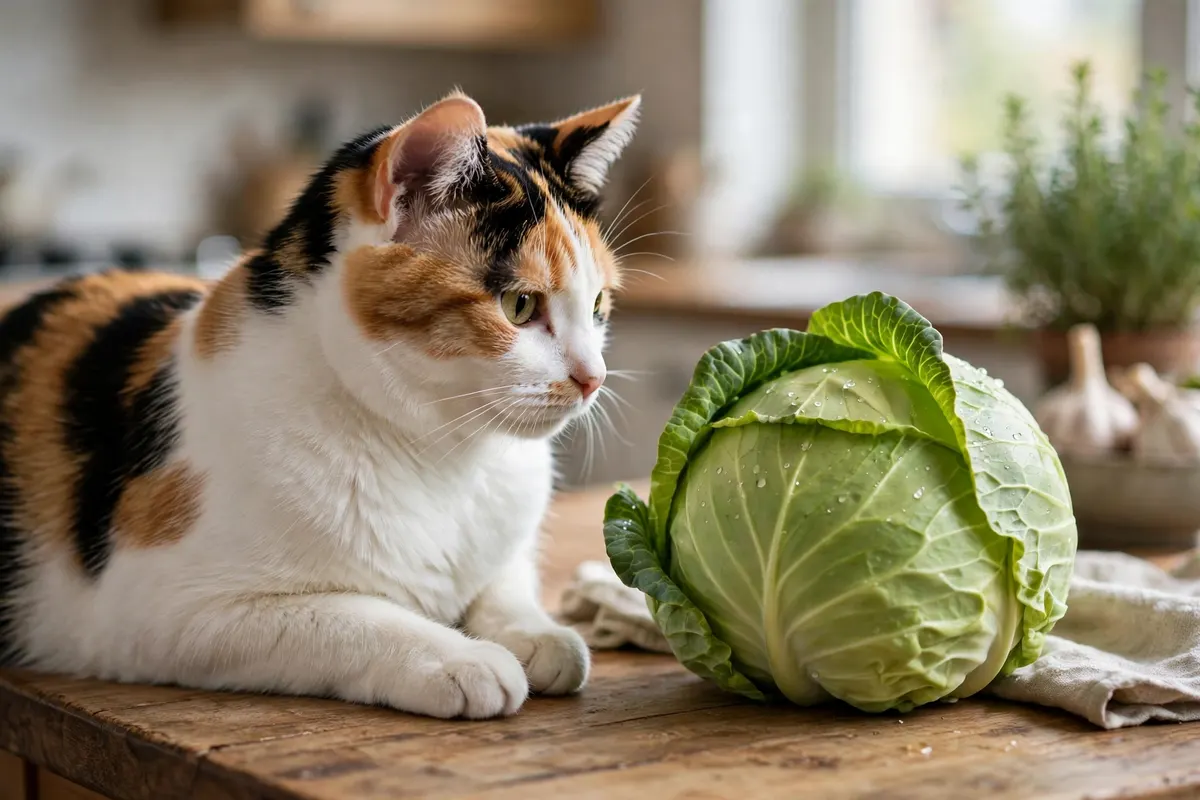
The Short Answer: Yes, Cooked and Plain
Yes, cats can eat cabbage. Plain cooked cabbage is safe for cats in small portions, and it is one of the more forgiving vegetables you can share. Steam it or boil it until soft, serve it with nothing added, and keep the portion to about a tablespoon. Raw cabbage is a different story — it is tougher, harder to digest, and far more likely to cause gas.
Cabbage is not toxic to cats, and it contains no compounds that poison them. The main things to watch are the portion and the preparation, and the seasoning on the cabbage you serve yourself. Keep reading for the raw-versus-cooked difference, the right portion size, the gas warning, and how to serve cabbage so your cat actually enjoys it.
Is Cabbage Safe for Cats?
Cabbage is safe for cats. It is a cruciferous vegetable, in the same family as broccoli, cauliflower, and Brussels sprouts, and it shares their fiber and their tendency to cause gas — but it does not share the risks of genuinely dangerous foods like onions or garlic. A cat that eats a small piece of plain cooked cabbage is not in any danger, and most cats digest it without a problem.
The reason cabbage earns a straightforward yes, while its cousin kale earns a cautious maybe, is that cabbage is lower in oxalates and goitrogens than kale. It is still a vegetable, and cats are obligate carnivores who get everything they need from meat, so cabbage is a treat rather than a dietary need. But as a treat, it is a safe one — provided it is plain, cooked, and served in a small amount.
Raw vs Cooked Cabbage: Which Is Better for Cats?
Cooked cabbage is better for cats, and it is not close. Raw cabbage is crisp, fibrous, and hard for a cat to chew and digest, and its tough fibers ferment in the gut and produce gas. A cat that eats raw cabbage is more likely to end up bloated and uncomfortable, and may refuse the next meal. Steaming or boiling softens the fibers, makes the cabbage easier to chew and swallow, and reduces some of the gas-forming compounds.
That does not mean raw cabbage is poisonous — it is not — but there is no reason to offer it raw when cooked is safer and more comfortable for your cat. Steam the leaves for a few minutes until they are soft but not mushy, let them cool, and chop them into small pieces. If you are making coleslaw or a stir-fry, cut your cat's piece before you add dressing, sauce, or seasoning.
How Much Cabbage Can a Cat Eat?
About a tablespoon of chopped cooked cabbage is a good serving for an adult cat, offered two or three times a week at most. That is a small amount, but it is all a cat needs from a vegetable treat. The ten-percent rule for treats still applies: all treats combined should stay under ten percent of your cat's daily calories, and cabbage should be a small part of that.
Start with a smaller taste the first time — a few small pieces — and see how your cat reacts. Many cats will sniff cabbage and walk away, which is normal and fine. If your cat eats it happily and its digestion stays normal, you can offer a full tablespoon next time. Do not be surprised if your cat prefers one type of cabbage over another; green cabbage is the mildest, while red cabbage is a little sweeter and purple cabbage can stain the fur around the mouth.
The Gas Warning: Too Much Cabbage Means Trouble
Cabbage is famous for causing gas, and cats are not exempt. The fiber in cabbage ferments in the gut, and the sulfur compounds in this vegetable family add to the effect. A small serving is usually fine, but a large serving can leave a cat bloated, gassy, and uncomfortable, and may lead to loose stools or a skipped meal.
This is the main reason the portion matters so much with cabbage. A tablespoon is a treat; a whole leaf or a bowlful is a stomach upset. If your cat has a sensitive stomach or a history of digestive problems, keep the portion even smaller, or skip cabbage and choose a gentler vegetable like steamed zucchini. And never offer cabbage every day — a couple of times a week is the limit, and less is fine too.
How to Serve Cabbage to Your Cat
Wash the leaves well, then steam or boil them for three to five minutes until soft. Let them cool to room temperature and chop them into pieces no bigger than a pea. Serve them plain, with nothing added — no salt, no butter, no oil, no dressing, and no garlic or onion. A cabbage leaf from a salad with dressing on it does not count as plain, so cut a fresh piece before you dress the salad.
Keep cooked cabbage away from the dishes it is usually served with. Cabbage rolls, stuffed cabbage, and cabbage cooked with bacon or sausage are all seasoned and fatty, and none of them are suitable for cats. Your cat's cabbage should come straight from the steamer, not from the finished dish, and it should be served at room temperature in a clean bowl.
Can Kittens Eat Cabbage?
Kittens can have a tiny taste of cooked cabbage once they are eating solid food, usually from around eight weeks old. Steam it until very soft, chop it into tiny pieces, and offer just one or two. Kitten food should remain the center of a kitten's diet — cabbage is only a small extra, and a kitten's stomach is small.
Raw cabbage is better left until a kitten is older and chewing well, because the tough fibers are hard for a small mouth and a developing gut. For kittens under eight weeks, skip vegetables entirely and stick to nursing or a kitten milk replacer as your vet advises.
What Happens If My Cat Eats Too Much Cabbage?
If your cat ate a small serving of plain cooked cabbage, there is nothing to worry about. Most cats digest it without any trouble, and the worst outcome is a little extra gas. Offer fresh water and feed the next meal as normal.
If your cat ate a large amount, especially raw cabbage, expect gas, bloating, and possibly vomiting or diarrhea. Keep an eye on your cat for a day, offer fresh water, and skip the next vegetable treat. If the cabbage was cooked with garlic or onion, call your vet, because those are toxic to cats. And if the stomach upset lasts more than a day, or your cat stops eating and drinking, call your vet for advice.
Cabbage is a safe, simple vegetable treat for cats when it is cooked plain and served in small portions. A tablespoon of steamed cabbage a couple of times a week is plenty, and the only real rules are to cook it first, skip the seasoning, and watch the portion so the gas stays away. If your cat enjoys the occasional cabbage leaf, you have found one of the cheapest and easiest vegetable treats there is — just keep it plain, keep it small, and keep the raw head out of reach.
Can cats eat cabbage?
Yes. Plain cooked cabbage is safe for cats in small portions — about a tablespoon, two or three times a week.
Is cabbage safe for cats?
Yes. Cabbage is not toxic to cats. The main concern is gas from its fiber, which is why portions should stay small.
Can cats eat raw cabbage?
Raw cabbage is not toxic, but it is tough, hard to digest, and much more likely to cause gas and bloating. Cooked cabbage is the better choice.
How much cabbage can a cat eat?
About a tablespoon of chopped cooked cabbage, two or three times a week at most. Larger servings can cause gas and stomach upset.
Can kittens eat cabbage?
Yes, from around eight weeks old — a tiny amount of soft cooked cabbage. Raw cabbage is better left until a kitten is older.
What happens if my cat eats too much cabbage?
Expect gas, bloating, and possibly vomiting or diarrhea. Offer fresh water and call your vet if the upset lasts more than a day.