Can Cats Eat Cheese? The Truth
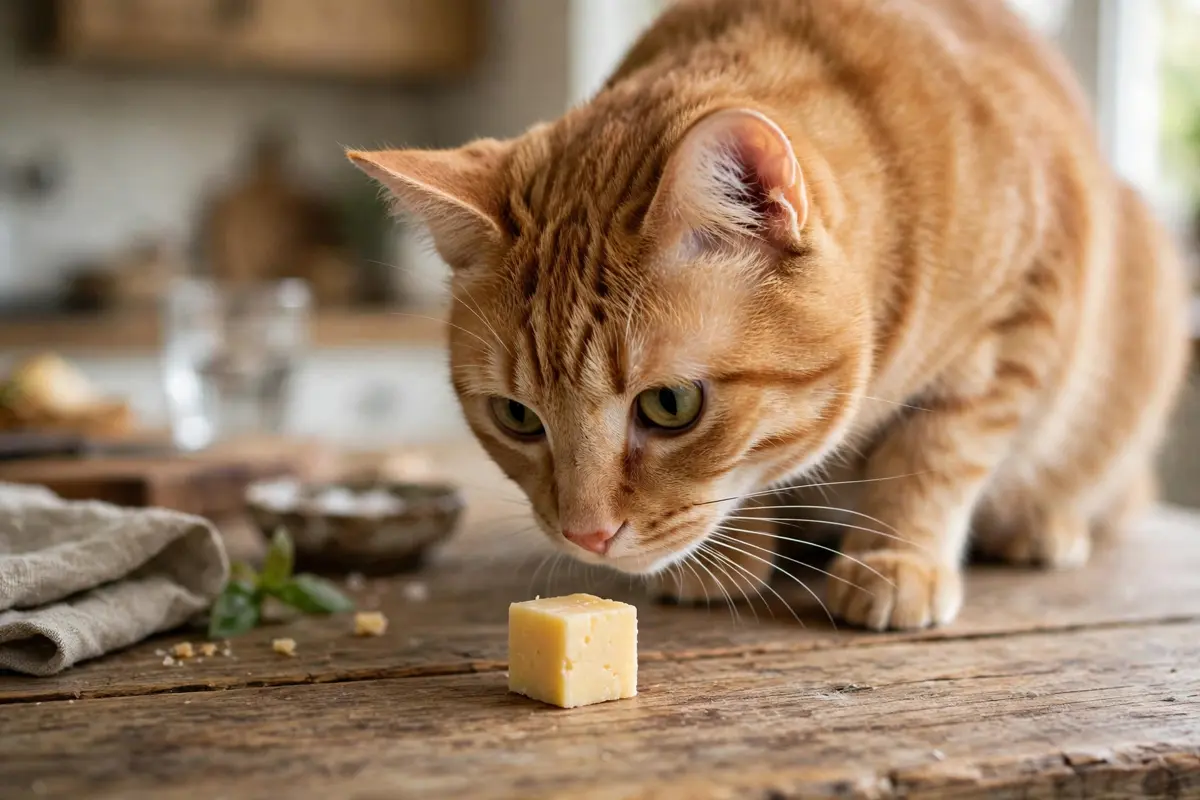
It is a scene every cat owner knows: you unwrap a slice of cheese, and suddenly your cat is at your elbow, eyes enormous, acting as if she has not eaten in weeks. Cartoons taught us that cats love dairy, so surely a little cheese is fine — right? The truth: cheese is not toxic to cats, but most adult cats cannot digest it well, so it should only ever be a rare, tiny treat.
In this guide we will unpack why dairy and cats are a mismatch, which cheeses are the worst offenders, how much is actually safe, what to do if your cat raids the cheese drawer, and the healthier treats your cat will love just as much.
The Short Answer: A Crumb Is Fine, a Meal Is Not
Cheese will not poison your cat the way chocolate or onions can. A pea-sized nibble stolen off your sandwich is not a veterinary emergency. The problem is quantity and frequency: cheese is rich, salty, and full of lactose — a sugar most adult cats cannot properly digest. Regular cheese snacking commonly leads to gassy stomachs, soft stools, or vomiting, and the extra calories add up fast on a small animal.
Think of cheese the way you would think of cake for yourself: not poisonous, not nutritious, and best kept to rare, tiny indulgences — if offered at all.
Why Most Cats Can’t Handle Dairy
Kittens produce plenty of lactase, the enzyme that breaks down lactose in their mother's milk. But after weaning, lactase production drops sharply — by adulthood, most cats are effectively lactose intolerant. Undigested lactose ferments in the gut, drawing in water and producing gas. The result, typically within 8–12 hours of a dairy snack, is the familiar fallout: bloating, flatulence, diarrhea, or an upset stomach.
Individual tolerance varies. Some cats can nibble a little hard cheese without any drama; others react to a single bite. There is no test you can do at home — the only honest measure is watching how your particular cat responds, and even then, "tolerates it" is not the same as "benefits from it."
The Cheeses to Avoid Entirely
Not all cheeses carry the same risk. Keep these away from your cat:
- Blue cheese and mold-ripened cheeses (gorgonzola, roquefort, stilton). The molds produce compounds that can cause vomiting, diarrhea, and in larger amounts, tremors. This is the one cheese category with genuine toxicity potential.
- Cheeses with added garlic, onion, or chives. Flavored cheese spreads and some artisan cheeses include alliums, which damage cats' red blood cells and are genuinely dangerous.
- Very salty cheeses (feta, halloumi, processed cheese slices). Excess sodium strains the kidneys and can cause dangerous thirst and electrolyte imbalance, especially in cats with kidney or heart conditions.
- Cream cheese and soft fresh cheeses in anything beyond a lick. They are among the highest in lactose, so they cause the worst digestive upset.
Hard, aged cheeses like cheddar and parmesan are lower in lactose and therefore the least problematic — but "least problematic" still means "occasional tiny treat," not a food group. For the full rundown of genuinely dangerous foods, see our guide to human foods that are poisonous to cats, and browse the Cat Food section for safe nutrition basics.
How Much Cheese Is Actually Okay?
If you want to share an occasional nibble, keep it strict:
- No more than a pea-sized piece, and only once in a while — not daily.
- Stick to plain, hard cheeses (a crumb of cheddar or Swiss) and skip anything flavored, moldy, or heavily salted.
- Count it as part of the treat budget: treats of any kind should stay under 10% of daily calories.
- Skip it entirely for kittens, senior cats, and any cat with kidney disease, heart disease, or a sensitive stomach.
And if your cat shows any digestive upset afterward — even once — take the hint and retire cheese from the menu for good. She will not miss what she cannot digest.
Better Treats Your Cat Will Love More
Cats go wild for cheese mostly because it is fatty, salty, and smells strong — all qualities you can offer in safer packages:
- Commercial cat treats formulated for feline nutrition (the crunchy ones double as dental-friendly snacks).
- Small pieces of plain cooked chicken or turkey — high protein, no lactose, universally adored.
- Freeze-dried meat treats (chicken, salmon, or liver) with a single ingredient on the label.
- A spoonful of meat-based baby food with no onion or garlic powder — check the label carefully.
These options deliver the savory punch your cat is actually after, without the lactose gamble. For more treat ideas and feeding wisdom, start at the Purrfect Paws homepage and work through the food guides.
The Milk-Saucer Myth
Somewhere along the way, popular culture decided cats and dairy go together — the saucer of milk, the wedge of cheese. In reality, an obligate carnivore's ideal diet is meat, not milk products. Adult cats get complete nutrition from quality cat food formulated with animal protein, taurine, and the right fat balance. Dairy adds nothing they need and quite a lot their digestion would rather avoid.
If the ritual matters to you — that cozy moment of sharing a snack with your cat — redirect it rather than abandon it. Offer a lick of plain meat baby food from your fingertip, or toss a freeze-dried chicken treat the way you would slide over a cheese crumb. Your cat gets the bonding moment, you get the happy purrs, and nobody's stomach pays for it later.
What If My Cat Ate a Lot of Cheese?
First, check what kind it was. Plain cheese in a large amount usually means 12–24 hours of digestive misery — vomiting or diarrhea — but not lasting harm in a healthy cat. Keep fresh water available, feed the normal diet, and monitor. However, call your vet promptly if the cheese contained blue mold, garlic, or onion; if your cat is a kitten, senior, or has a chronic illness; or if vomiting or diarrhea is severe, bloody, or lasts more than a day.
Frequently Asked Questions
Is cheese poisonous to cats?
No — with one exception. Plain cheese is not toxic, just hard to digest. The exception is blue and mold-ripened cheeses, whose molds can cause vomiting, diarrhea, and tremors, plus any cheese containing garlic or onion, which are genuinely dangerous to cats.
Can kittens have cheese?
It is best not to. Kittens have sensitive, developing digestive systems, and even though they still produce some lactase, cheese offers them zero nutritional benefit. Stick to kitten-formulated food and treats.
Why does my cat go crazy for cheese if she can’t digest it?
Cats are drawn to fat and protein — and cheese smells intensely of both. Your cat has no way of knowing the lactose will disagree with her later. Enthusiasm is not the same as suitability, which is why the decision has to be yours.
What should I do if my cat ate a big piece of cheese?
For plain cheese, monitor for 12–24 hours: expect possible vomiting or diarrhea, keep water available, and feed normally. Call your vet if the cheese had blue mold, garlic, or onion, or if symptoms are severe or last beyond a day.
Are cheese-flavored cat treats safe?
Yes. Treats marketed for cats are formulated for feline digestion and use cheese flavoring rather than meaningful amounts of dairy. They are a far safer way to satisfy a cheese-obsessed cat than real cheese.