Can Cats Eat Imitation Crab?
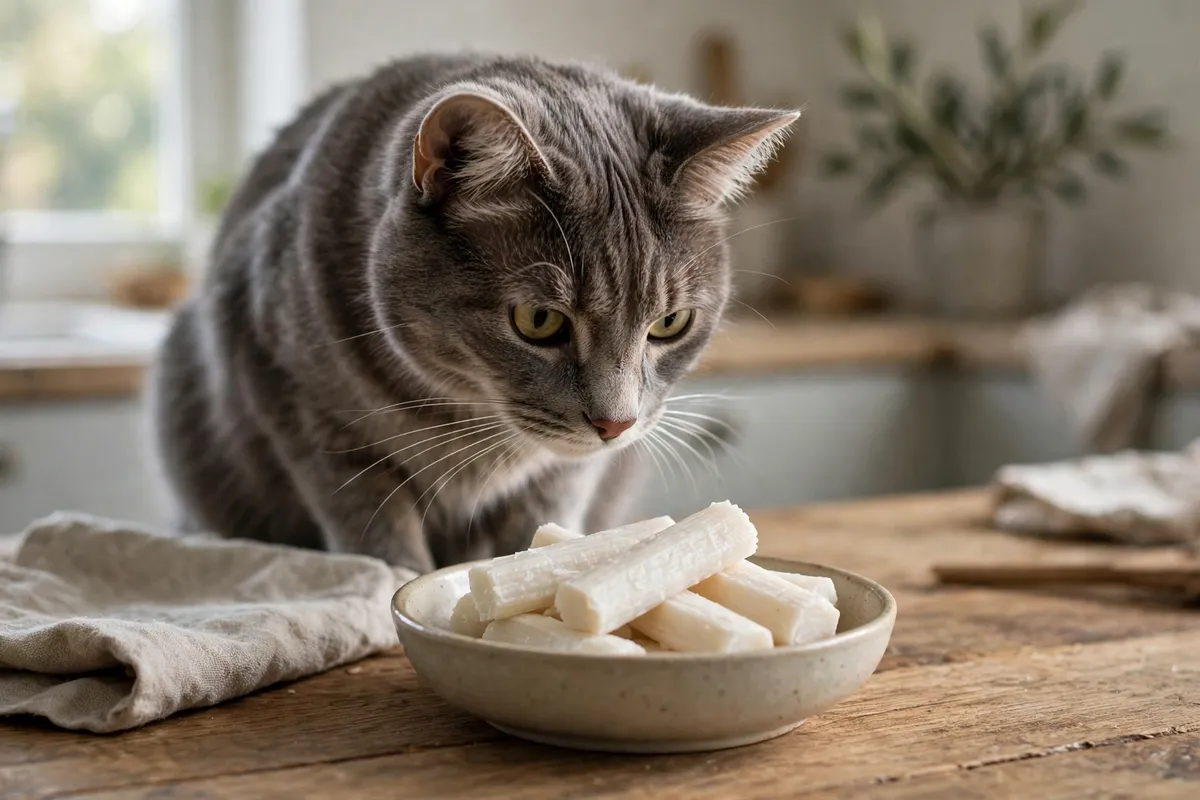
A tiny taste now and then is usually not dangerous — but imitation crab is not the treat it looks like. The verdict for cats is caution: imitation crab, also called surimi or crab sticks, is highly processed white fish paste with added salt, sugar, starch, and flavorings to make it taste like crab. It is not real crab, and not a good food for cats. A small lick stolen from your sushi roll is unlikely to harm a healthy adult cat, but it should never become a regular snack.
Imitation crab shows up everywhere: in sushi rolls, seafood salads, crab rangoon, and supermarket seafood counters. It looks like crab, smells faintly of the sea, and cats are often very interested in it. This guide walks you through exactly what is inside a crab stick, how it compares with real crab, and what to do if your cat has already eaten some.
Is Imitation Crab Safe for Cats? The Short Answer
Imitation crab is not toxic to cats, but "not toxic" and "safe to feed" are two different things. A single small piece will not poison your cat, yet the food is designed for human taste buds, not feline nutrition. It is high in sodium, contains added sugar and starches cats do not need, and often includes artificial flavorings and colorings. None of that belongs in a cat's diet.
There is also the question of quality. Surimi is minced fish that has been washed, pressed, and reformed — far more processed than a plain piece of cooked fish. That processing removes most of the benefit while adding salt and additives. So the practical answer is simple: an accidental taste is fine, but do not buy imitation crab for your cat, and do not offer it on purpose.
What Is Imitation Crab Actually Made Of? A Label Walkthrough
Pick up a pack of crab sticks and read the ingredient list — it tells the whole story. The first ingredient is usually surimi, a paste made from white fish such as Alaska pollock. After that come water, starch (often wheat, potato, or tapioca), sugar, salt, egg white, and crab flavoring. Some brands add colorings for the pink-orange outer layer, and some use sorbitol or other sweeteners.
Here is what each of those means for your cat:
- Surimi (fish paste). The fish itself is fine in principle — pollock is a normal fish. But it has been heavily washed and processed, so much of the nutrition is gone.
- Salt. The biggest concern. Crab sticks are noticeably salty, and a cat's small body handles excess sodium poorly.
- Sugar and starch. Cats do not need sugar or starch — they add empty calories that can contribute to weight gain over time.
- Egg white. Usually harmless in small amounts, but it is one more ingredient your cat does not need.
- Crab flavoring and colorings. Artificial flavorings and dyes add nothing for your cat and can upset a sensitive stomach.
- Wheat starch. Most cats tolerate a little wheat, but cats with food sensitivities may react to it.
Some cheaper brands also include monosodium glutamate (MSG) or other flavor enhancers. None of these ingredients is acutely poisonous, but together they make a food that is salty, sugary, and highly processed — the opposite of what a cat should eat.
Real Crab vs. Imitation Crab: Which Is Better for Cats?
Real crab wins easily, though it still comes with conditions. Plain, cooked, unseasoned crab meat — shell completely removed — is a lean protein most cats can enjoy in a small amount now and then. It is a real, whole food with no added sugar, starch, or artificial flavoring. That said, real crab is also naturally fairly high in sodium, so the portion should still be small and occasional.
Imitation crab, by contrast, is a copy: less protein, more salt, and a list of additives. It is much cheaper, which is why restaurants and sushi counters use it so widely. Real crab meat is the better choice for a cat — but neither should be a regular part of the diet. A complete and balanced cat food, or a plain piece of cooked fish, is always smarter. For more on the real thing, see our guide to whether cats can eat crab, and the full Cat Food section on the Purrfect Paws homepage.
Can Kittens Eat Imitation Crab?
No, kittens should not eat imitation crab. Their kidneys are still developing, they are very sensitive to salt, and their growth depends on a complete kitten food — not on processed treats borrowed from your plate, which only displace the nutrition they actually need.
Kittens also tend to have sensitive stomachs, and a salty, starchy food like imitation crab can easily trigger vomiting or diarrhea. If your kitten is staring at your sushi, enjoy the moment — and keep the crab sticks to yourself. Even as an adult, there are better fish treats to choose.
How Much Imitation Crab Can a Cat Eat?
Honestly, the best amount is none. If your cat has already stolen a bite, keep it to a piece no bigger than your thumbnail, and do not make it a habit. Do not serve imitation crab as a meal, mix it into your cat's food, or offer it daily — the salt and empty calories add up quietly over time, building weight and kidney strain.
No preparation trick makes imitation crab safe in larger amounts. Rinsing a crab stick can wash off a little surface salt, but not the salt, sugar, and starch mixed through the paste. A small piece of plain cooked fish — or a treat made for cats — is a far better choice.
What Happens If My Cat Eats Imitation Crab?
For most healthy adult cats, a small amount causes no trouble at all. A larger amount — several sticks, or a whole sushi roll's worth — is more likely to cause an upset stomach: vomiting, soft stools or diarrhea, and extra thirst from the salt. These usually pass within a day.
Take it more seriously if the crab sticks came in a dish with garlic, onion, or spicy sauce — common in seafood salads and crab rangoon — since those ingredients are harmful to cats on their own. The same applies if your cat has kidney disease, heart disease, or a food allergy. And if your cat is vomiting repeatedly, refuses food and water, or seems weak or lethargic, do not wait it out — call your vet.
What to Do If Your Cat Already Ate Imitation Crab
If your cat has just helped itself to your crab sticks, here is what to do:
- Take the rest away. Remove any remaining imitation crab, sushi, or seafood salad so your cat cannot eat more.
- Check what else was in the dish. Plain crab sticks are low-risk. Garlic, onion, chili, soy sauce, or spicy mayo change the picture — note what was there.
- Offer fresh water. Put down a clean bowl of fresh water and let your cat drink freely. The salt will make your cat thirsty.
- Watch for 24 hours. Look for vomiting, diarrhea, loss of appetite, or unusual tiredness. Mild, one-off sickness that settles quickly is usually not an emergency.
- Call your vet if needed. Call promptly if your cat ate a large amount, ate garlic or onion with it, is vomiting repeatedly, or has a health condition such as kidney disease. Tell the vet what your cat ate and roughly how much.
Do not try to make your cat vomit at home, and do not give milk to settle the stomach — most adult cats are lactose intolerant, and milk usually makes an upset stomach worse.
Frequently Asked Questions
Is imitation crab safe for cats?
A tiny taste is usually not dangerous, but imitation crab is processed surimi with added salt, sugar, starch, and flavorings — not a good food for cats, and not a regular treat.
Can kittens eat imitation crab?
No. Kittens' kidneys are still developing, they are very sensitive to salt, and they need the balanced nutrition of a proper kitten food.
What is imitation crab made of?
Mostly surimi — minced white fish such as Alaska pollock — plus water, starch, sugar, salt, egg white, crab flavoring, and sometimes colorings. It is not real crab meat.
Is real crab better than imitation crab for cats?
Yes. Plain, cooked, unseasoned real crab meat has no added sugar or starch, so it is the better choice — but keep the portion small and occasional, since crab is naturally fairly salty.
What happens if my cat eats imitation crab?
A small amount usually causes no trouble. A larger amount can cause vomiting, diarrhea, and extra thirst from the salt. Call your vet if your cat ate garlic or onion with it, is vomiting repeatedly, or has kidney disease.