Can Cats Eat Raw Fish?
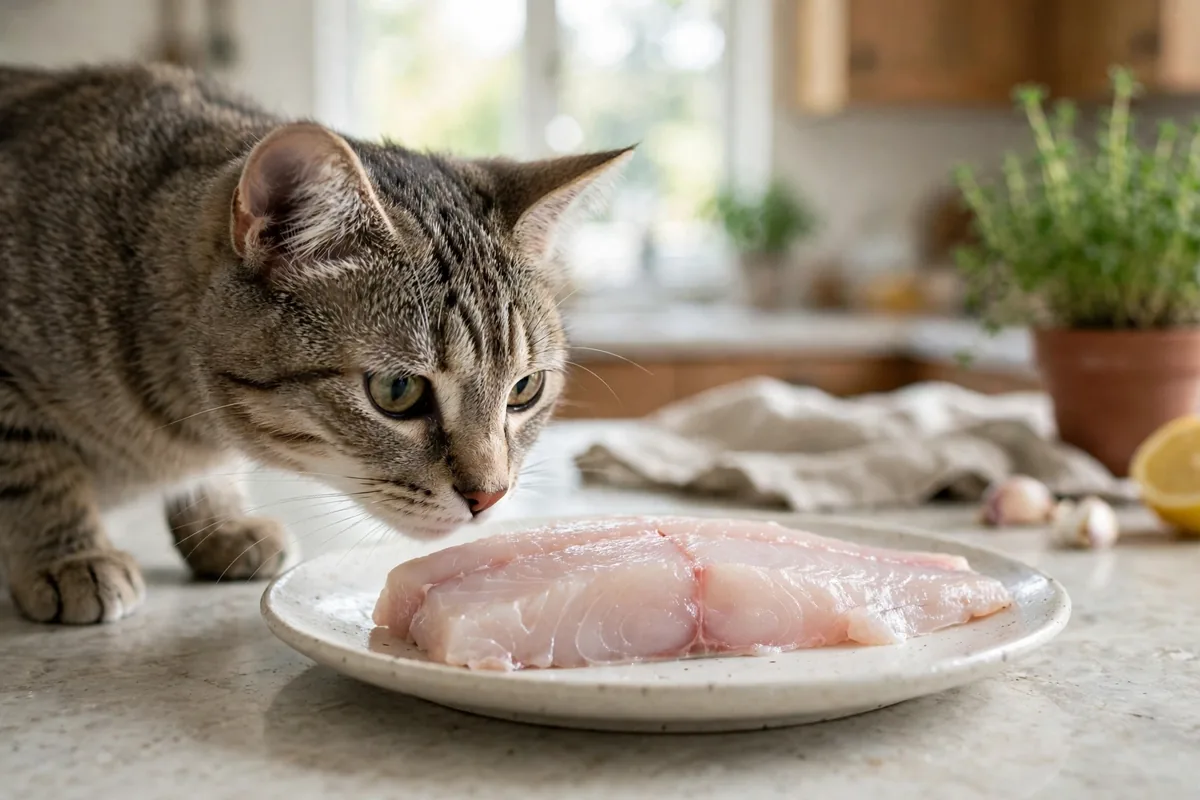
The Short Answer: No — Raw Fish Is Not Safe for Cats
No, cats should not eat raw fish. It may seem natural — cats are famous for loving fish — but raw fish from a shop, a restaurant, or a sushi counter carries risks a cat's stomach cannot handle safely. Bacteria, parasites, and an enzyme that destroys vitamin B1 all come with raw fish, and none are removed until the fish is cooked.
The good news is that cooked fish is a different story. Plain, cooked fish is a healthy treat for most cats, and it gives your cat the fish flavor they love without the dangers of raw fish. Keep reading to learn why raw fish is unsafe, why sushi-grade is no exception, and what to do if your cat already ate some.
Why Raw Fish Is Unsafe for Cats
Raw fish is unsafe for cats for three separate reasons, and each one matters on its own. The first is bacteria. Raw fish can carry bacteria such as Salmonella and Listeria, which cause vomiting, diarrhea, and fever in cats. A cat that eats contaminated raw fish can become seriously ill, and the bacteria can also spread to people in the home.
The second risk is parasites. Raw fish can carry parasites, including worms that live in fish muscle. When a cat eats infected raw fish, the parasites can settle in the cat's gut and cause weight loss, a dull coat, and ongoing diarrhea. Some need veterinary treatment to clear, so a single meal of raw fish can turn into weeks of vet visits.
The third risk is thiaminase, an enzyme found in many raw fish. Thiaminase breaks down thiamine, also known as vitamin B1, in the cat's body. A cat that eats raw fish regularly can develop a vitamin B1 deficiency, which affects the nervous system — signs include loss of appetite, weakness, wobbliness, and seizures. Cooking fish destroys thiaminase, so cooked fish does not carry this risk. Our cat food safety guide covers the full list of foods that can harm cats.
The Sushi-Grade Myth
Many people believe sushi-grade fish is safe because it is fresh and handled carefully. That is a myth when it comes to cats. Sushi-grade is not an official safety standard — it is a label sellers use for fish they consider fresh enough to eat raw. It means the fish was frozen or handled in a way that suits human sushi, not that it is free of bacteria, parasites, or thiaminase.
A cat's body does not care whether fish was sold as sushi-grade or not. Raw fish is still raw, and the enzyme that destroys vitamin B1 is still present in sushi-grade fish. Even fish frozen to kill parasites can still carry bacteria, and freezing does not remove thiaminase. No label, price, or source makes raw fish safe for a cat — only cooking does.
Is Cooked Fish Safe Instead?
Yes, cooked fish is a much safer choice, and most cats love it. Cooking kills the bacteria and parasites raw fish can carry, and it destroys the thiaminase enzyme, so the vitamin B1 risk disappears. Plain, cooked fish is a lean protein that fits a cat's diet as an occasional treat.
Keep it plain. Cook the fish with no oil, butter, salt, or seasoning, and remove all bones before serving. Small, boneless pieces of cooked salmon, tuna, or white fish are good options, once or twice a week at most. Avoid smoked fish, which is high in salt, and fish packed in oil or brine. Cooked fish should be a treat on top of a complete cat food, not a replacement for it.
Can Kittens Eat Raw Fish?
No, kittens should never eat raw fish. Kittens are even more vulnerable than adult cats to the bacteria and parasites in raw fish, because their immune systems are still developing. A small amount an adult cat might fight off can make a kitten seriously ill.
Kittens are also more sensitive to vitamin B1 deficiency, which can affect their growth and nervous system. A kitten's diet should be a complete and balanced kitten food, with no raw fish at all. If you want to share fish with a kitten, wait until your vet says your kitten is old enough, and offer only a tiny piece of plain cooked fish.
What Happens If My Cat Eats Raw Fish?
A single small bite of raw fish may cause no immediate trouble — many cats eat a little raw fish and seem fine at first. But the risks do not always show up right away. Bacteria can cause vomiting or diarrhea within a day or two, and a parasitic infection can take longer, showing up as weight loss, a dull coat, or ongoing soft stools.
The vitamin B1 problem is slower still. A cat that eats raw fish regularly can slowly lose vitamin B1 over weeks, and the signs — loss of appetite, weakness, wobbliness, or a head tilt — can appear gradually. By the time these signs show, the deficiency is already serious and needs veterinary treatment. That is why even small, regular amounts of raw fish are a problem.
What to Do If Your Cat Ate Raw Fish
If your cat ate raw fish, stay calm — a single bite is not an emergency on its own, but it does need attention. Follow these steps:
- Call your vet promptly. Tell your vet what kind of fish it was, how much your cat ate, and whether it was raw or sushi-grade, and follow their advice on what to watch for.
- Save the packaging or label if there is any. Keep the fish packaging, the receipt, or a photo of the label, so your vet can see what your cat ate.
- Take away the rest. Remove any remaining raw fish so your cat cannot eat more.
- Offer fresh water. Make sure your cat has clean water nearby.
- Do not induce vomiting. Never try to make your cat vomit at home unless your vet tells you to.
- Watch for symptoms over the next days. Look for vomiting, diarrhea, lethargy, loss of appetite, wobbliness, or weight loss over the following days and weeks, and call your vet if any appear.
Raw fish looks natural for a cat but is not safe in practice. Bacteria, parasites, and the vitamin B1 problem all disappear with cooking, so there is no reason to take the risk. Offer your cat a small piece of plain cooked fish instead — they get the flavor they love, with none of the risk.
Can cats eat raw fish?
No. Raw fish is not safe for cats. It can carry bacteria and parasites, and it contains an enzyme that destroys vitamin B1, which can lead to a serious deficiency.
Is raw fish safe for cats?
No. Even fresh-looking raw fish can carry bacteria and parasites, and raw fish contains thiaminase, an enzyme that breaks down vitamin B1. Cooking removes these risks.
Can cats eat sushi-grade fish?
No. Sushi-grade means the fish was handled for human eating, not that it is safe for cats. Sushi-grade fish is still raw, so it still carries the same bacteria, parasite, and thiaminase risks.
Can kittens eat raw fish?
No, kittens should never eat raw fish. Kittens are even more vulnerable to bacteria, parasites, and vitamin B1 deficiency than adult cats.
What happens if my cat eats raw fish?
A single small bite may cause no immediate trouble, but raw fish can lead to vomiting, diarrhea, or a parasitic infection, and repeated eating can cause vitamin B1 deficiency with loss of appetite, weakness, and wobbliness.
How much raw fish is dangerous?
There is no safe amount of raw fish for cats. Even a small piece carries bacteria and parasite risks, and regular small amounts can build up a vitamin B1 deficiency. Offer cooked fish instead.