Can Cats Eat Kale?
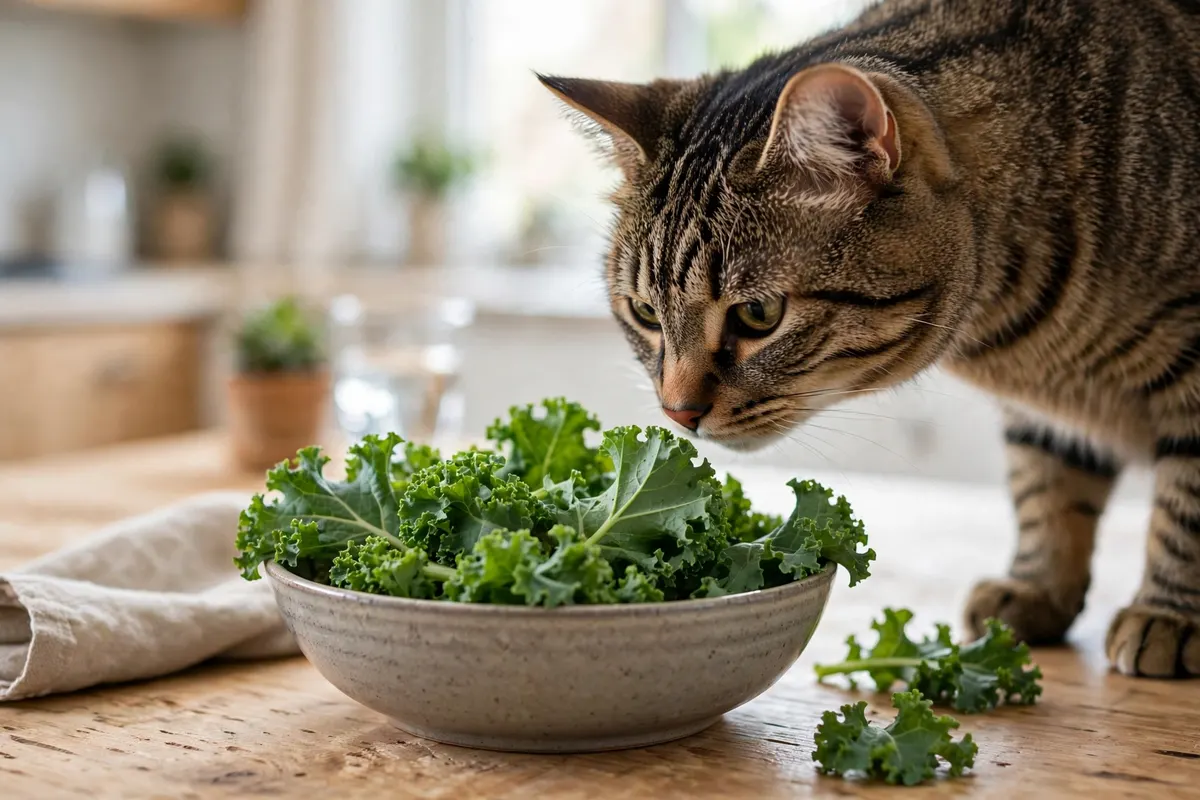
The Short Answer: Caution — Sources Disagree on Kale
Can cats eat kale? The honest answer is that sources disagree. Some pet-care guides list kale as safe for cats in small amounts, while others flag it as risky because of its oxalates and goitrogens — plant compounds that can affect the kidneys and the thyroid. That disagreement is real, and it means kale is not a food you can offer with confidence the way you can with a clearly safe vegetable like cucumber.
The safest approach is caution: keep portions tiny or skip kale altogether. A healthy adult cat that eats one small piece of plain steamed kale is unlikely to come to harm, but there is no nutritional reason a cat needs kale, and the risks are higher for cats with kidney disease, bladder stones, or thyroid problems. Read on for what the disagreement is about and when to leave kale off the menu entirely.
Is Kale Safe for Cats?
Kale is not toxic to cats in the way grapes or onions are, but "not toxic" is not the same as "safe to feed regularly." Kale contains calcium oxalate, which can contribute to bladder and kidney stones in animals prone to them, and goitrogens, which can interfere with thyroid function when eaten in large amounts over time. These are the two reasons some veterinary sources advise against kale, and why others urge small portions only.
The disagreement partly comes down to dose. A single leaf now and then is very different from a daily serving of raw kale, and most of the concern is about regular, larger amounts. That is why kale appears on some "safe in moderation" lists and on other "avoid" lists. The practical takeaway is simple: treat kale with caution, not as a regular part of your cat's diet.
The Oxalate Question: Kale and Kidney Stones
Kale carries a meaningful amount of calcium oxalate, the same family of compounds that makes rhubarb and spinach a concern for cats. A healthy cat handles a tiny amount without trouble, but in a cat that has already had calcium oxalate bladder stones or kidney disease, extra oxalate is an unnecessary risk. Vets often recommend a low-oxalate diet for cats with a history of stones, and kale does not fit that picture.
Cats are obligate carnivores, so their bodies are built to get what they need from meat, not from leafy greens. A cat does not need the vitamins in kale — a complete cat food already provides them. So when a food carries even a small extra risk and offers no benefit your cat needs, the sensible choice is to skip it or keep it to the tiniest occasional taste.
Kale and Thyroid Health: What Are Goitrogens?
Kale belongs to the cruciferous family, along with broccoli, cabbage, and cauliflower, and like its relatives it contains goitrogens — compounds that can slow the thyroid gland's ability to use iodine. In people this is only a concern with very large amounts of raw kale eaten every day. In cats the concern is similar but harder to measure, because cats are small, their thyroids are sensitive, and hyperthyroidism is already one of the most common conditions in older cats.
Cooking reduces goitrogens, which is one reason steamed kale is a better choice than raw if you do offer it. Even so, a cat with a known thyroid condition should not be given kale at all without a vet's approval. For a healthy cat, an occasional tiny piece of cooked kale is a low risk, but it is still a risk with no upside — and that is the heart of the disagreement about this vegetable.
How Much Kale Can a Cat Eat?
If you do offer kale, keep it to a very small amount: one small leaf, or a teaspoon of finely chopped steamed kale, no more than once or twice a week. That is the cautious middle ground between the sources that allow it and the sources that warn against it. Treat kale as an occasional taste, not a regular part of your cat's diet.
The ten-percent rule for treats still applies, but with kale the limit is really about the compounds, not the calories. If your cat has kidney disease, a history of bladder stones, or a thyroid condition, the right amount is none at all. And if your cat turns its nose up at kale, let that be the end of it — most cats will, and they are not missing anything.
How to Serve Kale to Cats Safely
If you choose to offer kale, serve it plain and cooked. Steam the leaves for a few minutes until soft, let them cool, and chop them into tiny pieces. Raw kale is tough, bitter, and harder to digest, and it carries more of the goitrogens that cooking reduces. Never serve kale with dressing, oil, salt, garlic, or onion — garlic and onion are toxic to cats.
Cut a fresh piece before you season your own salad, and wash the leaves well first. Offer one small piece and watch your cat for the rest of the day. If your cat eats it happily and its digestion stays normal, you can offer the same tiny amount again another day. If your cat refuses it, vomits, or has loose stools, stop offering kale.
Can Kittens Eat Kale?
Kittens should not eat kale. A kitten's kidneys and thyroid are still developing, its body is small, and its diet should be a complete kitten food. There is no benefit in offering a kitten a food that even adult-cat sources disagree about, and the risk is proportionally larger for a small body.
Wait until your cat is a healthy adult before considering any vegetable treat, and even then keep kale to the tiny occasional taste described above. If your kitten is chewing on plants, offer safe kitten toys instead.
What Happens If My Cat Eats Kale?
If your cat ate a small piece of plain kale, there is usually nothing to worry about. Most healthy cats digest a tiny amount without trouble, and the worst outcome is a bit of gas or a softer stool. Offer fresh water, feed the next meal as normal, and keep an eye on your cat for the rest of the day.
If your cat ate a large amount of raw kale, or kale served with seasoning, watch for vomiting, diarrhea, or a loss of appetite. Check the ingredients: garlic and onion are toxic to cats, so call your vet if either was involved. And if your cat has kidney disease, bladder stones, or a thyroid condition and has eaten kale, call your vet even if your cat seems fine — the concern is a slow strain on organs already under pressure, not an immediate poisoning.
Kale sits in a gray area for cats, and the honest answer is that sources disagree. Some guides call it safe in small amounts, while others flag its oxalates and goitrogens as reasons to skip it — and for a cat with kidney, bladder, or thyroid issues, skipping it is the safer choice. A tiny piece of plain steamed kale is unlikely to harm a healthy adult cat, but kale adds nothing your cat needs. When in doubt, leave it off the menu.
Can cats eat kale?
It depends on the source. Some guides allow a tiny amount of plain cooked kale, while others advise against it because of oxalates and goitrogens. The cautious choice is a tiny portion or none at all.
Is kale safe for cats?
Kale is not acutely toxic, but its calcium oxalate and goitrogens can affect the kidneys, bladder, and thyroid — especially in cats with existing kidney, stone, or thyroid problems.
Can cats eat raw kale?
Raw kale is not recommended. It is tougher, more bitter, and higher in goitrogens than cooked kale. If you offer kale at all, steam it and serve a tiny amount, plain.
Can kittens eat kale?
No. Kittens should stick to a complete kitten food. Their kidneys and thyroids are still developing, and kale offers them no benefit worth the risk.
How much kale can a cat eat?
At most one small leaf, or a teaspoon of finely chopped steamed kale, once or twice a week — and none at all if your cat has kidney disease, bladder stones, or a thyroid condition.
What happens if my cat eats a lot of kale?
A large amount of raw kale can cause vomiting, diarrhea, or gas. If the kale was seasoned with garlic or onion, call your vet, as those are toxic to cats.