Can Cats Eat Spinach?
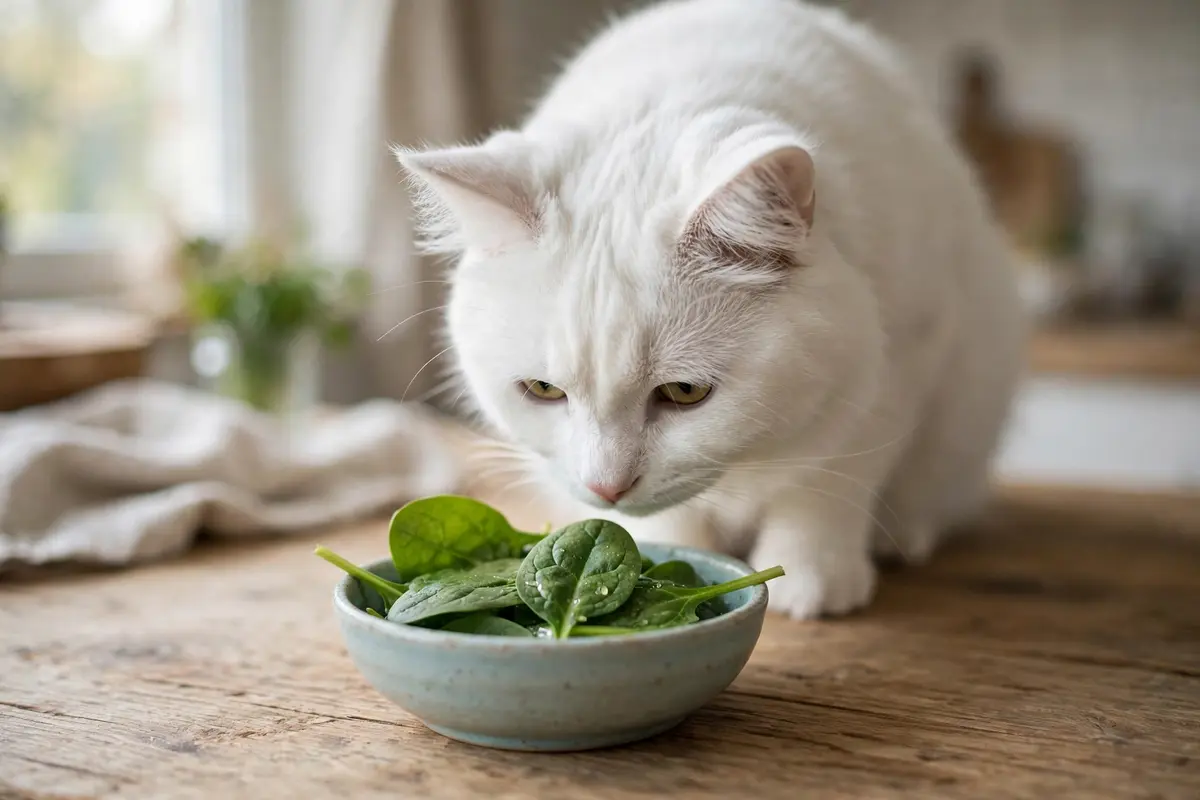
The Short Answer: Yes, But With One Big Exception
Yes, cats can eat spinach — but only cooked, only in small amounts, and only if your cat has healthy kidneys and no history of urinary problems. Spinach is the one common leafy green that comes with a real caveat, and that caveat is the whole point of this article.
Spinach contains oxalates, natural plant compounds that can contribute to calcium oxalate crystals and stones in the urinary tract. For a healthy cat, a small serving of cooked spinach now and then is not a problem. For a cat with kidney disease or a history of urinary crystals, spinach is a food to skip entirely. If you are unsure about your cat's urinary health, the safe choice is to ask your vet before offering spinach at all.
Is Spinach Safe for Cats?
Spinach is not toxic to cats in the way that onions, garlic, or lilies are. A healthy cat that eats a few cooked spinach leaves will almost certainly be fine. The leaves contain vitamins A, C, and K, folate, iron, and magnesium — a respectable nutritional profile for a leafy green.
The risk is specific and slow-moving rather than dramatic. Oxalates bind with calcium in the body, and in some cats the resulting crystals can collect in the bladder or kidneys. This does not happen after one small serving, and it does not happen to most cats. But for a cat that is already prone to urinary crystals or stones, even a modest amount of a high-oxalate food adds risk that is easy to avoid by simply choosing a different vegetable.
Raw spinach carries an extra problem: it is tough, stringy, and hard for a cat to chew and digest. Cooking softens the leaves, breaks down some of the oxalates, and makes the small amount your cat eats much easier to handle. Raw spinach should not be offered to cats at all.
The Oxalate and Urinary Warning
Calcium oxalate stones are one of the more common types of bladder stones in cats, and diet plays a real role in their formation. Foods high in oxalates — spinach is one of the highest — add to the oxalate load in the urine, and in a cat that already forms crystals, that extra load matters.
Cats most at risk are those with a history of calcium oxalate stones, chronic kidney disease, or urinary blockages. If your cat falls into any of these groups, spinach should stay off the menu permanently — green beans, zucchini, and cucumber give a green treat without the oxalate load.
Signs of urinary trouble are worth knowing: straining in the litter box, crying while urinating, blood in the urine, frequent small trips to the box, or licking the genital area more than usual. A male cat that cannot urinate at all is an emergency — get to a vet immediately.
How Much Spinach Can a Cat Eat?
For a healthy adult cat with no urinary or kidney history, a small amount means a few cooked leaves — roughly a tablespoon of chopped, cooked spinach — once a week at most. That is a garnish, not a serving. Treats of all kinds should stay under ten percent of daily calories, and spinach should sit well under that limit.
Do not make spinach a daily habit. The oxalate concern is about repeated, regular intake, not a single taste. A cat that eats a few leaves once in a while is in a very different position from a cat that gets spinach every day. If your cat loves leafy greens, rotate in lower-oxalate options like lettuce or cucumber so spinach stays occasional.
Start with one small leaf the first time. Some cats will not touch spinach at all — the texture and smell do not appeal to many cats — and that is perfectly fine. There is no nutritional reason a cat needs spinach, so a refusal costs your cat nothing.
How to Prepare Spinach for Your Cat
Only cooked spinach, never raw. Steam or boil fresh spinach leaves in plain water for one to two minutes, until they are fully wilted and soft. Drain them well and let them cool completely. Chop the cooked leaves into small pieces before serving — long, stringy leaves can be hard for a cat to swallow.
Serve the spinach plain, with nothing added. No salt, no butter, no oil, no garlic, no onion, no cream. Creamed spinach is a human dish, not a cat treat: the cream, salt, and seasonings in it are all wrong for cats. Baby spinach and mature spinach are the same as far as your cat is concerned — cook either one the same way.
Frozen spinach works too if it is plain and unseasoned: cook from frozen, drain thoroughly, and chop before offering. Avoid spinach from a seasoned dish, a dressed salad, or a dip.
Can Kittens Eat Spinach?
Kittens should not eat spinach. Their kidneys are still developing, their diets need to be built around kitten food, and there is no benefit to adding a high-oxalate vegetable to a growing cat's meals. A kitten's small body has no reason to take on extra oxalates, and the risk, while small, is entirely avoidable.
Once a cat is an adult and has a clean bill of urinary health, a tiny taste of cooked spinach is reasonable. Before that, stick to kitten food and leave the spinach for the humans in the house.
What Happens If My Cat Eats Spinach?
If your healthy cat ate a few plain cooked spinach leaves, there is nothing to worry about. The most likely outcome is no reaction at all, or at most a slightly softer stool. Offer fresh water and feed the next meal as normal.
If your cat has kidney disease or a history of urinary crystals and ate spinach, call your vet and tell them what happened. One serving is unlikely to cause a crisis, but your vet may want to watch your cat more closely or check a urine sample, and they can advise you based on your cat's history.
If your cat ate raw spinach, watch for stomach upset or vomiting — raw leaves are tough to digest. If your cat ate spinach from a seasoned dish, note the seasonings: garlic and onion are toxic to cats, so call your vet if either was involved. And if your cat shows any sign of urinary trouble — straining, crying in the litter box, or blood in the urine — call your vet the same day, whether or not spinach was involved.
Spinach is safe for healthy cats only in small, cooked amounts — and it should be skipped entirely if your cat has urinary or kidney problems, because of the oxalates. Cook it plain, chop it small, offer a tablespoon at most once a week, and choose a lower-oxalate vegetable if your cat has any urinary history at all.
Can cats eat spinach?
Yes, in small amounts — cooked only, and only if your cat has healthy kidneys and no urinary history. Cats with urinary or kidney problems should skip spinach entirely.
Why is spinach risky for some cats?
Spinach is high in oxalates, which can contribute to calcium oxalate crystals and stones in the urinary tract. The risk is highest for cats already prone to urinary problems.
Can cats eat raw spinach?
No. Raw spinach is tough, stringy, and hard to digest. Always steam or boil it until soft, drain it well, and chop it into small pieces.
How much spinach can a cat eat?
For a healthy adult cat, about a tablespoon of chopped cooked spinach once a week at most. Do not make it a daily habit.
Can kittens eat spinach?
No. Kittens should not eat spinach — their kidneys are still developing and kitten food should be their only diet.
What should I do if my cat with kidney disease eats spinach?
Call your vet and tell them what happened. One serving is unlikely to cause a crisis, but your vet may want to monitor your cat or check a urine sample.