Can Cats Eat Oranges?
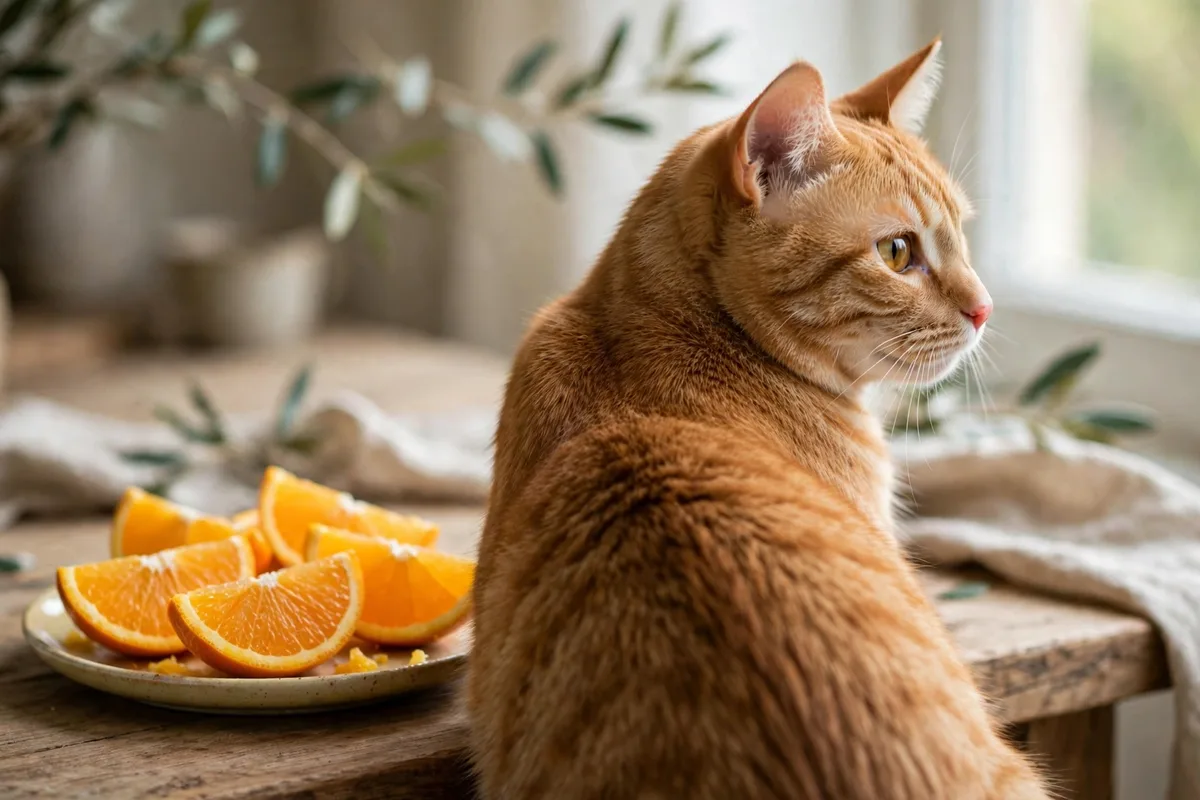
No, cats should not eat oranges. Oranges are unsafe for cats, and the simplest advice is to keep them out of your cat's bowl entirely. The problem is not one bad part of the fruit: citrus oils and citric acid in oranges irritate a cat's gut and nervous system, and the peel, pith, and seeds are the worst offenders. Even the flesh, which some sources call less harmful, is not recommended — it is acidic, sugary, and offers a cat nothing it needs.
Cats are famously put off by citrus smells, and that instinct is worth trusting. A cat that turns away from an orange slice is doing exactly the right thing. Cats are obligate carnivores, built to run on animal protein, and they cannot even taste sweetness — so the appeal of an orange is entirely human. When a fruit's every part ranges from irritating to toxic and its only upside is novelty, the honest answer is simply no.
Why Are Oranges Unsafe for Cats?
Oranges contain essential oils — including limonene and linalool — and citric acid, both of which cats handle poorly. Cats lack some of the liver enzymes that other animals use to break down certain plant compounds, which is one reason citrus hits them harder than it hits humans or dogs. Eating orange can cause vomiting, diarrhea, drooling, and stomach pain, and larger amounts or concentrated oils can affect the nervous system, causing weakness, trembling, or collapse.
The peel, pith, and seeds concentrate the risk. The peel is richest in essential oils, the bitter white pith is harsh on the stomach, and the seeds add a choking hazard on top. Orange juice is no safer: it is acidic and sugary, and it delivers the irritating compounds without any of the fiber. Orange-flavored products, orange oil, and citrus-scented cleaners and air fresheners deserve the same caution — the oils are the problem, whatever form they arrive in.
But What About Just a Little Flesh?
You may read that a tiny piece of orange flesh is unlikely to seriously harm a cat, and for a single small lick that is often true. But unlikely to seriously harm is not the same as safe, and it is certainly not a recommendation. Even a small amount of flesh can cause vomiting or diarrhea in a sensitive cat, and there is no benefit to balance that risk — orange flesh gives a cat nothing its regular food does not already provide better.
The practical problem is also real: once you start offering orange flesh, the boundary blurs. A cat that learns oranges are food may go after a peel left on a counter, a segment dropped on the floor, or a slice in a drink. Keeping a bright line — oranges are not cat food, in any form — is simpler and safer than negotiating portion sizes for a fruit no cat needs. This site lists oranges as unsafe, full stop.
Hidden Orange Exposures to Watch For
The most common orange accident is not a cat deliberately eating an orange segment — it is a peel left on a counter, a segment dropped while cooking, or a slice floating in a drink glass that a curious cat investigates. Orange peels are particularly attractive to cats as toys: they are light, they roll, and they smell strong. A cat that bats a peel around may chew it, and chewing a peel delivers the most concentrated dose of citrus oils in the whole fruit.
Citrus-scented household products are a quieter exposure. Orange oil in cleaning sprays, potpourri, air fresheners, and some pet shampoos can irritate cats through skin contact or inhalation, and cats groom themselves, so anything on their fur ends up ingested. If you use citrus-scented products, keep cats out of the room until surfaces are dry, and never use citrus essential oils directly on a cat or its bedding.
Symptoms of Citrus Trouble in Cats
After eating orange, watch for drooling, vomiting, diarrhea, stomach gurgling, or a refusal to eat — the usual signs of gut irritation. Those symptoms often appear within a few hours and usually resolve on their own if the amount was small, but they are still a sign the food disagreed with your cat. Offer fresh water, keep the next meals plain and familiar, and monitor closely.
More serious signs need a vet right away: weakness, trembling, difficulty walking, collapse, or vomiting and diarrhea that last more than a day or include blood. Concentrated citrus oil exposure — from essential oils, cleaning products, or a large amount of peel — is more dangerous than a nibble of flesh, and it should always be treated as urgent. Call your vet or an emergency animal poison line and describe exactly what was eaten or contacted and how much.
Can Kittens Eat Oranges?
Absolutely not. Kittens are smaller, more sensitive to toxins, and more likely to chew on novel objects like peels. Kittens should stick to kitten food, full stop. There is no age at which oranges become a good idea for a cat — this is a lifelong no, not a wait-until-adult situation.
What to Do If Your Cat Eats Orange
Stay calm and remove any remaining orange, peel, or pith from your cat's reach so it cannot eat more. Note what was eaten and how much — flesh, peel, or seeds — because that detail helps your vet judge the risk. For a small nibble of flesh with no symptoms, monitoring at home with fresh water and plain meals is usually reasonable, but call your vet if you are unsure.
Call your vet or an emergency animal poison line right away if your cat ate peel or a larger amount, if it contacted concentrated citrus oil, or if it shows vomiting, diarrhea, weakness, or trembling. Do not try to induce vomiting at home unless a vet tells you to, and do not offer milk or home remedies. If your vet asks you to bring your cat in, bring a sample of what was eaten if you safely can.
Oranges are a clear no for cats. Citrus oils and acids irritate the gut and nervous system, the peel and pith concentrate the risk, and the flesh offers nothing a cat needs. Trust your cat's instinct here — most cats turn away from citrus on their own, and that is the right call. Keep oranges, peels, and citrus-scented products out of your cat's reach, and choose a safer treat instead.
Can cats eat oranges?
No. Oranges are unsafe for cats — citrus oils and citric acid irritate the gut and nervous system, and the peel, pith, and seeds are the worst parts.
Is a tiny piece of orange flesh dangerous?
A single small lick often causes no serious harm, but it can still cause vomiting or diarrhea, and it offers no benefit. Oranges are not recommended in any form.
Are orange peels dangerous for cats?
Yes. The peel is richest in citrus essential oils and is the most dangerous part of the fruit. Keep peels out of your cat's reach.
Can cats drink orange juice?
No. Orange juice is acidic and sugary and delivers the irritating compounds without any benefit. Never give orange juice to a cat.
Are citrus-scented cleaners safe around cats?
Use caution. Citrus essential oils can irritate cats through skin contact or inhalation, and cats ingest anything on their fur by grooming. Keep cats away until surfaces are dry.
What should I do if my cat eats orange?
Remove the rest, note what and how much was eaten, and call your vet if peel or a large amount was involved, or if vomiting, diarrhea, weakness, or trembling appears.