Can Cats Eat Persimmon?
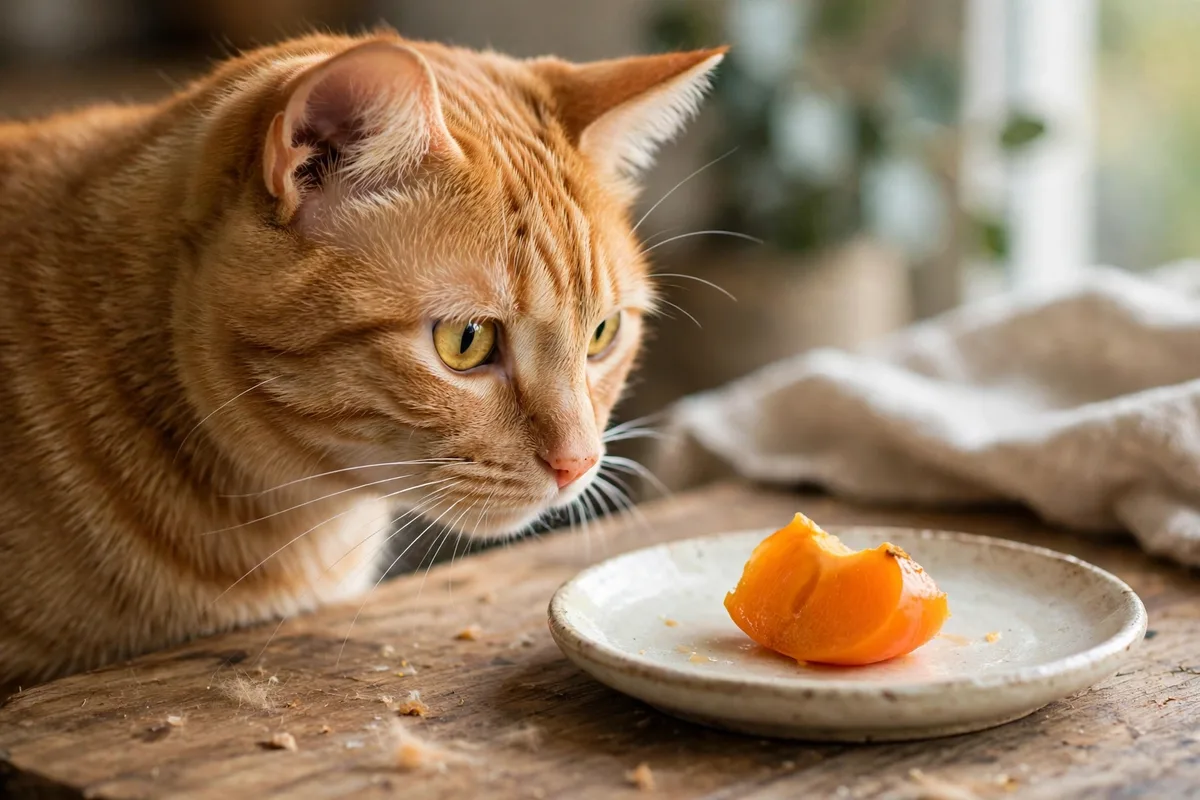
Cats can eat persimmon, but only as a rare treat and only under strict conditions: fully ripe flesh, no skin, no seeds, and a very small piece. Persimmon flesh itself is not toxic to cats, and a tiny amount will not harm a healthy adult cat. But persimmon carries two real hazards that simpler fruits do not — seeds that can block the gut, and a tough skin that is hard to digest — plus a third trap: an unripe persimmon is intensely astringent and unpleasant even before any safety question arises.
That combination is why persimmon earns a caution verdict rather than a clean yes. It is not a fruit to hand over casually, and it is certainly not a fruit worth making a habit of. Cats are obligate carnivores, which means their bodies are built to run on animal protein, and persimmon adds nothing they need. If any part of that is in doubt, skip it entirely.
Is Persimmon Safe for Cats?
Ripe persimmon flesh is safe for cats in very small amounts. It is soft, mostly water and natural sugars, with some fiber and vitamin A, and it contains no compounds known to be toxic to cats once the skin and seeds are removed. The flesh of a fully ripe, soft persimmon — the kind that yields gently to pressure and tastes honey-sweet — is the only part that should ever reach a cat's bowl.
Everything else about the fruit is a reason for care. Persimmon seeds are large, hard, and smooth, and a swallowed seed can cause a gut blockage, particularly in a smaller cat. The skin is thick and leathery and resists digestion, so pieces of skin can irritate the stomach or, in a cat that gulps, pose a choking risk. And an unripe persimmon is packed with tannins that make the mouth pucker and dry out — an experience no cat needs, and one that can also upset the stomach. Ripe, peeled, seeded, tiny: all four conditions matter.
The Seed and Skin Risks
Persimmon seeds are the main hazard. Depending on the variety, a persimmon can hold several large, flat, brown seeds, each hard enough to pass through the gut undigested — or to get stuck. A blockage shows up as repeated vomiting, straining in the litter box without results, a tender or swollen belly, lethargy, and refusal of food. That is a veterinary emergency, not a wait-and-see situation, and it sometimes needs surgery to resolve. Because the seeds sit embedded in the flesh, you must cut the fruit open and remove every seed by hand, checking each piece before serving.
The skin is the second hazard. Persimmon skin is thicker than apple peel and far harder to digest, and it can also carry pesticide residue if the fruit was not washed. Peel the fruit completely — do not assume a soft ripe persimmon's skin is harmless just because the flesh is soft.
Ripe vs Unripe: A Difference That Matters
Persimmon ripeness is not a matter of taste preference; it changes the fruit. An unripe persimmon, especially the astringent Hachiya type, is loaded with soluble tannins that create an intensely dry, puckering sensation in the mouth. For a cat, that means immediate rejection at best and stomach upset at worst, and there is no reason to test it. A ripe persimmon, by contrast, is soft all over, almost jelly-like inside, and sweet without any astringent bite.
If you are unsure whether a persimmon is ripe, do not serve it. Press it gently: a ripe one yields easily, like a very soft tomato. If it is firm, leave it on the counter for a few days until it softens completely.
How Much Persimmon Can a Cat Eat?
Keep it to one pea-sized piece of ripe flesh, once in a while — no more than once every week or two, and less is fine. Persimmon is sugary, and a cat's daily treat allowance is small: treats of all kinds should stay under about 10 percent of daily calories. A whole persimmon, or even half of one, is far beyond a treat portion for a cat, and a larger amount raises the odds of soft stool, vomiting, or a sugar spike that a diabetic cat cannot afford.
Start with a single tiny piece the first time and watch for the next 24 hours: normal appetite, normal litter box habits, no vomiting or diarrhea. If everything looks fine, that tiny piece can become a rare treat. Cats with diabetes should skip persimmon unless their vet approves it, and overweight cats are better off with a lower-sugar treat like plain cooked chicken. Persimmon is a novelty, not a health food, for cats.
How to Serve Persimmon to Your Cat
Choose a fully ripe, soft persimmon and wash it well under running water. Cut it open, scoop out the soft flesh, and remove every seed and all of the skin — check the flesh piece by piece, since seeds can hide in the soft pulp. Cut the flesh into one tiny, pea-sized piece, serve it plain at room temperature in your cat's regular bowl, and throw away anything uneaten after a short while so it does not spoil.
Do not cook persimmon, sweeten it, or serve it in any processed form. Persimmon pudding, persimmon bread, and dried persimmon slices all add sugar, spices, or other ingredients that have no place in a cat's diet, and dried pieces are a choking risk besides. Plain, ripe, peeled, seeded, and tiny is the whole recipe — and if the fruit is not fully ripe, the recipe is to wait or skip it.
Can Kittens Eat Persimmon?
Kittens should stick to kitten food. Their growth demands precise nutrition, and fruit treats only displace that nutrition without adding anything useful. A kitten's stomach is also small and more easily upset by new foods, and a kitten is more likely to gulp a piece whole — a real concern with a fruit whose seeds are a blockage risk. Wait until your cat is an adult, around twelve months old, before offering persimmon at all, and even then start with a single tiny piece.
What Happens If My Cat Eats Persimmon Seeds or Skin?
A small amount of skin will often pass without trouble, but watch for vomiting, drooling, or a refusal to eat over the next day. A swallowed seed is more serious: watch for repeated vomiting, straining without producing stool, a swollen or tender belly, lethargy, or refusal of food and water. Those signs can indicate a blockage, and a blockage needs a vet promptly.
Call your vet or an emergency animal poison line and describe exactly what was eaten and how much. Do not try to induce vomiting at home unless a vet tells you to. If your cat is eating, drinking, and using the litter box normally after nibbling skin, monitoring at home is usually reasonable — but any change in behavior earns a vet call, and a known swallowed seed earns one right away.
Persimmon sits firmly in the caution category: safe only when every condition is met — fully ripe, skin off, seeds out, piece tiny, frequency rare. Miss any one of those and the risk climbs fast, especially with the seeds. Most cats will be perfectly happy never tasting persimmon, and that is a fine outcome. If you do share it, follow the rules exactly, and keep the main diet a complete cat food.
Is persimmon safe for cats?
Ripe persimmon flesh is safe in very small amounts, but only with the skin and all seeds removed. Unripe persimmon and dried persimmon should not be given.
Are persimmon seeds dangerous for cats?
Yes. The large, hard seeds can cause an intestinal blockage if swallowed. Always cut the fruit open and remove every seed before serving.
Can cats eat persimmon skin?
No. The thick skin is hard to digest and can irritate the stomach or cause choking. Peel persimmon completely.
How much persimmon can a cat eat?
One pea-sized piece of ripe flesh, rarely — no more than once every week or two. Start with a single tiny piece and check for stomach upset.
Can kittens eat persimmon?
No. Kittens should stick to kitten food. Wait until your cat is an adult, around twelve months, before offering persimmon.
What if my cat eats an unripe persimmon?
Unripe persimmon is very astringent and can upset the stomach. Watch for vomiting or refusal to eat, and call your vet if symptoms appear or persist.