Can Cats Eat Pears?
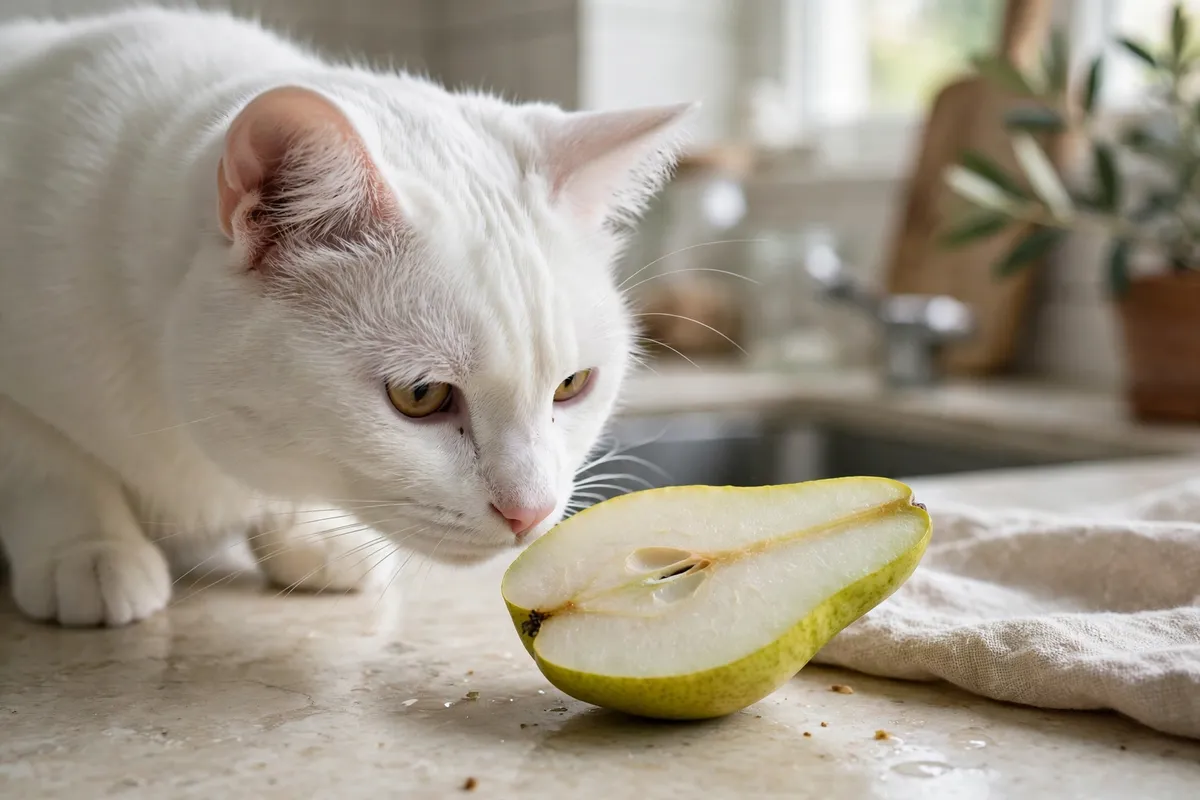
Yes, cats can eat pears — but only the flesh, and only when the pear is ripe and soft. A few small pieces of ripe pear flesh, with the seeds, core, and stem completely removed, make a safe occasional treat for a healthy adult cat. Pear flesh is not toxic to cats, and a ripe, soft pear is actually one of the easiest fruits for a cat to chew and digest. The cautions are familiar: pear seeds carry compounds that can release cyanide when chewed, and the core and stem are choking hazards.
As with all fruit, pears are a treat, not a cat food. Cats are obligate carnivores, and their bodies are built for animal protein, not fruit. Pear adds nothing essential to a cat's diet, but a few small pieces of soft, ripe pear once in a while are harmless for a healthy cat and can be a gentle introduction to fruit for a cat that has never tried it. Here is why ripeness matters, the seed warning, the right portion, and how to serve pears safely.
Is Pear Safe for Cats?
Pear flesh is safe for cats. It is mostly water, with vitamin C, vitamin K, copper, and a small amount of fiber, and it is low in fat and calories per piece. The standout feature of pears is texture: a fully ripe pear is soft, almost buttery, which makes it easier to chew and gentler on the stomach than firmer fruits like apple. That softness is a real advantage for senior cats or cats with sensitive mouths, as long as the pieces are still cut small.
The parts to avoid are the seeds, the core, and the stem. Pear seeds contain amygdalin, the same compound found in apple seeds, which breaks down into cyanide when the seed is crushed or chewed. The core is dense and woody, and the stem is hard and thin — both are choking risks. The skin is not toxic, but it can be hard to digest and may carry pesticide residue, so peeling is the safer choice for cats. Only the soft flesh belongs in the bowl.
Ripe and Soft: Why Ripeness Matters Most
With pears, ripeness is not just about taste — it is the main safety and digestibility factor. An unripe pear is hard, gritty, and much more likely to upset a cat's stomach, and a cat that tries to gulp a hard chunk faces a bigger choking risk. A ripe pear, by contrast, yields gently to pressure at the neck, smells sweet, and cuts into soft pieces that a cat can chew easily. If your pear is still hard, leave it on the counter for a few days and offer it only once it has softened.
How Much Pear Can a Cat Eat?
Keep it to a few small pieces — about the size of your cat's kibble — once or twice a week at most. For a first taste, offer just two or three tiny pieces and watch for the next 24 hours: normal appetite, normal litter box habits, no vomiting or soft stool. If everything is normal, that small portion can become an occasional treat. A whole slice is already too much for a cat, and a large serving can easily cause stomach upset from the sugar and fiber.
The 10-percent rule applies here too: all treats combined should stay under about 10 percent of your cat's daily calories. For an average indoor cat, that budget is small, and pear should replace another treat on the day it is offered, not add on top of a full treat allowance. Pears are moderately sugary, so diabetic cats should skip them unless a vet specifically approves a piece, and overweight cats are better off with a lower-sugar treat.
How to Serve Pears to Your Cat
Choose a ripe, soft pear and wash it well under running water. Peel it, cut away from the core, and remove every seed and the stem. Dice the flesh into small, pea-sized pieces — small enough to chew, not gulp — and check each piece for stray seeds or core fragments. Serve the pieces plain, at room temperature, and discard anything uneaten after a short while, since cut pear browns and spoils quickly.
Do not cook the pear, sweeten it, or add cream, chocolate, or any topping, and do not offer canned pears — they are usually packed in syrup, which means a heavy sugar load. Poached pears and pear desserts are likewise off the menu. Fresh, plain, ripe pear flesh is the only version that belongs near a cat. If your cat sniffs the pieces and walks away, that is normal; many cats ignore fruit entirely, and a piece of plain cooked chicken is a treat your cat's biology actually values.
Can Kittens Eat Pears?
Kittens should stick to kitten food. Their growth needs precise nutrition, and fruit treats displace that nutrition without adding anything useful. A kitten's stomach is also small and more easily upset by new foods. Wait until your cat is an adult, around twelve months old, before offering pear, and even then start with a single tiny piece to test tolerance.
The same restraint applies to senior cats and cats with health conditions. A diabetic cat should skip pears, a cat with kidney disease should have any new food cleared by the vet first, and a cat recovering from vomiting or diarrhea should not be given a novel treat until fully recovered. When in doubt, ask your vet before the first piece, not after a stomach upset.
What Happens If My Cat Eats Pear Seeds?
Do not panic over a single seed. One whole seed swallowed intact usually passes through without releasing a harmful amount of cyanide, because the hard seed coat keeps the compounds locked inside. The real risk comes from several seeds that have been chewed and crushed, or from a large amount of core material eaten at once. Watch your cat closely for vomiting, drooling, difficulty breathing, or unusual weakness or lethargy.
If your cat has eaten several crushed seeds, or a whole core, call your vet or an emergency animal poison line right away and describe exactly what and how much was eaten. Do not try to induce vomiting at home unless a vet tells you to. In most everyday cases, a cat that grabbed one seed will be perfectly fine, but a prompt vet call is always the right move when the amount is unknown or the cat shows any symptoms. As with peaches, prevention is the real fix: seeds and cores go straight into a closed bin.
When to Call the Vet
Pears are one of the gentlest fruits you can share with a cat: soft, easy to digest when ripe, and safe as long as the seeds and core are removed. Ripe flesh only, tiny pieces, occasional frequency — follow those rules and pear becomes a harmless little extra. Keep the main diet a complete cat food, and your cat can enjoy the occasional pear piece without any worry.
Is pear safe for cats?
Yes. Ripe pear flesh is non-toxic to cats and safe in small, occasional portions, with all seeds, core, and stem removed.
How much pear can a cat eat?
A few pea-sized pieces once or twice a week is plenty. Start with two or three tiny pieces the first time and check your cat's stomach handles it.
Can kittens eat pears?
Kittens should stick to kitten food. Wait until your cat is an adult, around twelve months, before offering pear, and then only a tiny piece.
Are pear seeds poisonous to cats?
Pear seeds contain amygdalin, which can release cyanide when chewed. A single whole seed usually passes harmlessly, but several crushed seeds are a real risk — always remove all seeds.
Should pears be ripe before giving them to cats?
Yes. Only offer fully ripe, soft pears — unripe pears are hard and more likely to upset a stomach or pose a choking risk, and overripe or fermented pears should be thrown away.
Can diabetic cats eat pears?
Generally it is best to skip pears for diabetic cats because of the natural sugar. Ask your vet first if you want to offer a small piece.