Can Cats Eat Cantaloupe? Vet Answer
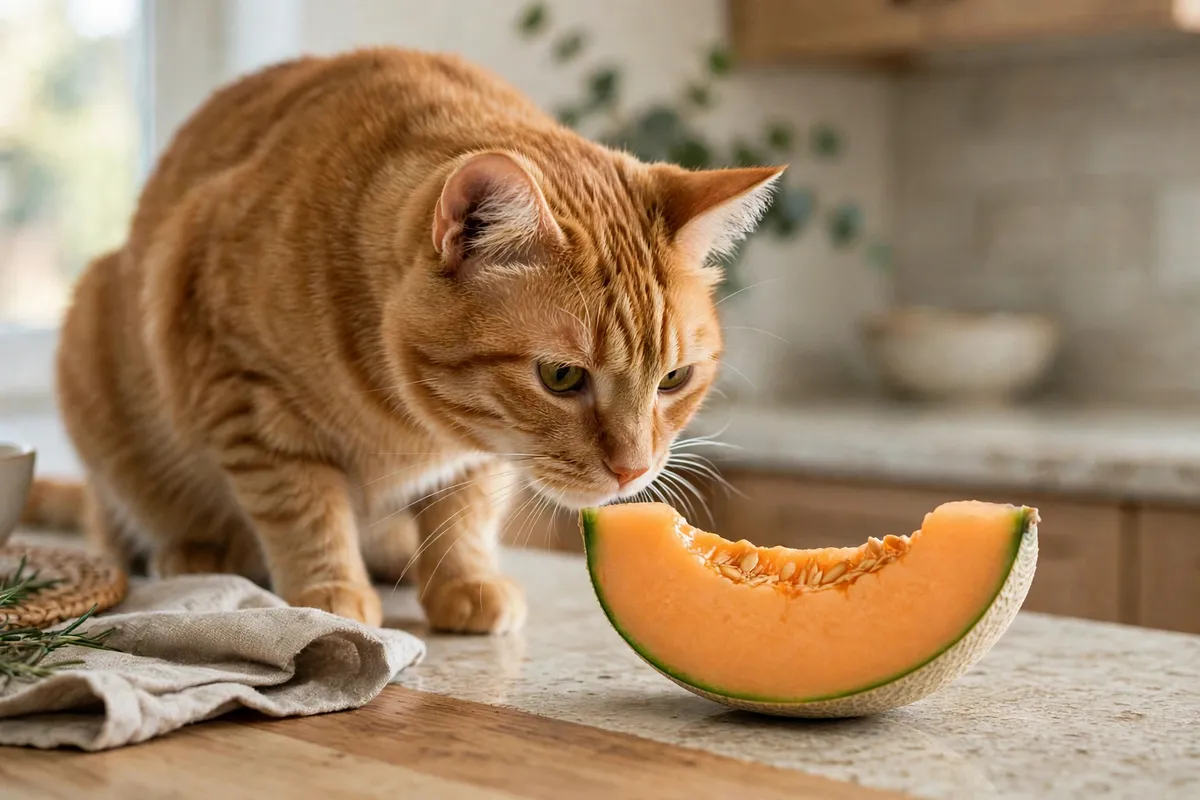
Cantaloupe is one of those foods that surprises cat owners twice: first because cats, famously indifferent to sweet things, sometimes show real interest in melon, and second because the answer is reassuringly simple. Yes, cats can eat cantaloupe. The flesh of a ripe cantaloupe is non-toxic to cats, and a few small, seedless pieces make a safe occasional treat for a healthy adult cat.
That said, cantaloupe is a treat, not a cat food, and there are a few serving rules that matter: remove the rind and seeds, keep portions tiny, and skip it for cats with diabetes or sensitive stomachs unless your vet says otherwise. Here is what cantaloupe offers, where the cautions are, and exactly how to serve it.
Why Some Cats Love Melon
Cats cannot taste sweetness the way humans do — they lack a key sweet-taste receptor — so a cat's interest in cantaloupe is not about sugar. What draws them in is usually the smell: cantaloupe contains volatile compounds similar to those in meat, which is why some cats sniff it eagerly and even rub their faces on it. Other cats will sniff it once and walk away, and both reactions are completely normal.
Nutritionally, cantaloupe is mostly water, with a modest amount of vitamin A, vitamin C, potassium, and fiber, and very few calories per piece. That high water content is actually its main benefit for cats: many cats do not drink enough, and a juicy treat can add a little hydration. It does not, however, provide protein or taurine, the nutrients cats actually need, so it should never displace real cat food.
How to Serve Cantaloupe Safely
Start with a ripe, fresh cantaloupe. Wash the outside before cutting, since the netted rind can carry bacteria from the field and the knife drags it through the flesh. Cut away all rind — the tough outer skin is hard to digest and can cause stomach upset or, in a greedy cat, a choking risk. Scoop out all seeds and the stringy center, and cut the flesh into small, pea-sized cubes, no bigger than your cat's usual kibble pieces.
Offer just two or three cubes the first time and watch for the next day: normal appetite, normal litter box, no vomiting or soft stool. If all is well, a few cubes once or twice a week is plenty. Serve it plain and fresh, at room temperature, and throw away any uneaten pieces — cut melon spoils quickly at room temperature and should be refrigerated and used within a couple of days. Never offer dried cantaloupe, candied melon, or melon-flavored desserts, which are concentrated in sugar and often contain other ingredients.
When to Skip Cantaloupe
Cantaloupe contains natural sugars, so cats with diabetes should generally skip it, or have it only if their vet specifically approves a small amount. Cats with chronic kidney disease can usually handle a tiny piece, but since potassium and sugar both matter in kidney diets, check with your vet first rather than guessing. Kittens under about six months should stick to kitten food — their small stomachs and precise growth needs leave no room for fruit treats.
Also skip cantaloupe if your cat has a sensitive stomach or is recovering from vomiting or diarrhea; even a safe food can be one variable too many during recovery. And if your cat has never eaten fruit before, remember that novelty itself can upset a stomach, so the first portion should be truly tiny. If vomiting, diarrhea, or itching follows, drop cantaloupe from that cat's treat list — individual sensitivities vary.
Cantaloupe vs Other Melons
The same rules apply to the melons most people have at home. Watermelon flesh, seedless, is safe in small pieces, and honeydew flesh is safe too, with the same rind-and-seeds-removed rule. All melons share the same profile: high water, low protein, safe as an occasional treat, not a dietary staple. What matters more than the variety is the serving: plain, fresh, seedless, rind-free, and small.
Do not confuse fresh melon with melon-flavored products. Melon candy, syrups, and desserts often contain added sugar, artificial flavorings, or xylitol, and those are not safe. If it comes in a wrapper or a bottle, it is not the same food as the fruit, and it does not belong in a cat's bowl. Fresh fruit only, and only the flesh.
Do Cats Actually Need Fruit?
No — and that is worth saying plainly. Cats are obligate carnivores, and they do not need fruit, vegetables, or grains to be healthy. A cat on a complete, balanced cat food is already getting everything it needs, and fruit adds nothing essential. Treats like cantaloupe are for enrichment and bonding: a novel smell, a new texture, a shared moment in the kitchen.
That perspective keeps portions honest. If your cat loves cantaloupe, a few cubes a week is a lovely extra. If your cat ignores it, nothing is lost — offer a piece of plain cooked chicken instead, which your cat's biology actually values. Either way, treats stay under about 10 percent of daily calories, and the main diet stays a complete cat food chosen for your cat's age and health.
Cantaloupe for Cats That Do Not Drink Enough
One of the best uses for cantaloupe is as a hydration helper for a cat that does not drink much. Many cats, especially those on dry food, live in a state of mild, chronic low hydration that strains the kidneys and urinary tract over time. A few juicy cubes of melon will not fix a poor drinking habit on their own, but they add moisture in a form some cats find more appealing than a water bowl, and every bit of extra water helps. If your cat ignores its bowl but eats melon eagerly, it may be telling you it prefers its water in food form — which is a useful clue. In that case, the bigger win is usually switching toward wet food or adding a water fountain, with melon as an occasional bonus rather than the main strategy.
There is also a behavioral angle worth knowing. Some cats enjoy licking and batting at melon cubes, and a few cubes on a lick mat or in a puzzle feeder can turn a treat into enrichment. Freeze melon cubes in summer for a cool, lickable snack on hot days — just supervise the first time, since frozen pieces are harder and some cats try to gulp them. As with any treat, keep the portion small and the frequency low, and remember that the healthiest hydration habits are still a clean bowl of fresh water, refreshed daily, and a diet with a good share of wet food. Melon is a fun extra on top of those basics, not a replacement for them.
Can cats eat cantaloupe rind?
No. The rind is tough, hard to digest, and can carry bacteria on its netted surface. Always remove all rind and serve only the flesh.
Are cantaloupe seeds toxic to cats?
Seeds are not considered highly toxic, but they are a choking risk and can irritate the stomach, so always scoop them out before serving.
How much cantaloupe can a cat eat?
A few pea-sized cubes, once or twice a week, is plenty. Start with two or three cubes the first time and check that your cat's stomach handles it.
Can diabetic cats eat cantaloupe?
Generally it is best to skip it, since cantaloupe contains natural sugars. If you want to offer it, ask your vet first — diabetic diets need tight sugar control.
Can kittens eat cantaloupe?
Kittens should stick to kitten food. Their growth needs precise nutrition, so fruit treats are best left until they are older, and even then only in tiny amounts.