What Human Food Can Cats Eat? Safe List
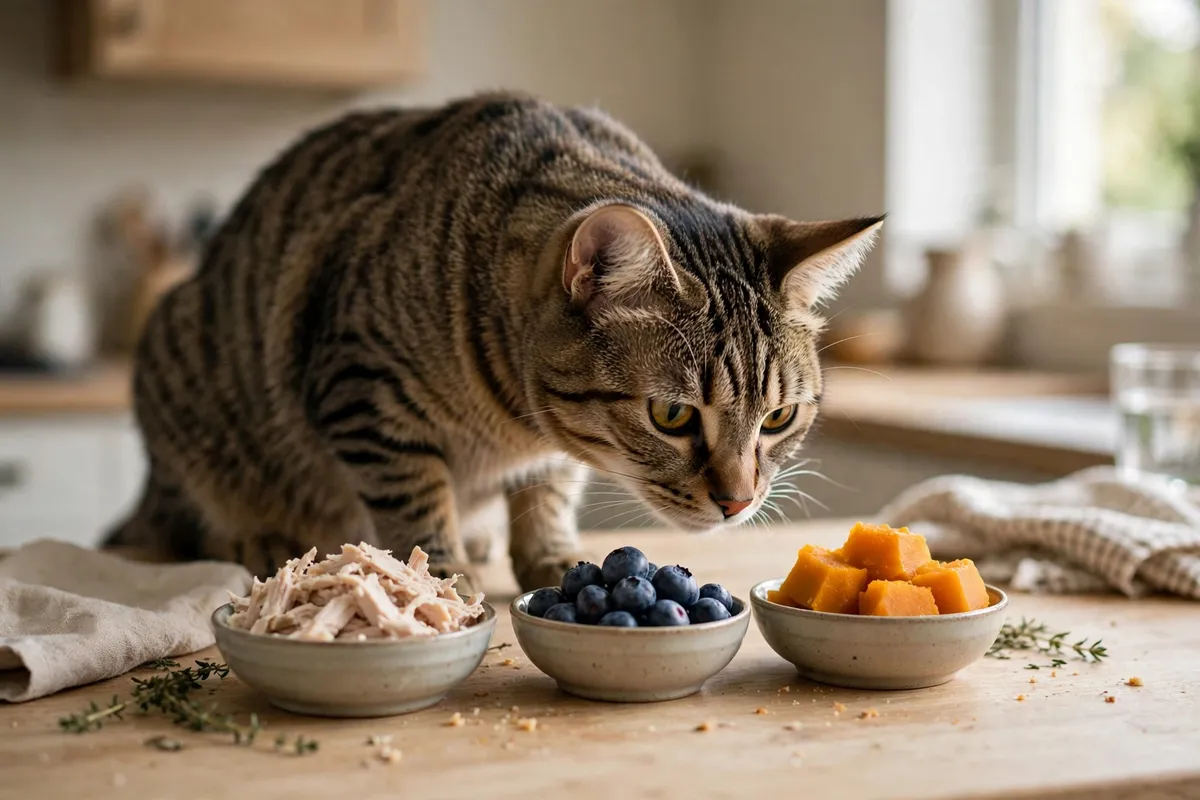
Almost every cat owner has felt it: those big eyes watching you eat, the hopeful paw on your leg, and the question of whether a little taste is harmless. The honest answer is that some human foods are perfectly safe for cats in small amounts, some are fine only when cooked and plain, and a handful are genuinely dangerous. Knowing which is which keeps treat time fun instead of a trip to the emergency vet.
The golden rule is that human food should only ever be a small extra, never the main diet. Cats are obligate carnivores, which means they need meat-based nutrition with specific nutrients, like taurine, that human meals do not reliably provide. Treats of any kind — including safe human foods — should stay under about 10 percent of your cat's daily calories. With that rule in place, here is the safe list, the cook-it-first list, and the never-share list.
Safe Straight From the Kitchen
Plain cooked chicken and turkey are the safest starting point. Offer small pieces of unseasoned, boneless meat, either boiled, baked, or poached, with no skin, no bones, and no sauce. Most cats love it, it is high in protein, and it is easy to digest. Plain cooked fish, such as salmon or white fish, is also safe in small amounts, but keep portions small and infrequent, since fish-heavy diets can be high in certain minerals and some cats are sensitive to fish.
Cooked eggs are another good option: scrambled or boiled, with no butter, salt, milk, or seasoning. Eggs provide complete protein and most cats enjoy them. Plain canned pumpkin — not pumpkin pie filling, which is sweetened and spiced — is safe and genuinely useful: a teaspoon can help both mild constipation and mild diarrhea because of its soluble fiber. Small amounts of plain blueberries, peeled apple slices without seeds, and seedless watermelon are safe fruity treats, though many cats will simply ignore fruit, and that is fine too.
Safe Only When Cooked and Plain
Several foods move from risky to safe with cooking and simplicity. Raw meat and raw fish carry bacteria and parasites, so always cook them through. Plain cooked rice and oatmeal are safe in small amounts and are often used in bland diets for upset stomachs, but they add little nutrition for a cat, so keep them occasional. Cooked carrots, green beans, peas, and zucchini are safe vegetables, best served soft and unseasoned — again, most cats will be indifferent, but a curious cat can enjoy a few pieces.
Dairy needs a special note. Despite the classic image of a cat lapping milk, most adult cats are lactose intolerant to some degree, and milk, cream, and cheese commonly cause diarrhea. A tiny piece of hard cheese or a spoonful of plain yogurt is usually tolerated by cats that handle dairy well, but if your cat has never had dairy, start with a very small amount and watch the litter box. Never offer butter, cream sauces, or anything fried, and skip all seasoning: garlic, onion, salt, and spices belong to human cooking, not to cat treats.
The Never-Share List
Some human foods are toxic to cats and should never be offered, not even as a tiny taste. Onions, garlic, leeks, chives, and shallots damage red blood cells and can cause anemia, whether raw, cooked, or powdered. Grapes and raisins can cause sudden kidney failure in cats, and the toxic dose is unpredictable, so avoid them entirely. Chocolate and cocoa contain theobromine, which cats cannot process safely, and caffeine in coffee, tea, and energy drinks is similarly dangerous.
Alcohol is toxic even in small amounts, and unbaked bread dough can expand in the stomach and produce alcohol as it ferments. Xylitol, a sweetener found in sugar-free gum, candy, and some peanut butters, is extremely dangerous. Lilies are not food, but they deserve a mention in any kitchen list: every part of a lily is highly toxic to cats, so never bring lilies into a cat household. Raw fish and raw meat, bones that can splinter, fatty skin, and anything heavily salted or seasoned also stay off the menu.
How Much and How Often
Think of human food as a treat, not a meal. A good rule is one or two small pieces, a few times a week at most, and never more than 10 percent of daily calories. Introduce one new food at a time, in a tiny amount, and wait a day to see how your cat's stomach handles it before offering it again. If you see vomiting, diarrhea, or itching after a new food, drop it from the list for that cat — individual cats have individual sensitivities.
Be careful with begging, too. Sharing from your plate teaches your cat to beg at every meal, and human portions are almost always too large and too seasoned. If you want to share, put the cat's portion in its own bowl, plain and small, away from the table. And remember that treats do not replace a complete, balanced cat food: a cat fed mostly on human leftovers can develop deficiencies, especially in taurine, vitamin A, and calcium, even if it looks well-fed.
What About Kittens and Senior Cats?
Kittens should stick almost entirely to kitten food. Their growth demands precise nutrition, and filling a small stomach with human treats can crowd out the nutrients they actually need. If you want to offer a kitten a taste, keep it to a pea-sized piece of plain cooked chicken, and only occasionally. Senior cats can enjoy the same safe foods as adults, but their kidneys and digestion are more sensitive, so portions should be smaller and new foods introduced even more gradually.
Cats with health conditions need extra caution. A cat with kidney disease should avoid high-phosphorus treats like fish, a diabetic cat should avoid anything sweet or starchy, and a cat with food allergies may react to a protein it has never had before. When in doubt, the safest human food for any cat is a small piece of plain cooked chicken — and the safest answer of all is to ask your vet at the next visit what treats suit your particular cat.
Can cats eat cooked chicken every day?
A little plain cooked chicken is safe, but it should not replace complete cat food. As an everyday topper it is fine in small amounts; as the whole diet it lacks nutrients like taurine and calcium.
Is cheese safe for cats?
A tiny piece of hard cheese is usually safe for cats that tolerate dairy, but many adult cats are lactose intolerant and cheese can cause diarrhea. Start small and skip it if your cat has a sensitive stomach.
Can cats eat peanut butter?
Plain peanut butter without xylitol is not toxic, but it is high in fat and calories and offers cats nothing they need. A tiny lick is harmless for most cats, but it is not a recommended treat.
What human food is most dangerous for cats?
Onions and garlic, grapes and raisins, chocolate, caffeine, alcohol, and xylitol are the most dangerous. Lilies, while not food, are also extremely toxic and should never be in a cat home.
Can cats eat rice?
Yes, plain cooked rice in small amounts is safe and is often part of a bland diet for an upset stomach. It should only be an occasional extra, not a regular part of the diet.