Can Cats Eat Scallions?
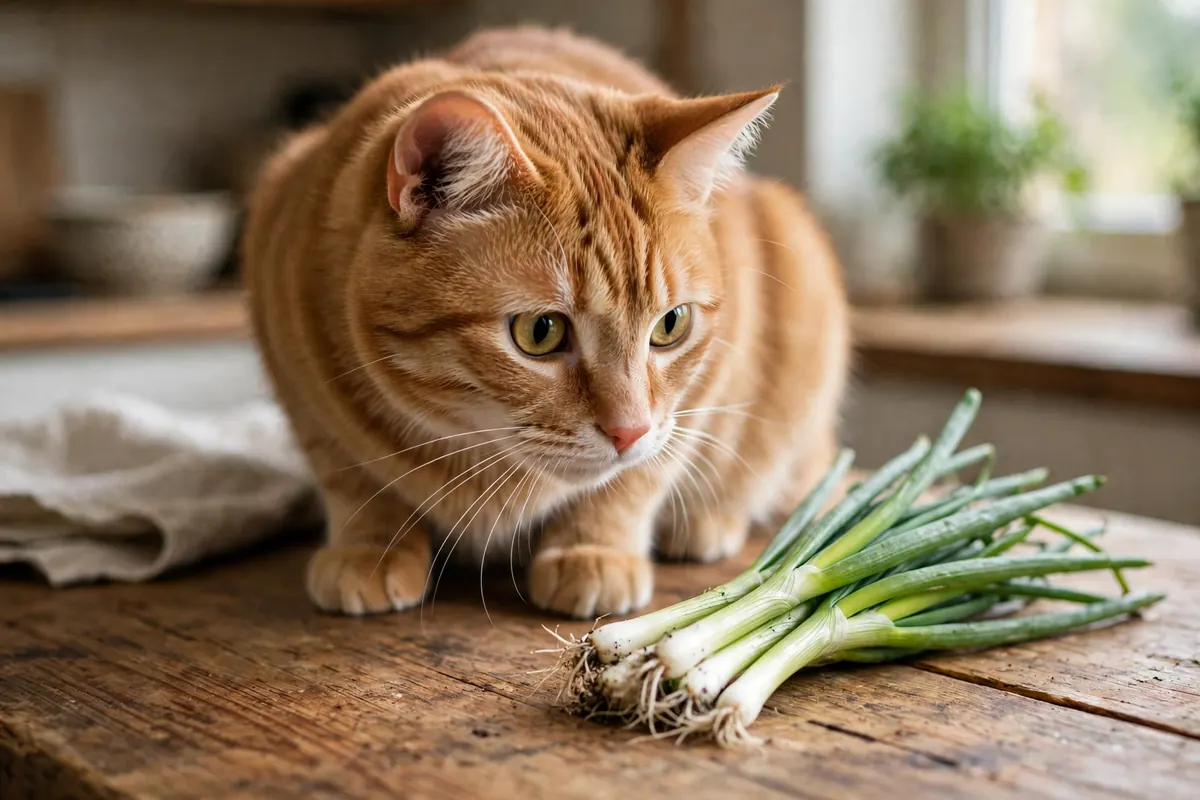
The Short Answer: No — Scallions Are Toxic to Cats
No — cats should never eat scallions. Scallions, also called spring onions or green onions, are members of the allium family, and they are toxic to cats in every form: raw, cooked, or dried. The compounds in scallions damage a cat's red blood cells and can lead to anemia, even from a small amount.
Scallions are easy to underestimate because they look like harmless green grass and are usually served as a light garnish. A cat may nibble the green tops from a plate, lick a soup, or steal a bite of a stir-fry topped with scallions. Keep reading for why scallions are dangerous, where they hide in Asian dishes, and what to do if your cat has already eaten some.
Are Scallions Safe for Cats?
No, scallions are not safe for cats in any amount. The white bulb, the green tops, and the whole plant are all toxic, and cooking does not make them safe — heat does not destroy the harmful compounds. Dried scallion flakes and scallion powder carry the same risk.
Cats are far more sensitive to allium vegetables than people are, and their small body size means even a garnish can matter. There is no safe serving size for scallions and no way to prepare them that makes them safe. Keep scallions out of your cat's bowl and out of reach on the counter. Our cat food safety guide covers the full list of foods that can harm cats.
Why Are Scallions Toxic to Cats?
Scallions contain sulfur compounds called thiosulfates, the same substances that make onions and garlic toxic to cats. When a cat eats scallions, these compounds attack the red blood cells, damaging them so they can no longer carry oxygen properly. The damaged cells break down over the following days, and the cat can develop anemia.
Scallions are often confused with chives because both are thin and green, but the rule is the same for both: no allium is safe for cats. The damage can also be delayed, so a cat may seem fine for a day or two before weakness or pale gums appear. That delay is why any scallion eating should be taken seriously right away, even if your cat looks normal.
Scallions in Asian Dishes and Garnishes
Scallions are one of the most common garnishes in Asian cooking. They are scattered over ramen, pho, and noodle soups, folded into dumplings and spring rolls, stirred into stir-fries, and sprinkled over rice dishes. A cat that licks a bowl of noodle soup or steals a bite of a dumpling has eaten scallions, even though the green flecks are easy to miss.
The risk is highest at the table, where a cat can reach a bowl before anyone notices. Keep noodle bowls, takeout containers, and plates of garnished food away from your cat, and never let your cat lick a plate that held a scallion-topped dish. When you cook with scallions, keep your cat out of the kitchen while you chop, and wipe the board and knife before your cat can lick them.
Soup and Stock: The Hidden Scallion Accident
Soup and stock are the quietest way a cat can eat scallions. Scallions are often simmered in broth for flavor and then removed, but the harmful compounds stay in the liquid. A cat that laps up a spoonful of soup or stock has still eaten scallions, even though no green pieces are visible.
The same is true of the cooking water from noodles or dumplings that were seasoned with scallions. Never offer your cat soup, stock, or broth from a dish that contained scallions, onions, garlic, or leeks. If you want to give your cat a warm treat, use plain water or a small amount of unsalted, unseasoned broth made without any alliums.
Can Kittens Eat Scallions?
No, kittens should never eat scallions. Kittens are smaller and still developing, so they are even more vulnerable to the compounds in scallions than adult cats. A curious kitten may nose at a bunch of scallions on the counter or lick a soup bowl, so keep scallions and scallion-topped dishes well out of reach.
What Happens If My Cat Eats Scallions?
The first signs are usually stomach upset: vomiting, diarrhea, loss of appetite, and stomach pain. Your cat may drool, hide, or refuse its next meal. These signs can appear within a few hours, or not until the next day.
The more serious signs come from anemia and can take one to three days to appear. Watch for unusual tiredness, weakness, rapid breathing, and pale gums — lift your cat's lip gently and check whether the gums look paler than their usual pink. Dark or reddish urine is another warning sign that red blood cells are breaking down.
Any of these signs after your cat has eaten scallions is a reason to call the vet the same day. Do not wait to see whether the symptoms pass on their own.
What to Do If Your Cat Ate Scallions
If you catch your cat eating scallions, act quickly and calmly:
- Move the scallions away. Take the plate, bowl, or scallions away from your cat so it cannot eat any more.
- Call your vet. Do this right away, even if your cat seems fine. Tell the vet what your cat ate, how much, and when.
- Do not induce vomiting. Never try to make your cat vomit at home unless your vet tells you to.
- Keep your cat indoors and calm. Offer fresh water and a quiet place to rest.
- Watch for symptoms. Check for vomiting, lethargy, pale gums, and dark urine over the next three days, and tell your vet about anything unusual.
How Much Scallions Can a Cat Eat?
None. There is no safe amount of scallions for a cat — not a single green top, not a pinch of garnish, and not a spoonful of scallion-flavored soup. If you want a green treat, choose something known to be safe, such as a few blades of cat grass or a small piece of cucumber, offered only occasionally.
Safe Alternatives to Scallions
If your cat likes nibbling green things, give it a safe outlet. A pot of cat grass — usually wheat, oat, or barley grass — is made for exactly this, and most cats love it. A small piece of plain cooked chicken is a better savory treat.
Cats are obligate carnivores: meat is the center of their diet, and vegetables are only an occasional extra.
Scallions may look like harmless green grass, but for cats they carry the same danger as onions and garlic. Raw, cooked, or dried, every form can damage red blood cells and cause anemia, and there is no safe amount. The most likely danger is a garnish on a noodle bowl or a spoonful of soup, so keep scallion-topped dishes away from your cat. If your cat does eat scallions, call your vet the same day.
Can cats eat scallions?
No. Scallions are toxic to cats in every form — raw, cooked, or dried — and should never be fed to a cat.
Are scallions the same as green onions?
Yes. Scallions are also called spring onions or green onions, and all of them are toxic to cats.
Can kittens eat scallions?
No. Kittens are smaller and still developing, so they are even more vulnerable to scallions than adult cats.
What happens if my cat eats scallions?
Your cat may develop vomiting, diarrhea, and loss of appetite, followed by signs of anemia such as weakness and pale gums. Call your vet the same day if your cat ate scallions.
How much scallions can a cat eat?
None. There is no safe amount of scallions for a cat — not a single green top and not a spoonful of scallion-flavored soup.
Is scallion soup or stock safe for cats?
No. Scallions simmered in soup or stock leave their harmful compounds in the liquid, so never offer your cat soup or broth that contained scallions.