Cat Harness Training: How to Walk Your Cat in 10 Days
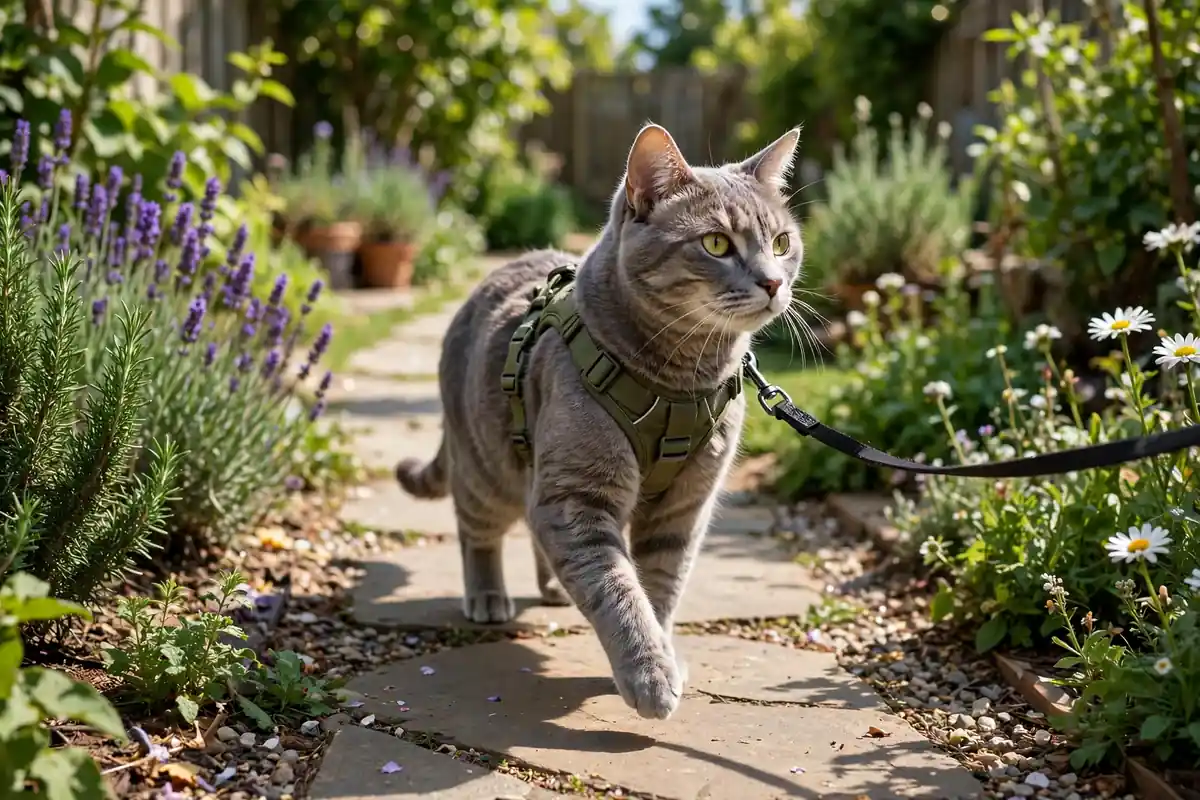
Walking a cat on a harness sounds improbable until you see a confident, harness-trained cat strolling a garden path, sniffing bushes, and watching birds from a safe distance. Most cats can learn to accept a harness and enjoy supervised outdoor time — not like a dog on a route march, but in their own stop-start, sniff-everything style. The secret is patience: harness training done in ten short, positive days beats a single forced session every time, and a cat who is rushed will simply refuse the harness for months.
This plan breaks training into small daily steps, from letting your cat sniff the harness to a first real walk outside. It works for kittens and adults, though older cats who have never worn anything may need a few extra days at each stage — and that is fine. The goal is a cat who associates the harness with treats, exploration, and fun, not with being grabbed and restrained.
Choosing the Right Harness and Leash
Start with a well-fitting, cat-specific harness — a vest-style or H-style harness designed for cats, not a small dog harness and never a collar. Collars are unsafe for walking cats because a frightened cat can slip out or injure his neck, while a harness distributes pressure across the chest and shoulders. Measure your cat's chest just behind the front legs and follow the manufacturer's sizing chart; you should be able to fit two fingers snugly between the harness and your cat's body, no looser and no tighter.
Pair the harness with a lightweight leash, about six feet long, and avoid retractable leashes, which give you little control if your cat bolts. Let your cat inspect both items before training begins, and keep treats nearby from the very first introduction. A harness that fits well and is introduced gradually is the foundation of everything that follows — a poor fit is the most common reason cats freeze, flop over, or fight the harness.
Days 1–2: Sniff, Treat, Repeat
For the first two days, do not put the harness on at all. Leave it near your cat's bed or food bowl, draped where he can sniff and rub against it, and place a treat on or beside it several times a day. The aim is simple: harness equals good things. Some cats will sniff and walk away, which is fine; others will rub their cheeks on it, which is even better, since cheek rubbing deposits their own scent and claims the harness as familiar territory.
Keep sessions short — two to three minutes, a few times a day — and end while your cat is still relaxed. If your cat ignores the harness entirely, try placing it near a favourite resting spot or rubbing it gently with a cloth that smells like home. Patience in these first days pays off later, because a cat who has already accepted the harness as an object will accept wearing it much faster.
Days 3–4: Wearing the Harness Indoors
On day three, gently slip the harness on indoors, keeping it loose at first, and immediately distract your cat with treats, a favourite toy, or a meal. Many cats react to a first harness by freezing, walking sideways, or flopping dramatically on their side — this is normal and usually passes within minutes as the strange sensation fades. Do not laugh, scold, or force movement; just offer treats and let your cat decide when to stand up.
Keep the first wearing to five or ten minutes, then remove the harness and offer a final treat. Over days three and four, gradually increase wearing time to twenty or thirty minutes, tightening the harness to its proper fit, and pair every session with something enjoyable: meals, play, or brushing. If your cat consistently panics, go back a step for a day — training that moves backwards briefly still moves forwards overall.
Days 5–6: Adding the Leash Indoors
Once your cat moves normally in the harness, clip on the leash and let it trail indoors under supervision — never leave a leashed cat unattended, as the leash can snag. Let your cat drag the leash for short sessions while you follow with treats, then pick up the leash and follow your cat around the house, keeping it loose. The key lesson for you, not just your cat, is to follow rather than lead: a cat on a leash explores, and your job is to keep the leash slack and prevent tangles.
Practice gentle guidance indoors: if your cat heads somewhere unsafe, stop, wait, and lure him back with a treat or a toy rather than pulling. Pulling against a cat's movement triggers opposition — he will dig in, panic, or bolt. By day six, your cat should be walking around the house on a loose leash, pausing to sniff and investigate, without freezing or trying to remove the harness.
Days 7–8: First Steps Outside
Choose a quiet, enclosed outdoor space for the first outings: a garden, a patio, or a quiet corner of a yard, away from dogs, traffic, and crowds. Carry your cat outside in your arms or in the carrier, and set him down near a bush or a patch of grass where he can sniff safely. Most cats will crouch low, sniff intensely, and move only a few feet on the first outing — that is a successful first walk, even if it looks unimpressive.
Keep first outings to five or ten minutes, and end on a positive note before your cat becomes overstimulated. Watch body language closely: ears flat, tail lashing, crouching with dilated pupils, or frantic attempts to run mean it is time to go back inside. Carry your cat back in rather than dragging him, and offer a treat indoors. Over days seven and eight, most cats grow bolder, exploring further and spending longer outside with each outing.
Days 9–10: Building Real Walks
By days nine and ten, you can start building a loose routine: a regular time of day, a familiar route, and gradually longer outings of fifteen to twenty minutes. Let your cat set the pace and the direction within safe limits, and expect frequent stops — cats walk to investigate, not to exercise, and a walk that covers fifty feet with ten fascinating sniffs is a perfect cat walk. Bring treats, water for longer outings, and a carrier or a bag you can pop your cat into if a dog appears or the environment suddenly becomes stressful.
Not every cat will become a keen walker, and that is okay. Some cats enjoy only garden exploration, some prefer a stroller or a catio, and a few simply dislike the outdoors despite careful training. Respect your cat's preference: a cat who tolerates the harness but never relaxes outside is telling you that supervised garden time, not street walks, is his version of outdoor enrichment. The training itself is still valuable, because a harness-trained cat is far easier to transport, evacuate, or take to the vet safely.
Common Problems and Fixes
The classic problem is the harness flop: your cat falls over and refuses to move. This usually resolves with patience, treats, and play distraction, but check the fit first — a harness that is too tight or rubbing under the legs will cause a genuine refusal. Escaping the harness means it is too loose or the wrong style; refit it, and practice indoors until you are confident it holds before going outside.
A cat who walks well indoors but panics outdoors needs slower outdoor steps: more carrier-to-garden sessions, shorter outings, and quieter locations. Never chase a loose cat outdoors, and always carry identification and a phone with your vet's number on walks. With consistency, most cats complete this plan in about ten days, and the reward — a cat safely enjoying the world beyond the window — is worth every treat along the way.
Frequently Asked Questions
Can any cat learn to walk on a harness?
Most cats can, including adults, though kittens usually learn fastest. A few cats never enjoy outdoor walks despite careful training — garden exploration or a catio may suit them better.
How long does cat harness training take?
About ten days with short daily sessions for most cats, though shy or older cats may need two to three weeks. Rushing the process usually causes setbacks.
Is it safe to walk a cat on a collar instead of a harness?
No. Cats can slip out of collars or injure their necks if frightened. Always use a well-fitting, cat-specific harness for walks.
What if my cat flops over and will not move in the harness?
This is normal at first. Check the fit, distract with treats or play, and keep sessions short. If it persists, go back to the sniff-and-treat stage for a day or two.
Should I use a retractable leash for my cat?
No. A lightweight fixed leash of about six feet gives you much better control if your cat bolts or a dog appears.