Cat-Proofing Your Home: Room by Room Guide
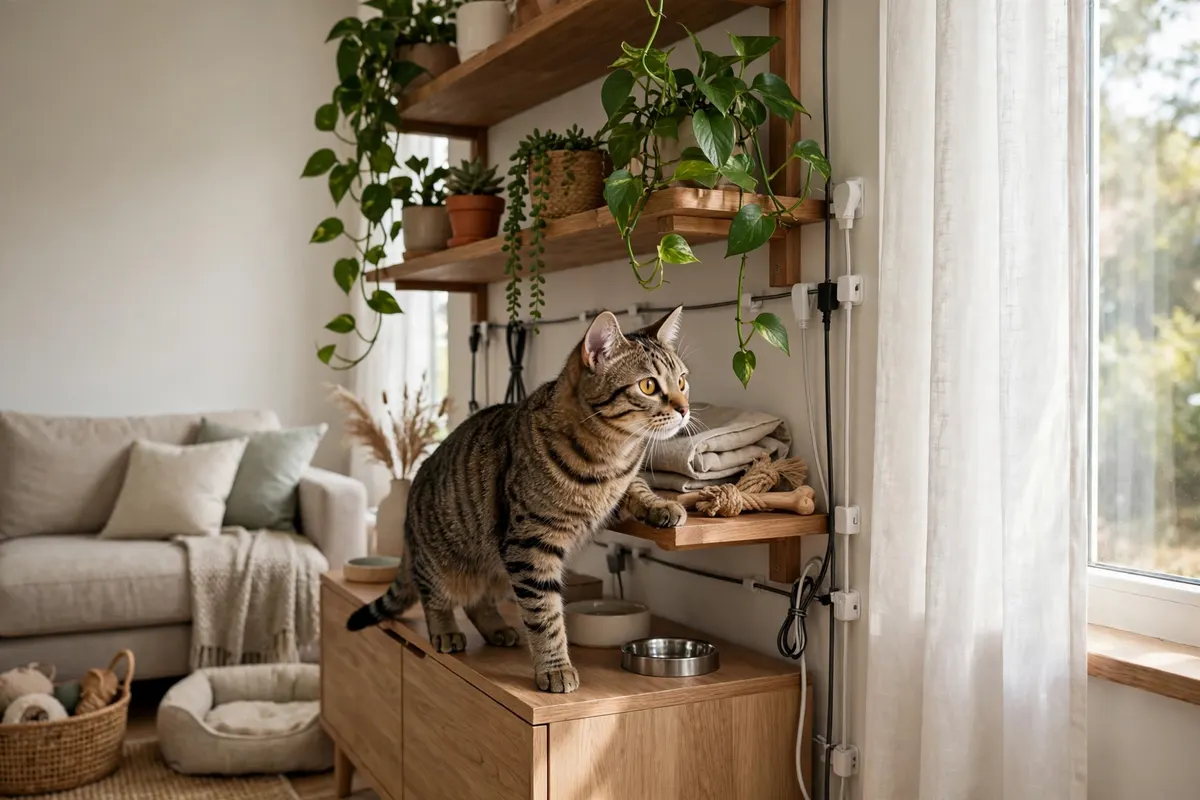
Your home looks perfectly safe to you — but to a cat, it is an obstacle course full of hidden dangers. Cats explore with their mouths, climb anything that holds still, and squeeze into spaces you swore were too small. That curiosity is charming until it meets a toxic lily, a dangling blind cord, or an open window.
The good news: cat-proofing your home does not require a renovation. In one focused weekend you can walk through every room, fix the biggest risks, and build a space where your cat can be curious safely. This room-by-room guide covers the kitchen, bathroom, living room, bedroom, windows and balconies, and the garage — plus a quick checklist of common household dangers and a simple weekend plan to get it all done.
Cat-Proofing the Kitchen: Cabinets, Trash, and the Stove
The kitchen packs the most concentrated risks into one room: cleaning chemicals, hot surfaces, sharp tools, and food scraps.
- Lock the cabinet under the sink. Bleach, drain cleaner, detergent pods, and bug spray usually live here. Cats can nudge loose doors open, so add a cheap adhesive child-proof latch.
- Use a trash can with a locking lid. Chicken bones can splinter, onions are toxic to cats, and plastic wrap can cause blockages. A step-can with a lid keeps curious cats out.
- Check the stove after cooking. Cats love warm surfaces, and a recently used stovetop is a burn risk. Keep cats out while you cook, and use burner covers if your cat counter-surfs.
- Wipe up spills fast. Sweet-tasting antifreeze (sometimes tracked in on shoes) is extremely dangerous to cats. Clean up chemical drips immediately.
- Keep toxic foods out of reach. Chocolate, grapes, and xylitol-containing products belong in closed cupboards, never on open counters.
Cat-Proofing the Bathroom: Medicines, Toilet, and Cleaners
Bathrooms are small but hold some of the most dangerous items in the house.
- Lock all medications away. Human pills are a leading cause of pet poisoning — ibuprofen and acetaminophen are especially dangerous to cats. Keep medicines in a closed cabinet or latched box, never loose on a counter.
- Keep the toilet lid closed. Toilets contain chemically treated water, and small kittens can fall in. A closed lid is the simplest fix.
- Store cleaners behind latched doors. Bleach, toilet bowl cleaner, and bath salts can irritate or poison a curious cat.
- Hide razors and dental floss. Loose razors cut paws, and swallowed floss or string can require emergency surgery.
- Check the washer and dryer. Cats nap in warm appliances — always look inside before starting a load.
Cat-Proofing the Living Room: Cords, Candles, and Toxic Plants
This is where your cat spends most of its time, so it deserves the most attention.
- Bundle and hide electrical cords. Chargers and lamp cords are irresistible chew toys. Use cord covers or cable raceways, and route cords behind furniture.
- Blow out candles; screen fireplaces. Lit candles are a tail-and-whisker fire hazard — flameless LED candles give the same ambiance safely. Never leave a fireplace burning unattended with a cat around.
- Audit your houseplants. Every part of a true lily is potentially fatal to cats, even the pollen. Pothos, monstera, and philodendron are also toxic. Move risky plants behind closed doors or hang them high, or swap them for cat-safe plants like spider plants and Boston ferns.
- Tie up blind and curtain cords. Looped dangling cords are a strangulation risk — wrap them up high with cord cleats or switch to cordless blinds.
- Anchor tippy furniture. Bookcases and tall lamps can be knocked over by a climbing cat. Use anti-tip straps on anything tall and heavy.
Cat-Proofing the Bedroom: Small Objects and Laundry
The bedroom feels safe, but it is full of small swallowable items and places a cat can get trapped.
- Pick up small objects. Hair ties, rubber bands, earrings, and coins are choking and blockage risks. Cats adore batting hair ties around, but swallowed ones can cause intestinal blockages.
- Keep closets and the hamper closed. Cats slip into closets and get locked in — check before closing doors. Keep laundry pods out of open hampers too, since they are toxic if chewed.
- Latch nightstand drawers. Nightstand pills are a classic poisoning scenario: a cat bats a bottle, it spills, and the cat chews a tablet.
Cat-Proofing Windows, Balconies, and Screens
Falls from windows and balconies are among the most common cat emergencies — vets call it high-rise syndrome. Cats do not always land on their feet, and even second-story falls can cause serious injuries.
- Install and lock window screens. Standard screens pop out easily, so use pet-grade screens or add screen locks a leaning cat cannot push open.
- Never rely on a cracked window. A window open a few inches can be pushed wider by a determined cat. If it is open, it must be screened and secured.
- Net the balcony. If your cat goes on the balcony, install cat-safe netting or mesh panels with no gap big enough to squeeze through.
Cat-Proofing the Garage and Utility Areas
These spaces hold some of the deadliest household chemicals — do not forget them.
- Lock away antifreeze, oil, and pesticides. Antifreeze tastes sweet and a tiny amount can be fatal. Store automotive fluids in sealed containers on high shelves and clean up drips immediately.
- Keep rodent poison and traps out of reach. A poisoned rodent eaten by a cat can cause secondary poisoning, so place traps only where cats cannot go.
- Pick up sharp tools. Nails and screws on the garage floor injure paws — keep tools on shelves or in a toolbox.
Common Household Dangers: Quick Checklist
Use this quick-scan list for a final pass through the whole house:
- Toxic plants (especially lilies) removed, hung, or behind closed doors
- Human medications and cleaning chemicals in latched cabinets
- Electrical cords covered; string, floss, and hair ties out of reach
- Trash cans with locking lids; toilet lids closed
- Candles flameless or never unattended; blind cords tied up
- Window screens locked; balcony netting installed
- Small objects picked up; washer and dryer checked before use
- Garage chemicals locked away; spills cleaned immediately
Your One-Weekend Cat-Proofing Plan
You do not need to do everything at once. Here is a simple plan that covers a whole home in one weekend:
- Saturday morning: Walk every room at cat height — crouch down and note every cord, plant, chemical, and small object. Secure medications and chemicals first (highest risk, fastest fix).
- Saturday afternoon: Install cabinet latches and cord covers, switch to a locking trash can, move toxic plants out of reach, and tie up blind cords.
- Sunday morning: Lock all window screens, add balcony netting if needed, and anchor tippy furniture with anti-tip straps.
- Sunday afternoon: Do a final walkthrough with the checklist above, then watch your cat explore — whatever they go straight for is what you missed.
A cat-proofed home is not a sterile one. Your cat still needs climbing spots, scratching posts, and sunny perches — the goal is to make the fun things safe, not to remove them. For more on setting up a welcoming space, see our new kitten checklist and our full set of guides on the Care Guides page, or browse the Purrfect Paws homepage for every topic.
Frequently Asked Questions
How do I cat-proof my house for the first time?
Walk through your home room by room at cat height — crouch down to see what your cat sees. Lock away chemicals and medications, secure cords, remove or hang toxic plants out of reach, cover trash cans, check windows and balconies for gaps, and put small objects out of reach. Most homes can be cat-proofed in a single weekend.
What common household items are dangerous to cats?
The most common household dangers include lilies (all parts are potentially fatal), human medications like acetaminophen and ibuprofen, cleaning chemicals, string and yarn that can be swallowed, lit candles, dangling blind cords, antifreeze, and rodent poisons.
Are my houseplants dangerous to my cat?
Many common houseplants are toxic to cats, including lilies, pothos, monstera, and philodendron. If your cat chews leaves, move toxic plants to rooms the cat cannot access, hang them from the ceiling, or replace them with cat-safe options like spider plants, Boston ferns, or cat grass.
Can I leave windows open with a cat in the house?
Only if the windows have secure, sturdy screens. Cats can fall from windows — a condition vets call high-rise syndrome — even from second-story heights. Window screens should be locked in place and strong enough to hold a leaning cat.
How long does it take to cat-proof a home?
A typical apartment or house can be cat-proofed in one focused weekend. Start with the biggest risks — toxic plants, chemicals, medications, and window safety — then work through cords, trash, and small objects room by room.