Flying With a Cat: 12 Tips for Stress-Free Travel
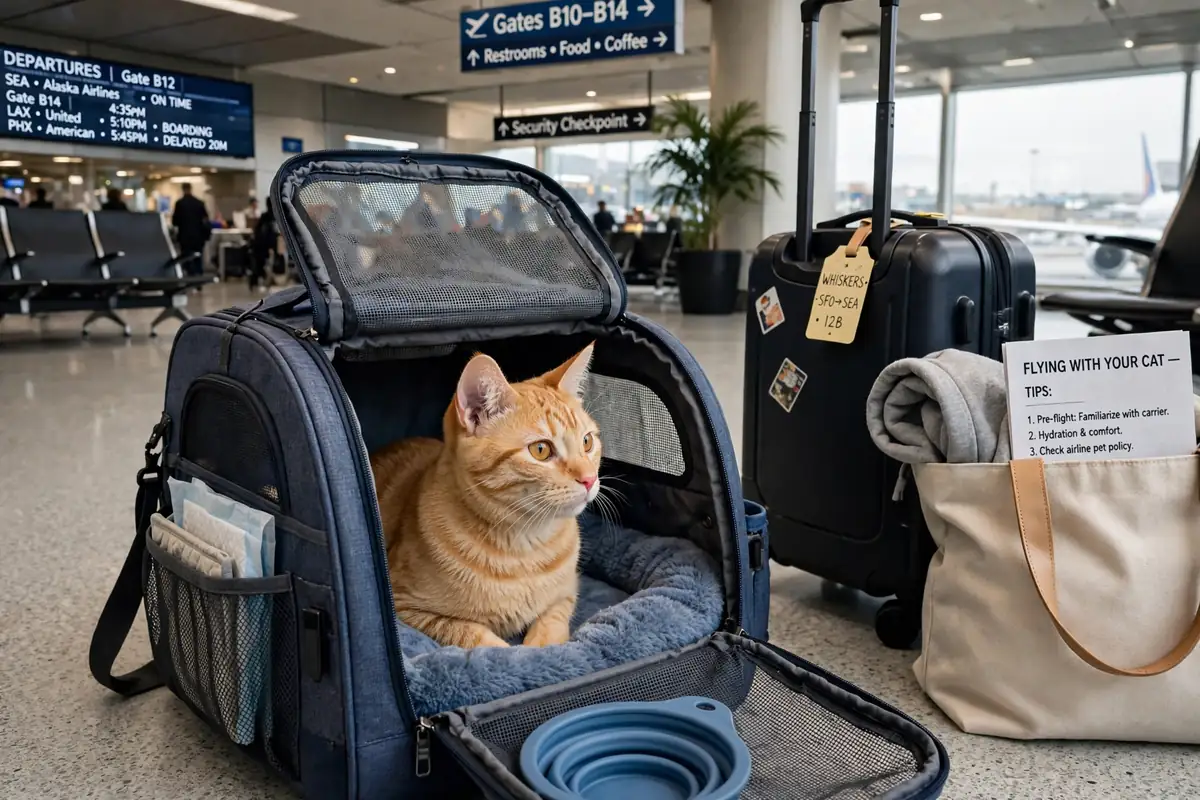
Yes — most cats can fly safely and calmly, as long as they ride in the cabin with you inside a comfortable carrier they have had time to get used to. The real secret to stress-free air travel with a cat is not the flight itself; it is the quiet weeks of preparation before it. Get the carrier, the paperwork, and the routine right, and the actual travel day becomes surprisingly uneventful.
Whether you are relocating or visiting family, flying with a cat feels daunting the first time. But thousands of cats fly every day without incident. This guide breaks the process into 12 practical tips — from booking the right flight to settling in at your destination — so both of you land happy. For more big-life-change advice, see our cat care guides.
Before You Book
1. Book a direct flight whenever possible
Every takeoff, landing, and layover multiplies your cat's stress — and every connection is another chance for a delay, a missed transfer, or a mix-up. A single direct flight, even if it costs a little more or leaves at an awkward hour, is the kindest option for your cat. If a connection is unavoidable, choose the longest layover you can tolerate rather than a tight one; rushing through terminals with a cat is miserable for everyone.
2. Check the airline's pet policy before you pay
Pet rules vary wildly: some airlines welcome cats in the cabin, others only allow them as cargo, and a few accept no pets at all. Check carrier size limits, the pet fee (most airlines charge one each way), and whether you must reserve your cat's spot in advance — many require a phone call after booking. Always read the airline's current pet page and save a screenshot.
3. Get the right carrier
For in-cabin travel, you want a soft-sided carrier that fits under the seat in front of you and meets your airline's published dimensions. Look for sturdy mesh ventilation on at least two sides, secure zippers (escape artists can nose open cheap ones — a small carabiner through the zipper pulls fixes that), a removable washable base pad, and a top opening so you can lift your cat out at security without dragging them through the front. The carrier counts as your personal item, so pack your own bag accordingly.
Weeks Before the Flight
4. Turn the carrier into furniture, not a trap
The single biggest mistake is introducing the carrier on travel morning. Set it out two to three weeks early with the door open, a soft blanket inside, and treats appearing in it like magic. Feed a meal or two inside it. Let your cat nap in it, play around it, and claim it as territory. Take a few short practice outings — a calm drive around the block, a sit in a parked car — so the carrier stops meaning "vet" and starts meaning "cozy den that sometimes moves."
5. Visit your vet
Schedule a checkup well before travel. Many airlines require a health certificate issued within 10 days of departure, and vaccinations must be current — rabies at minimum. Discuss motion sickness, anxiety, and whether your cat is healthy enough to fly at all; seniors, young kittens, and flat-faced breeds like Persians deserve an honest risk conversation with your vet. Carry vaccination records in your bag, not just on your phone.
6. Microchip, collar, and labels
Before any trip, make sure your cat is microchipped and the registration details are up to date — a scared cat in a strange airport is exactly when chips earn their keep. Add a breakaway collar with an ID tag showing your mobile number, and tape a label to the carrier with your name, phone number, flight details, and destination address. Redundancy is the point: if one form of ID fails, another is right there.
The Final Countdown
7. Test calming aids in advance
Feline pheromone sprays (the well-known one mimics the facial pheromone cats deposit when they rub their cheeks on things) can genuinely take the edge off — spray it on the carrier bedding 15–30 minutes before your cat goes in, never directly on the cat. Vet-approved calming supplements or treats are another option. Whatever you choose, trial it at home first on an ordinary day so you know how your cat reacts; travel day is not the moment for experiments.
8. Feed light on flight day
Serve a small meal about four to six hours before departure, then stick to water until you land. A full stomach plus motion plus stress is a recipe for nausea, and an emptier bladder and bowel mean less pressure for a litter break mid-journey. Keep water available right up until you leave for the airport, and offer small sips during long travel days.
At the Airport
9. Know the security drill
At the checkpoint, the carrier goes through the X-ray machine — your cat does not. You will carry your cat through the metal detector while the empty carrier is scanned. This is the highest escape-risk moment of the trip, so put a snug harness and leash on your cat before security and hold them firmly against your chest. If your cat is a known bolter, request a private screening room. Practice the hold at home so it feels routine.
10. Pack a proper cat carry-on kit
Keep these in your personal bag, not checked luggage: a collapsible water bowl and a small bottle of water, treats, absorbent pee pads (line the carrier with one and carry spares), waste bags, a familiar-smelling blanket or worn T-shirt, medications, and vet paperwork. A small portion of regular food covers you if delays stretch for hours — familiar smells are powerful calm-down tools.
In the Air and After Landing
11. Keep the flight boring — on purpose
Once onboard, slide the carrier under the seat in front of you and leave it there. Resist the urge to unzip it for cuddles; every opening is an escape risk, and the dark, enclosed space is calming. Speak softly if your cat meows, offer water on long flights, and keep your own energy low — cats read your tension. Most cats settle within 20–30 minutes of takeoff.
12. Decompress in one quiet room
At your destination, set up a single room before opening the carrier: litter box, water, a little food, and the familiar blanket. Open the carrier door and walk away — let your cat emerge on their own timeline, whether that takes ten minutes or three hours. Expect 24–48 hours of cautious behavior; hiding, skipping a meal, and super-gluing themselves to you are all normal. Keep the routine predictable, and your cat will map the new territory at their own pace.
A Note on Sedation
It is tempting to ask your vet for "something to knock them out," but veterinary organizations generally advise against sedating cats for air travel. Sedatives can affect breathing and balance at altitude, blunt a cat's ability to regulate body temperature, and leave them groggy and disoriented on arrival — unable to brace during turbulence. Most airlines also discourage or prohibit it. Calming aids, carrier training, and a calm owner are safer and, honestly, more effective. If your cat's anxiety is severe, talk to your vet about modern anti-anxiety options designed for travel rather than old-school sedation.
Frequently Asked Questions
Can my cat fly in the cabin with me?
On most airlines, yes — small cats can fly in the cabin in an airline-approved carrier that fits under the seat. Airlines limit the number of in-cabin pets per flight, so book your cat's spot as early as possible.
How long can a cat go without a litter box on a flight?
Most healthy adult cats can comfortably go 6 to 8 hours without a litter box. Line the carrier with an absorbent pee pad just in case, and feed a light meal several hours before the flight.
Should I sedate my cat for a flight?
Generally no. Veterinary organizations and most airlines discourage sedation because it can affect breathing and balance at altitude, and a sedated cat cannot brace during turbulence. Ask your vet about calming alternatives instead.
What paperwork do I need to fly with my cat?
For domestic flights, you typically need current vaccination records and sometimes a health certificate issued within 10 days of travel. International travel is far more complex — start researching your destination country's requirements several months ahead.
Is it safe for cats to fly in the cargo hold?
Cargo holds are pressurized and temperature-controlled, but the experience is loud, lonely, and stressful. Choose in-cabin travel whenever possible, especially for kittens, seniors, and flat-faced breeds like Persians, which some airlines restrict from cargo entirely.