How to Bathe a Cat Without Getting Scratched
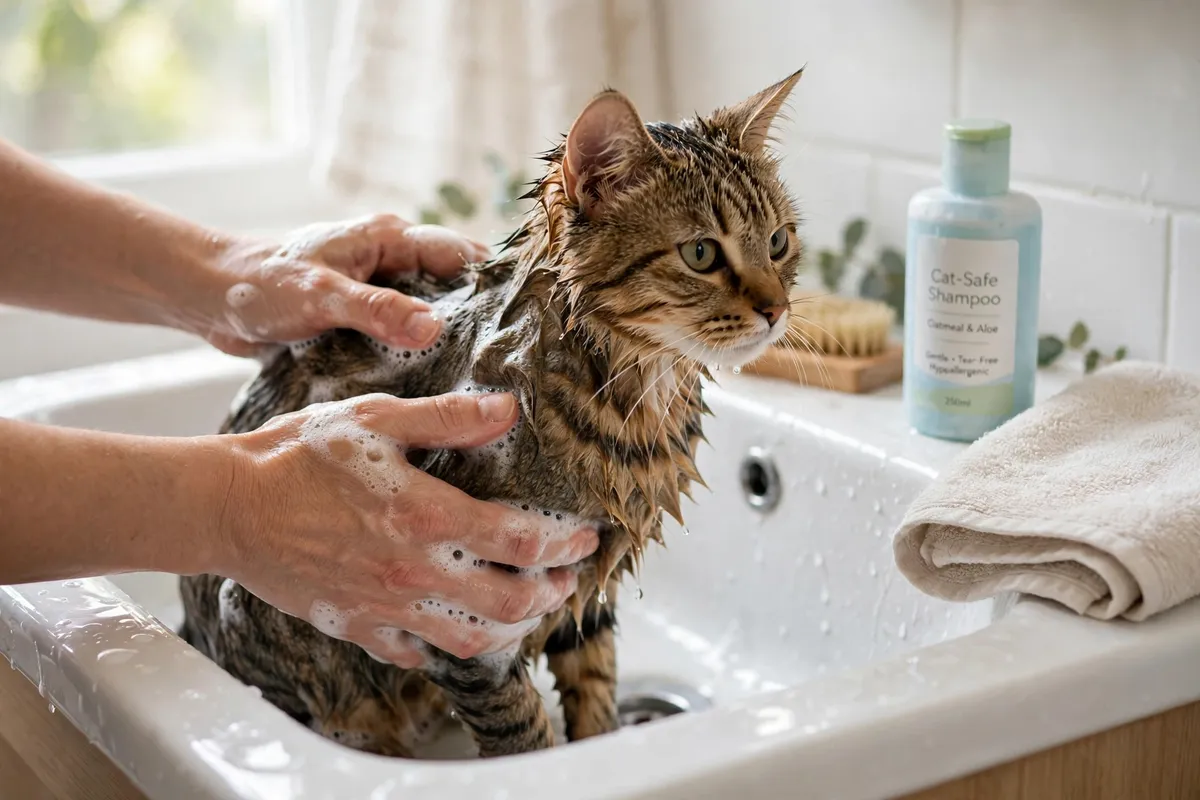
Bathing a cat has a reputation somewhere between wrestling an octopus and defusing a bomb. But here is the good news: most cats rarely need baths at all, and when they do, the process is far less dramatic if you prepare properly. The scratches people fear usually come from rushing, cold water, or a panicked cat with nowhere to feel secure.
This guide walks you through the whole thing — deciding whether a bath is even needed, gathering the right supplies, prepping your cat, the step-by-step wash, and safe drying. Follow it once or twice and bath day becomes just another (slightly damp) part of cat ownership.
Do Cats Actually Need Baths?
Usually, no. Cats are meticulous self-groomers, spending hours each day cleaning their coats with a barbed tongue that works like a built-in comb. A healthy indoor cat with no skin problems can go its entire life without a single bath and stay perfectly clean.
There are real exceptions, though. Bathe your cat when:
- They get into something sticky, greasy, or potentially toxic — paint, oil, cleaning products, or anything you would not want them licking off.
- Your veterinarian prescribes a medicated shampoo for a skin condition such as ringworm, allergies, or seborrhea.
- They are elderly, arthritic, or overweight and can no longer groom their back end properly.
- A long-haired cat develops mats or gets litter stuck in its coat that brushing cannot fix.
- They have had a flea treatment that requires a wash-off, per your vet's instructions.
If none of these apply, skip the bath. Over-bathing strips natural oils from a cat's skin and can cause dryness and flaking.
Gather Your Supplies First
Everything must be within arm's reach before the cat goes near water — once the bath starts, you cannot leave to fetch something. Set up in a small, warm bathroom with the door closed so a startled cat cannot bolt through the house dripping wet.
- Cat-specific shampoo — never human shampoo, dish soap, or dog shampoo. Cat skin has a different pH, and the wrong product causes irritation.
- Two large towels — one for the main dry-off, one as backup.
- A non-slip mat — a rubber bath mat or folded towel in the sink or tub. Cats panic when their feet slide, and a secure footing prevents most scratching.
- A cup or small pitcher — for gentle pouring. A detachable shower head on the gentlest setting also works, but many cats hate the spray sensation.
- Cotton balls — placed gently at (not inside) the ear openings to keep water out.
- Treats — for rewarding calm behavior before, during, and after.
- A brush or comb — for the pre-bath brush-out, which matters more than people think.
Prep Work: The Secret to a Scratch-Free Bath
Most bath disasters are decided before the water is even on. Good prep takes fifteen minutes and prevents ninety percent of the drama.
Trim the nails first. Do this a day or two before bath day so it is a separate calm event, not part of the bath stress. Shorter nails mean shallower scratches if your cat does grab you.
Brush thoroughly. Brushing out loose fur and tangles before the bath is essential. Water tightens mats into felted clumps that are miserable to remove afterward, and loose fur in the drain is its own headache. For long-haired cats, work through any small tangles now.
Tire them out. A vigorous play session an hour before the bath burns off nervous energy. A slightly tired cat is a calmer cat.
Fill the water before the cat arrives. The sound of running water can spook cats, so run a few inches of lukewarm water into the sink or tub first. Test it on the inside of your wrist — it should feel comfortably warm, roughly body temperature.
Step-by-Step: Bathing Your Cat
- Stay calm and move slowly. Your cat reads your tension instantly, so speak in a low, soothing voice throughout.
- Place the cat gently on the non-slip surface. Let all four paws find the mat before you do anything else. Keep one hand resting lightly on their shoulders — firm enough to steady, gentle enough not to pin.
- Wet from the neck down. Using the cup, pour lukewarm water over the body starting at the shoulders and working back. Never pour water over the face or into the ears — use a damp washcloth for the face separately.
- Apply a small amount of cat shampoo. Lather gently with your fingertips, working with the direction of the fur. Massage rather than scrub. Keep shampoo away from the eyes, ears, nose, and mouth.
- Rinse thoroughly — then rinse again. Leftover shampoo residue is the most common cause of post-bath itching and flaking. Rinse until the water runs completely clear and the coat feels squeaky-clean, not slippery.
- Wipe the face. Use a damp cloth (no soap) to gently clean around the eyes, chin, and ears. This is also a good moment to check for any skin issues you might have missed under the fur.
- Lift and wrap. Scoop the cat up with both hands — one under the chest, one supporting the rear — and wrap them immediately in a warm towel like a burrito. Most cats visibly relax the moment they are wrapped.
Keep the whole process efficient. A typical cat bath should take ten to fifteen minutes of actual washing. Longer than that and stress builds faster than cleanliness improves.
Drying: The Part Everyone Rushes
Drying matters as much as washing. A damp cat in a cool house can get chilled quickly, and kittens are especially vulnerable to losing body heat.
Press the towel against the coat to absorb water — do not rub, which tangles fur and annoys the cat. Swap to the second dry towel once the first is soaked, then move your cat to a warm, draft-free room to finish air-drying.
A hair dryer can help with long-haired cats, but use it on the lowest heat and lowest speed setting, held well away from the body, and keep it moving. Most cats find the noise frightening, so introduce it gradually — and if your cat panics, abandon the dryer and stick with towels. Never use a dryer on hot, and never confine a cat in a heated drying box or cage dryer unless it is a product specifically designed and safety-tested for pets.
Once dry, give the coat a final gentle brush-out and a treat. Ending on a positive note makes the next bath easier — cats remember how the last one ended.
Shampoo Safety: What to Never Use
This deserves its own section because the wrong product can genuinely harm your cat:
- No human shampoo or conditioner. Formulated for human skin pH, these dry out and irritate cat skin.
- No dog shampoo (especially flea shampoo for dogs). Some dog flea products contain permethrin, which is toxic to cats — even the residue on a shared towel can be dangerous.
- No essential oils. Tea tree oil, lavender oil, and many others are toxic to cats, who cannot metabolize certain compounds the way humans and dogs can. "Natural" does not mean safe.
- No dish soap as a routine choice. It is sometimes used in emergencies for oil or grease, but it strips the coat aggressively and is far too harsh for regular use.
Stick to shampoos labeled specifically for cats. For kittens, look for a gentle kitten formula. If your vet prescribes a medicated shampoo, follow their instructions exactly — including how long to leave it on before rinsing.
Common Mistakes to Avoid
- Bathing too often. Unless medically directed, most cats need baths only a few times a year at most.
- Using cold water. Lukewarm is the rule. Cold water shocks the system and makes cats fight harder.
- Getting water in the ears. This can lead to ear infections. Cotton balls at the ear openings and careful pouring prevent it.
- Rushing the rinse. Residue causes itching, and an itchy cat will blame the bath forever.
- Forcing a terrified cat. If your cat is in full panic — screaming, thrashing, trying to climb the walls — stop. Forcing it risks injury to both of you and makes every future bath worse. Try again another day, use a waterless shampoo, or ask your vet or a professional groomer for help.
- Bathing right after vaccinations or surgery. Wait until your vet gives the all-clear and surgical sites are fully healed.
Done right, a cat bath is unremarkable: a damp cat, a dry cat, a treat, and life goes on. The scratches everyone fears are almost always the result of skipping the prep — so trim those nails, warm those towels, and keep it calm.
Frequently Asked Questions
How often should I bathe my cat?
Most indoor cats never need a full bath — they groom themselves very effectively. Bathe only when necessary: if your cat gets into something sticky or dirty, has a skin condition your vet wants treated, or is elderly or overweight and can no longer groom properly.
Can I use human shampoo on my cat?
No. Human shampoo is formulated for human skin pH and can irritate or dry out your cat's skin. Always use a shampoo made specifically for cats. Avoid products with essential oils unless your vet approves them.
What water temperature is safe for bathing a cat?
Use lukewarm water — comfortably warm to the inside of your wrist, roughly body temperature. Water that feels hot to you will feel hotter to your cat, and cold water can chill them quickly, especially kittens.
How do I dry my cat after a bath?
Gently press (don't rub) with a large absorbent towel, then keep your cat in a warm, draft-free room until fully dry. A hair dryer on the lowest, coolest setting held at a distance can help long-haired cats, but many cats find the noise frightening — towel drying is fine for most.
My cat panics in water — what should I do?
Stop and try again another day rather than forcing it. Use only a few inches of water, keep sessions short, and reward calm behavior with treats. For cats that truly panic, ask your vet or a professional groomer for help — or consider waterless foam shampoos made for cats.